Categories
Blogs

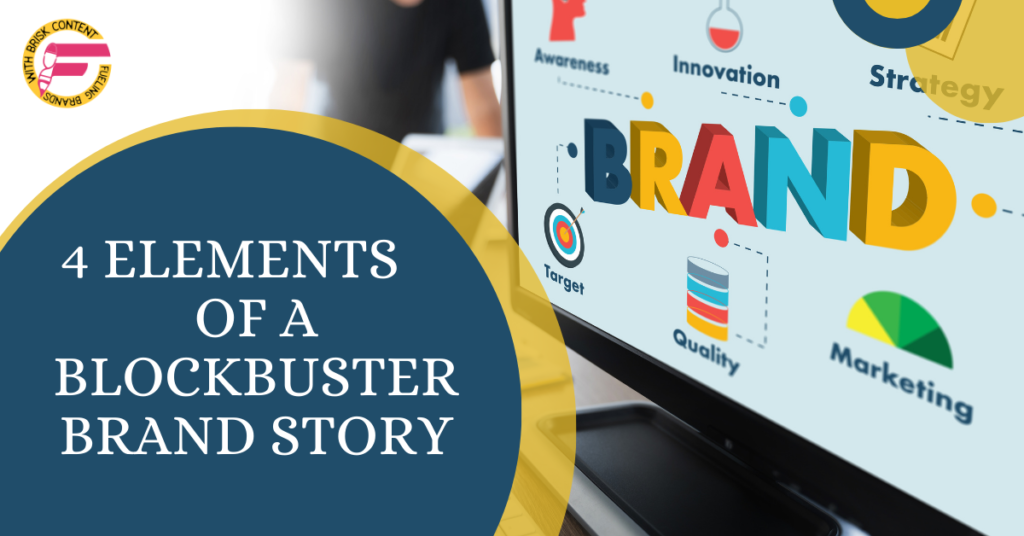
4 Elements of a Blockbuster Brand Story

Introduction

What is a brand story?

A brand story means storytelling of a brand that connects with the audience on an emotional level and builds trust and loyalty. A good brand story is authentic, relatable, and memorable, and try making it clear, concise, and easy to understand for your audience.

Why is it important?

An Effective Brand story is important as It helps you connect with your audience on an emotional level. An effective Brand story allows us to share our experiences, learn from others, and feel empathy. It gives a sneak peek to your audience about your company’s values, mission, and vision building trust and loyalty with your customers.

It helps you stand out from the competition in today’s crowded marketplace, a good story can help you differentiate your brand from the competition and make your brand more memorable to the audience or the customers

A good brand story increases brand awareness, generates leads, and drives sales resulting in more sales. When your brand connects with the customer emotionally they will most likely buy from you.

For Example, Nike’s brand story is about empowering athletes to achieve their goals. The company’s “Just Do It” tagline is a call to action that inspires people to push themselves to be the best they can be.

What are the 4 elements of a blockbuster brand story?

  • A clear and compelling message
  • A relatable protagonist
  • A plot that keeps readers engaged
  • A satisfying ending

Body

A clear and compelling message

Crafting a creative brand story needs to have a strong message that is appealing to your target market. People should be able to understand and recall this message with ease.  Additionally, it must be something to which they can emotionally relate.

Here are some tips for crafting a clear and compelling message for your brand story:

Start by identifying your target audience. To whom are you hoping your brand story will appeal? What are the people’s wants and needs?

What does your brand’s main message consist of? After hearing your story, what do you want listeners to recall about your brand?

Keep it short and simple when communicating. In a few seconds, people should be able to comprehend your message.

Bring your message to life by using vivid language and imagery. Help people understand your ideas by providing examples.

Use language that is appropriate for your target audience when telling your story. Ensure that your tale speaks to their interests and needs.

A relatable protagonist

The protagonist of your brand story is the character that your audience will try to see themself in the character and relate with. It’s important to make this character someone they can root for and care about. 

There are a few considerations when making the protagonist relatable to your audience. 

The character must, firstly, be someone with whom your target audience can identify. They ought to share the same fears, aspirations, and hopes as your audience. 

Second, the character ought to be someone who closely resembles the audience in terms of personality. They should be likable even if they make mistakes. 

Thirdly, they should be someone that your audience has no trouble visualizing.

Here is an example of relatable protagonists from popular brand stories:

Harry Potter from the Harry Potter series is a relatable protagonist because he is an orphan who is trying to find his place in the world. He is also a talented wizard who is trying to overcome the evil Lord Voldemort.

A plot that is full of conflict and resolution

A good brand story has a plot that is full of conflict and resolution. This conflict should be something that the protagonist must overcome in order to achieve their goals. The resolution should be something that is satisfying and leaves the audience feeling good.

A conflict is what makes a story interesting. It is what drives the plot forward and keeps the audience engaged. Without conflict, a story would be boring and predictable.

Conflict can take many different forms and be used in brand stories.

Internal conflict is a struggle the protagonist has with themselves. A conflict between the protagonist’s desires or between their beliefs and their desires could exist. An external force and the protagonist are at odds in an external conflict. A person, a group of people, or even an inanimate object can be this force.

The conflict in a brand story should be something that the protagonist can overcome. This will make the story more satisfying for the audience. The resolution should be something that is believable and satisfying. It should leave the audience feeling good about the protagonist and their journey.

Here are a few examples of plots with conflict and resolution from popular brand stories:

In the Hunger Games books and movies, Katniss Everdeen deals with the conflict of the Hunger Games which is a bloody event where kids are made to compete to the death. By utilizing her abilities and forming alliances with other competitors, Katniss triumphs over this conflict.

Here are a few tips for creating a plot with conflict and resolution:

  • Make sure the conflict is something that the protagonist can overcome.
  • Make the resolution believable and satisfying.
  • Leave the audience feeling good about the protagonist and their journey.

A memorable ending

Your brand story should come to a memorable conclusion that piques the audience’s interest. Long after they have finished reading or watching it, they should be left with something to reflect on.

A successful brand story must have a memorable conclusion. The likelihood that someone will remember the brand associated with a story increases when they can recall the ending. Making an ending that leaves the audience thinking is essential for this reason.

The conclusion should, first and foremost, make sense in the context of the entire story. It should not be shocking or unanticipated by the audience. 

It should also be satisfying and ought to provide a sense of closure for the audience and leave them satisfied with the tale. Finally, the conclusion ought to provoke thought. Long after they have finished reading or watching it, it should continue to occupy the audience’s thoughts.

Brand Storytelling: 5 Key Brand Attributes

Incorporate your brand’s 5 key attributes into your brand storytelling to maximize your marketing impact.

  1. Brand voice. What language does your brand use? Is it casual or formal?
  2. Brand tone. What emotions does your brand portray? How does your audience understand that they’re key to your brand?
  3. Perspective. How do you tell your story for maximum impact? Stories are often told in a formal third person or less formal first person. Many online writers address their audience in the second person (aka you).
  4. Language. What words do your readers use? What images do these words evoke?
  5. Personality. How do the words and sentence construction convey your brand’s personality?

Here are some Statistics on the topic

90% of consumers claim that the backstory of a brand influences their choice.

Consumers are 70% more likely to make a purchase from a company that has a compelling narrative.

In order to get a product or service from a company with a compelling story, 50% of consumers are willing to pay more.

30% of consumers claim that a brand’s origin story has positively impacted their perception of the company.

Conclusion

Brand storytelling sets your business apart and makes it memorable. In the process, it contributes to building your brand to make it stand out.

More importantly for today’s distracted audience, brand stories pull your potential audience into your marketing.  

Integrating stories into your marketing to add personality and details that your target audience needs to capture their attention.

Don’t feel locked into a linear plot line. Instead, tap into interactive and multi-channel options to enhance your brand approach.

The key to brand storytelling is to set your brand apart by infusing your story with brand elements that hook your reader into consuming it.

Categories
Blogs

5 Content Marketing Goals You Must Track.

Introduction

According to the Content Marketing Institute, 70% of B2C marketers and 73% of B2B marketers use content marketing as part of their overall marketing strategy. When it comes to marketing, the first thing you think of is how you will publish your content to your audience, but that does not mean you will now keep your complete focus on that matter.

Marketing is not all about showcasing your content, it’s a strategy focused on creating and displaying your matter based on how interesting your work is to gain the public’s attention.

Although not every marketing firm knows how to handle this matter, which results in them losing their audience. To bring an end to this, content marketing brings you different types of goals on which you could finally figure out where your team lacks consistency.

What Is Content Marketing?

Now, the main question is, what actually is content marketing and how will it help expand your business? It is all about producing matter on specific topics which does not include any brand awareness or stuff like advertising. 

For example – When you create a content calendar, you set goals on how you will achieve success. That is because you want to make sure what you’re presently working on will help your future set goals to succeed.

There are specialized tools to help you set goals in marketing strategy but before that, you should know your main focus and reason why you want to put those goals. 

Why Do You Need To Set Goals?

Setting goals gives you purpose, future vision, and motivation to focus on what you’re currently working on. Setting goals in content marketing simply means knowing what you’re aiming for and working passionately on that. 

You should understand and realize the value of money and hard work before using either of those in any situation. 

Creating and tracking your goals is a way of achievement, this article will show you the exact goals to track in content marketing and the primary purpose behind those.

Marketing Goals to Track:

1. Expand Your Brand Awareness:

Brand awareness is a key way to attract customers. Prioritizing your audience is very important. Creating a targeted customer and working for their happiness and satisfaction is what you should set your goal on. If a customer is happy with a product you’re selling, they will introduce it to their family, friends, and colleagues which will increase the brand awareness.

Now the question is how to attract new customers. Firstly, focus on where your targeted audience is and what you’re actually trying to impress them with. Then all you have to do is start with your conversation skills and try to convince them of the benefits of your brand. Make them realize how your brand will help them in different situations. 

2. Attract High-Quality Leads To Get New Customers.

 Attracting qualified leads is itself a main goal for a business and then turning them into brand new customers is again a big task. Creating a lead customer is key to business growth and revenue generation. Generating a lead and nurturing a lead are two different things. Generating a lead has specific tactics such as targeted campaigns, content personalization, etc. On the other hand, nurturing a lead is converting a generated lead into a loyal customer. 

Generating leads is not an easy task, this is counted as a main set plan in content marketing. It consumes its time and our work, conversations in a convincing tone, showing them benefits, and creating campaigns overall results in generating a lead. 

Transforming a lead into a customer is again a big goal to achieve in content strategy. Once you have generated a lead for your business, converting them into customers is just a piece of cake. 

3. Creating And Increasing Website Traffic.

We live in a digital era, and congestion on our websites describes we’re achieving success in our marketing strategy. People are reading our content, they’re enjoying it, and satisfying them is what our motive is. This traffic on our websites is our 3rd most important goal in content marketing. This can increase, and our content can reach more and more audiences just by a few other steps.

  • Writing and publishing blogs
  • More efforts on SEO to increase optimization ranking
  • Creating campaigns for paid ads
  • Social Media is the best way to create traffic for your business

The goal is to reach more people with our content, this will not only increase content ranking but the demand for our business will keep on increasing. 

It is important to showcase your work to as many people as possible, and if it is reaching the targeted audience why not give them the high-quality content they always seek of?

4. Engaging & Retaining Old Customers.

Generating new customers is a tough task but satisfying the old ones isn’t. Make your old customers happy, reach back to them for reviews of your product and content. Keep engaging and retaining them. If a customer is delighted by the products or services you’re offering, they will not only buy from you again and again but also recommend you to their relatives, family, friends, colleagues, etc. 

There are plenty of ways to retain your customers, including:

  • Seek reviews and thoughts about your product/services.
  • Listen to the complaints properly and work on them.
  • Offer them discounts and early access to the products.
  • Respect their thoughts about your content whether they are in your favor or not.
  • Pursue carefully what content you offer to the public that influenced the most deals.

 5. Create Brand Identity And Boost Its Engagement.

Last but not least, the 5th most important goal you must track in content marketing is to create a brand identity and boost its engagement. 

What does one mean by creating an identity and boosting its engagement? Social Media such as Instagram, Facebook, and many others work on the basis of their algorithm. Increasing your reach to more and more people will have a positive impact on your sales. 

Now how does one work on the basis of an algorithm in content marketing? 

  • Social Media shows people what they specifically search for which means you cannot give people what they’re not even interested about. 
  • Second, distribute people the content in one form and one way. Showcasing different types of work in a single moment will make people confused about what you’re trying to convey. 
  • Provide them with different types of stuff at different times so that the engagement of the content is increasing in a particular way.
  • Make people aware of what you’re offering them and how it can benefit them. Make sure that all the 4 Ps of marketing i.e. Price, Place, Product, and People are being considered while making the strategy. 

Last Thoughts:

In order to achieve success setting goals are very important, and timely fulfillment of these goals will only help you grow more and more. 

The Internet is the best place to expand your reach. Generate leads and convert them into loyal customers through tactics such as content personalization and targeted campaigns. 

Try to increase as much traffic on your website as possible, heavier the traffic easier the sales. Gain positive impacts from old customers by listening to their complaints, reviews, and compliments. Boost your engagement by working through the algorithm of social media.

Setting Goals is important in every aspect of life, marketing is just another reason to consume it and grow towards success. 

Contact us now at Content Fayah to set up your personalized goals.

Categories
Blogs

Why Brand Marketing Should Be Important For The Brands

A study shows it takes at least 5-7 brand impressions for someone to remember a brand and 81% of consumers need to trust a brand before making any purchase. 

This shows a brand needs to create such an identity or image in consumers’ minds that not only helps them in increasing brand recognition but also maintains their trust & loyalty of them in order to drive sales. 

While you’re dealing with the ways how to make your business stand out in the market, there is surely a point when you get puzzled between the two most important terms of any business- Branding and Marketing. 

So before moving forward, let’s dive into how branding and marketing differ from each other.

Difference between Branding & Marketing- 

In nutshell, “Branding” is who you are. i.e., it’s all about your values, missions, or USPs that make you different from the competitors and lets you foster a deeper relationship with the customer, supplier, follower, or mere bystander. It’s about how the audience recognizes you through your brand’s key elements like the logo, website, tagline, symbol, brand tone of voice, and brand style. 

To build awareness about your brand, you need a way to communicate with the audience about the products or services you’re offering. Here’s when “Marketing” enters into the picture to deliver and promote your brand’s message or identity with a strategy & tools to convert leads into customers. It helps you to clear the clutter, grab customers’ attention and get your brand in front of people. 

What Is Brand Marketing?

Brand marketing is a strategic plan that helps in creating & growing a bond between consumers and the company. So, instead of promoting individual products or services your company offers, you can emphasize the brand as an entity or whole. 

This helps in displaying the story your brand stands by, and further generates brand awareness, and builds reputation & recognition among target prospects to have a competitive advantage.

Your brand can use multiple channels for brand marketing strategy such as digital, social, or paid search advertising, but what works best is when you use a good mix of different channels 

Brand marketing should be important for brands for several reasons:

The brand marketing strategy will help your brand to create a positive image and reputation in consumers’ minds. Here are some reasons why brand marketing is important for the brands:

1. Differentiation

In this competitive era, the uniqueness your brand possesses can help you define and spread your identity, values, positioning, and propositions which in turn can attract customers and let them choose your brand more than anyone else’s.  

To encourage engagement and spread awareness, a content marketing strategy can serve your brand with multiple opportunities where your content can grab the readers’ attention and let them interact with your brand. The more the audience resonates with your brand and ideas, the higher the chances of engagements, sales, and retention rate, and it in turn builds a community of loyal followers around the brand.

Example- When it comes to differentiation, the best example we can think of is the brand “Apple”.  Apple differentiates its product by charging them higher and wants to imply that its products incorporate the latest frontline technology and better quality than the rest of its competitors. 

They build a level of hype and interest in customers’ minds before any of their product launches through clever content marketing and distribution strategies.  And since Apple has a long-time established reputation, brand equity for innovations, and commitment to designing new products, they have covered a large market share in its industry. 

2. Trust and credibility: 

If your brand is one among those who stand by its value, consistently deliver high-quality content/service, and have a positive brand image, well then you’ve already earned the trust and credibility of your customers. 

Once you’ve gained customers’ trust, and they believe in the reliability of your product and feel confident about your brand, you’re going to retain them for the long term.

Example- Whenever the word delicious occurs, we all remember the slogan “Utterly Butterly delicious” and the iconic animated girl often seen on the covers of Amul dairy products. They focused solely on the mass market and became an integral part of the common man’s lives, by maintaining quality products at affordable prices to the consumers.

The brand “Amul” has always amazed audiences with its quirky meme-styled content & all those animated characters that make consumers feel engaging, relatable, and humorous and they never fail to publish their take on current scenarios. This proves that they majorly deliver customer-centric content and their awareness and care towards the environment, and so is an ideal brand example of content marketing strategy. 

3.Loyalty: 

When you address consumers’ needs and interests and provide accurate services, they will feel a sense of association while buying the product and remain more loyal to your brand. This will lead to consumers’ developing an emotional connection with your brand which will make them come to you again and again, thereby increasing the retention and advocacy level.  

Example- Being among one of the leading brands with a wide fan base across the world, “Starbucks” has successfully managed to increase its sales, and retain and expand its loyal customers through some of its exemplary loyalty programs. 

They deliver a unique experience with the “order & pay” feature that lets consumers quickly add their favorite items to the cart, and also suggests what beverage might pair up with their order. And if you’re one among them who uses the app, you might get to earn stars for money spent, which later gets converted into free treats. 

4. Awareness

Reaching out to more people, and communicating the brand’s key message through various marketing channels not only helps to drive consumers’ interest and attention towards the brand but also increases the chances of remembrance in their minds.    

At this phase, Content marketing can help your brand by- attracting more audience on social media, generating traffic on your website, and improving organic ranking & customer retention rate. 

Example- What word comes to your mind when you hear “Nike”? Empowerment, Courage, Motivation, and Innovation. Well, this is why people buy Nike’s products as they never sell you the products, but the attitude and identity you feel when you wear them. 

From logos to campaigns to slogans and their content strategies, everything supports these terms. You go through any of their campaigns or ads, they always use the real stories and faces behind them covering all types of personalities, ages, races, and gender, and their ability to overcome obstacles.  

5. Expansion:

The reputation and identity of a brand can help a company to expand itself in further product categories or sometimes even enter into a new market.  

The already-established brand loyalty and credibility can help companies open new doors to opportunities and increase their visibility, customer base, engagements, and sales through content marketing strategy.

Example- One of the most well-known examples of this can be seen in the “Amazon” brand extension strategy, once which began as an online book retailer in 1994 and has now expanded its operations & offerings into a one-stop online shop. It now sells all kinds of products on its online platform and delivers services like music streaming, videos, artificial intelligence, cloud computing, and online advertising

The Takeaway

To thrive in this fast pace and ever-evolving competitive business world, you need to put forward a strong Brand marketing strategy.  Without an effective Brand marketing strategy, you might be delivering a high-quality product, but will always carry a risk of losing or fading the memory of your brand image in consumers’ minds.

Categories
Uncategorized

Is Ai Generated Content Good for SEO?

Are you tired of spending countless hours creating content for your website or business, only to see little improvement in your search engine rankings? If so, you may have heard about the potential benefits of using AI-generated content to boost your SEO.
But before you jump on the bandwagon, it’s important to consider the potential drawbacks and limitations of relying solely on automated content creation tools. While AI-generated content can certainly help streamline the content creation process, it may not always produce the same level of quality and authenticity as human-written content.

In this article, we’ll explore the pros and cons of using AI-generated content for SEO, and provide insights into how to strike the right balance between automated content creation and the human touch. So, whether you’re a small business owner or a seasoned SEO professional, read on to discover the truth about AI-generated content and its impact on your search engine rankings.

The world of SEO is constantly evolving, and with the rise of AI-powered technologies, automated content creation has become a popular trend. Here, we’ll explore the benefits and drawbacks of AI-generated content for SEO and provide tips on how to incorporate it into your content strategy.

AI content SEO

Benefits of AI-generated content for SEO

One of the primary benefits of AI-generated content is its ability to produce large quantities of content quickly. This can be particularly useful for websites or businesses with a high volume of content needs, such as e-commerce sites or news outlets. Additionally, AI-generated content can help reduce costs and improve efficiency, freeing up time and resources for other important tasks.

Another advantage of AI-generated content is its potential to increase search engine rankings. By using target keywords and optimizing content for SEO, AI-generated content can help boost website traffic and visibility. However, it’s important to note that search engines prioritize quality and relevance over quantity, so it’s essential to strike the right balance between quantity and quality.

Limitations of AI-generated content for SEO

Despite the potential benefits of AI-generated content, there are also limitations to consider. One major drawback is the potential lack of authenticity and personality in the content. While AI algorithms can produce grammatically correct and coherent content, they may not be able to convey the same level of emotion or connection as human-written content. This can lead to a lack of engagement from readers and ultimately harm your SEO efforts.

Avoiding plagiarism and duplicate content

Another limitation of AI-generated content is the risk of plagiarism or duplicate content. AI algorithms may scrape content from other sources and repackage it, which can lead to penalties from search engines and damage your website’s credibility. To avoid this, it’s important to use AI-generated content as a starting point and then edit and refine it with a human touch to ensure its uniqueness.

Incorporating AI-generated content into your content strategy

To reap the benefits of AI-generated content without sacrificing authenticity and engagement, it’s important to incorporate human touch into your content strategy. One way to do this is by using AI-generated content as a starting point and then editing and refining it with a human touch. This allows you to take advantage of the efficiency and convenience of AI-generated content while still ensuring that your content is unique and engaging.

Using AI-generated content for repetitive tasks

Another way to incorporate AI-generated content into your strategy is by using it for repetitive or low-value content, such as product descriptions or social media posts. This frees up time for human writers to focus on higher-value content, such as blog posts or thought leadership pieces.

Does AI-generated Content rank on Search Engines?

Yes, but it’s crucial to optimize the content for SEO and user experience. Search engines prioritize relevance and quality, so striking the right balance between AI-generated content and human touch is important.

To ensure that AI-generated content ranks on search engines, use target keywords, make the content informative and unique, optimize for user experience, and engage with your target audience. However, it’s important to avoid plagiarism and ensure authenticity to maintain credibility.

AI-generated content can rank on search engines if optimized properly. By using AI-generated content and human touch together, you can improve search engine rankings and drive traffic to your website.

Here are some tips for using AI content tools to produce high-quality and engaging content:

  • Choose the right tool for your needs. Some of the best AI content tools in the market include GPT-3, ContentBot, Copy.ai, and Wordsmith.
  • Understand the capabilities and limitations of each tool. While they can generate content quickly and efficiently, it’s important to ensure that the content is authentic, relevant, and engaging.
  • Use the tool to generate ideas and inspiration. AI-generated content can help generate new ideas and perspectives that you may not have considered before.
  • Incorporate human touch and editing. Editing the content generated by AI tools can help ensure that it’s unique, relevant, and resonates with your audience.
  • Use the tool to enhance, not replace, human creativity. While AI-generated content can be useful, it’s important to remember that human creativity and expertise are still essential for producing high-quality content.

AI content tools can be powerful resources for content creation, but it’s important to use them wisely and incorporate the human touch. By understanding their capabilities and limitations, and using them alongside human creativity and editing, you can produce high-quality and engaging content that resonates with your audience.

In Conclusion

AI-generated content can be a powerful tool for improving SEO, but it’s important to understand its limitations and find ways to incorporate the human touch into your content strategy. By striking the right balance between efficiency and authenticity, you can harness the power of AI-generated content to boost your search engine rankings and drive traffic to your website.

Categories
Blogs

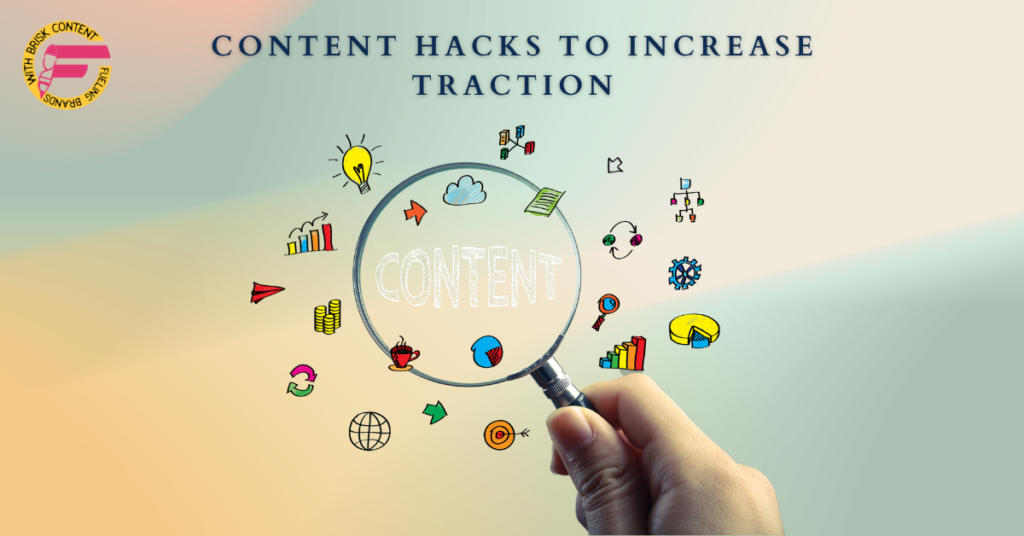
Content Hacks to Increase Traction

With the evolving market scenario at a fast pace, content creators are constantly consumed with creative unique high-quality marketing strategies. 
Let us dig deeper to know a couple of content hacks to increase traction: 

  1. Merge with influencers: 

There is a trend when influencers in your news feed share about their experiences with the products/ services then a certain trust is created and we get an urge to at least try it once. These influencer marketing hacks are proving good for businesses for their products and services because of the way they create engagement with real-life experiences. These influencers have a habit of creating content with a touch of regular habits hence we as consumers connect better. This results in helping them to increase traction. 

  1. TikTok & Instagram: 

The content creators on TikTok and Instagram have an immense number of followers. They present the content in uniquely creative ways which are displayed multiple times on the news feed and people also searched for or people also viewed lists. This hack has shown to have increased traction because of its multiple times being shown on the wider space to diversified viewers. 

  1. Call to action: 

When we are shown that by using the special promo codes for a limited time period then there is a drive of excitement to try the highly rated and the buzz around the product/service. We end up DM-ing to know the special promo code. We participate in the giveaway tasks that are asked to be done like following the page, commenting, tagging friends, sharing the story for 24 hours on our personal page while tagging that brand, etc. All these are smart hacks to increase traction. 

  1.  In-app shops: 

When we are shown ads on Facebook, Instagram, YouTube, etc. i.e. all the social media platforms then we prefer to instantly grab the offer displayed. For this in-app shops come in handy to us. This content hack has proven to increase traction so much more. The moment we are directed to the website page we lose interest. If you notice, Digital media platforms that have in-app shops show better sales. 

  1. News hacking: 

You must incorporate the trending news if you desire to increase traction in your business. The more relevant the content is to the trending news the better the rise in engagement for consumers to feel connected and tend to find solutions to their issues. Everyone is sailing in a similar boat so it is easier to grasp the touch if regular scenarios are creatively displayed and provide aid to the consumers. This trending news hacking tactic has proven to be good to increase traffic for the business. 

  1. Keep an eye on your competitors: 

The shortest way in finding the right keywords used so that google and Seo pick up your business in the highest ranks is by keeping track of competitors strategies. Decode it and then visualize your plans similarly in a creative way. This quick hack of increasing traction can be done by using keyword research tools and most importantly modeling the competitors. 

  1. Involve humor: 

You respond better to memes and content which has a lighter happier note. After all, we all are looking for an escape from our monotonous dull lives. This is the reason we dwell on social media platforms. You respond better to trending news that must be digitalized into memes and eventually creatively used by businesses for their increased traffic i.e. customer acquisition. The phenomenon of memes is highly effective in a major increase in traction. 

  1. Repeat the dress but in a different style each time: 

Just like you end up filling your cupboards because you are never ready to part ways with those favorite dresses because when you wore it you got the maximum number of compliments. It is similar when a post shows massive acceptance and engagement from customers who are really important and close to your hearts as well as pocket-filling to your business. So, in this case, the hack is to redesign the same post, it can be used as a podcast episode, YouTube video, email marketing, social media posts/reels/stories, etc. the audiences who didn’t watch it earlier it is new to them. But the trick is not to bore the ones who have already seen it so make sure it is all done at the correct time. After all, you desire to increase traction not lose it. 

  1. Infographics: 

Consumers are moody and always prefer looking at things that are prettier and at the same time provide useful insights into the topic. This is when infographics come has a hack to increase traction. Every piece of information and at the same time call to action can be merged creatively and aesthetically in infographics. 

  1. Customer satisfaction: 

At the end of the day, your business is meant to provide satisfaction to the customers and be profitable to you at the same time. You must believe in the power of customer loyalty for a successful business. Each customer’s feedback and rating should be taken into consideration and then strive towards more success. After all, success is happily felt when there is customer retention. A quick hack to increase traction is by spreading positive feedback on various social media channels of your business. It is helpful to your business for trust building. 

  1. Quick hack for the landing page: 

You come across appealing offers and instantly add products to the shopping cart from the in-app stores. All this is done in a fraction of a second because of the amazing deal displayed creatively in the advertisements. But at the time of payment, we all have a habit of thinking once so this is when we read the product/service reviews. To increase traction, you must display organic reviews to make the potential customer click on the “order now” option. 

  1. The power of the recommendation engine: 

There is always a moment when you come across words like these “Style with,” “Others also bought,” and “If you liked this post, you’d love these related articles” etc., and because this piece of content was interesting and engaging to you then you take further steps to dig deeper. This is an e-commerce marketer hack to increase traction. Since the recommendation was from a trustworthy page/ influencer then you as a potential customer give a trial to explore more. 

  1. Show options:  

You like it when everything similar is instantly shown so that it is easier to compare and make a decision. more color options available for the same product, when shown together on the same page, is better to keep the interest of customers intact. rather than clicking back to explore all the options for that specific category of the product then the interest is lost. At the same time when the option below shows how to style it further and what more can be teamed up then customers get excited hence it is a hack that increases the traction on the page. 

Share in the comments your personal hack for increasing traction on your page. 

Wouldn’t it be exciting to guide others and be their role model by letting them know your set of hacks to increase traction to your business?

Need professional help in increasing traction on your website? Contact Content Fayah today and get a free consultation.

Categories
Blogs

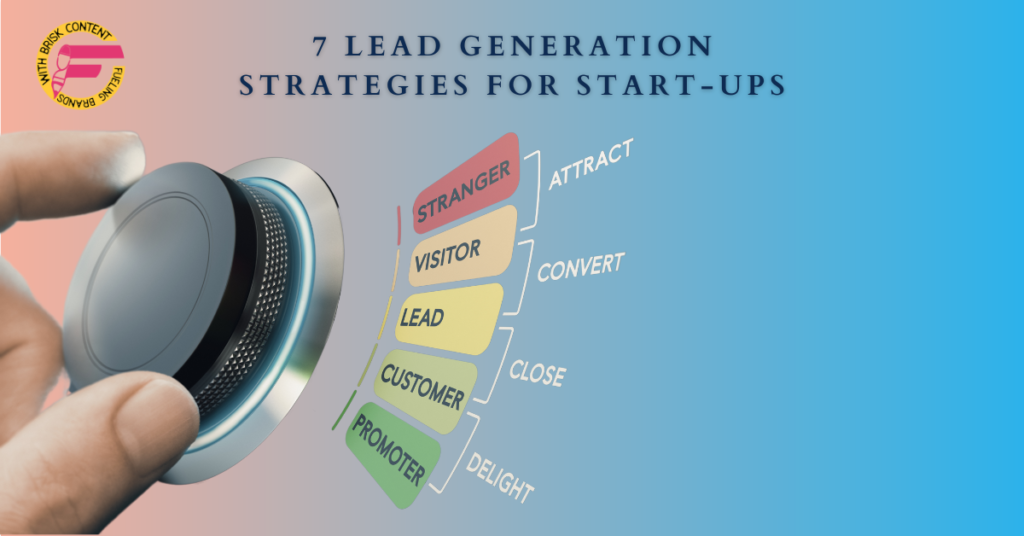
7 Lead Generation Strategies for Start-ups

Are you tired of feeling like your startup is stuck in neutral? You know you have a fantastic product or service, but you just can’t seem to reach the right people. Well, don’t throw in the towel just yet because, with the right lead generation strategies in place, you can quickly and effectively attract new customers and take your business to new heights.

In this article, let us reveal seven proven tactics that can help you generate leads, from leveraging the power of social media to harnessing the potential of referral marketing. So, buckle up, and get ready to learn how to take your startup from struggling to thriving!

  1. Content Marketing:

As a startup, you’re inclined to spread the message about your product or service. But how do you reach your target audience and show them what your brand offers?

This is where content marketing comes in. By creating valuable and relevant content, such as blog posts, videos, infographics, or e-books, you can establish yourself as an industry expert and attract potential customers.

For example, if you sell workout clothes for women, creating a blog that provides workout tips, nutrition advice, and healthy living inspiration can be an excellent way to engage with your target audience and generate leads.

By offering them helpful content, you’re not only showcasing your knowledge and expertise but also providing them with something of value, making them more likely to remember your brand and return for future purchases. So, start brainstorming some topics that would be of interest to your target audience, and let your content do the work of attracting and engaging potential customers.

  1. Social Media Marketing:

As a startup, you have a unique opportunity to harness the power of social media to reach a wider audience and build brand awareness. By creating and sharing content, you can engage with potential customers and show them what your brand has to offer.

Social media platforms also offer advertising options that can help you target specific audiences. For instance, if you sell handmade jewelry, creating a Facebook page and running a social media campaign that targets women interested in fashion and accessories can be an effective way to get your brand in front of the right people.

By showcasing your products in a visually appealing and engaging way, you can entice potential customers to visit your website and make a purchase. So, start by identifying which social media platforms your target audience uses most and create a plan for regularly posting engaging content that showcases your brand and products. With a little time and effort, social media can be a powerful tool for growing your startup.

  1. Email Marketing:

Email marketing can be a powerful tool for reaching your potential customers. And as a startup, it’s a cost-effective way to promote your products or services and build relationships with potential customers.

By sending relevant and personalized emails, you can capture the attention of potential customers and encourage them to take action. Email campaigns can nurture leads, keep subscribers informed of new developments in your startup, and promote your products or services.

For example, if you offer monthly subscription boxes, sending email campaigns to promote your latest box and encourage subscribers to refer friends and family can be an effective way to generate more leads and grow your customer base. By providing subscribers with a sneak peek of what’s inside the box and offering them incentives to refer others, you’re not only promoting your product but also building relationships with your subscribers.
So, start by building a list of email subscribers and creating campaigns that provide value and encourage action. With a little bit of creativity, email marketing can be a powerful tool for growing your startup.

  1. Search Engine Optimization (SEO):

It is vital for a startup to appear at the top of search engine results. And with search engine optimization (SEO), startups can improve their website’s visibility and attract potential customers who are searching for their products or services.

By using relevant keywords, high-quality content, and link-building, you can improve your search engine ranking and increase your chances of being found by potential customers.

For example, if you offer online interior design services, using relevant keywords and high-quality content on your website can improve your search engine ranking for terms such as “online interior design services”.

By creating blog posts or articles that offer helpful tips and advice, you’re not only improving your search engine ranking but also showcasing your expertise and building trust with potential customers.

So, start by identifying which keywords are relevant to your startup and create high-quality content that incorporates those keywords. With a little bit of effort, SEO can be a powerful tool for growing your startup and reaching a wider audience.

  1. Paid Advertising:

Paid advertising can be an effective mode for reaching a wider audience. And for startups, it can be a quick and convincing way to generate leads and promote their products or services.

With options such as pay-per-click (PPC) advertising, display advertising, or social media advertising, startups can choose the type of advertising that best fits their target audience and budget.

For example, a startup that sells eco-friendly cleaning products can use Google Ads to target customers searching for eco-friendly household cleaning products.

By using relevant keywords and ad copy, the startup can ensure that their ads are being seen by potential customers who are actively searching for their products.

Social media advertising is also a great option for startups looking to promote their products or services on platforms such as Facebook or Instagram. By targeting specific demographics and interests, startups can reach a wider audience and generate leads quickly.

So, if you’re looking to grow your startup quickly and efficiently, paid advertising is definitely something to consider.

  1. Referral Marketing:

Have you ever recommended a product or service to a friend or family member? Referral marketing is based on that same concept of word-of-mouth recommendations.

It can be a powerful way for startups to generate leads and build customer loyalty. By offering incentives such as discounts, free products, or exclusive access, startups can encourage existing customers to refer their friends and family to the business.

And let’s be real, who doesn’t love a good discount or freebie? As a consumer, I know I’m more likely to try a new product or service if it’s been recommended by someone I know and trust.

For example, a startup that sells plant-based meal delivery services can offer a discount to existing customers who refer to a friend.

By doing so, the startup generates new leads and builds customer loyalty by rewarding existing customers for their support.

  1. Networking:

As the saying goes, “it’s not what you know, it’s who you know.” And when it comes to startups, networking can be a game-changer. By attending industry events and conferences, startups have the opportunity to meet other entrepreneurs and industry leaders.

Not only can networking help startups build valuable relationships, but it can also lead to potential partnerships and referrals. As a business owner, you will soon realize that some of your best opportunities will come from networking events.

For example, a startup that offers social media management services can attend a social media marketing conference to connect with potential customers and industry leaders.

By doing so, they can not only generate leads but also learn from other experts in their field and stay up-to-date on the latest industry trends.

To wrap it up
Lead generation is like planting seeds for the future success of a startup. By using a mix of the above-mentioned methods, startups can cultivate a thriving customer base. It’s important to know your audience, set clear goals, and use a combination of strategies that fit your budget and resources. Just like a farmer tends to their crops, startups need to continuously monitor and optimize their lead generation efforts to ensure growth and success. With the right approach, and good quality human-generated content your startup can attract and convert more potential customers, leading to a brighter future for your company.

Connect with Content Fayah to know how our content marketing ideas can give a boost to your startup.

Categories
Blogs Content Marketing Content Writing

7 Content Writing Tips to Boost Your Content Marketing

What makes one piece of content rank on Google while another gets buried? What makes one post go viral while thousands of similar ones are ignored?

The popularity of content marketing has led to a tsunami of content online. Millions of blogs, social media posts, videos, and articles are published every single day. The rise of AI has made producing content as easy as typing a search query. Anyone can now generate content in seconds.

But creating content that ranks and goes viral is far more than just putting words together. Content must be informative enough to educate, yet engaging enough to hold attention, and, of course, search-engine-optimized (SEO). It must read effortlessly, yet be compelling enough to keep the reader hooked till the last word.

Your content marketing strategy may be perfectly planned, but if the writing is weak, it will never deliver the results you’re aiming for. An outstanding strategy needs terrific writing to bring it to life

So, are you ready to supercharge your content marketing with exceptional writing? Here are the essential tips that will change the way you create content forever.

7 Tips to Transform Your Content Writing for Better Results

1) Write a Heading that Demands to be Clicked

Your headline is the most important line you will ever write for your content. It is the first thing the audience will read to decide whether to move on to your introduction or leave. In fact, according to Copyblogger, 8 out of 10 people will read a headline, but only 2 out of 10 will read the rest of the article.

A great headline not only grabs attention but also signals value and stirs curiosity. It should make readers feel they will gain something and that they have to continue reading, or they will miss out on something important.

Successful content creators, BuzzFeed and Cosmo, have built an entire media empire almost entirely on the strength of their headlines. Titles like “17 Things Only 90s Kids Will Understand” or “How to Get the Body You Want Without Going to the Gym” trigger an emotional response that makes clicking feel irresistible.

Another great example is HubSpot. Its blogs consistently rank on Google not just because of their content quality, but because their headlines reflect the search intent. Titles like “How to Write a Cover Letter That Gets You the Job” or “The Ultimate Guide to Email Marketing” tell you exactly what you’ll get while making you want it immediately.

So, make sure you spend enough time on curating a headline that ticks all the required boxes, such as:

  • Clear and easy to understand (No cryptic word play)
  • Use numbers, preferably odd ( 9 tips, 5 ways, 7 mistakes)
  • Use words that people actually use (Search intent)
  • SEO-friendly
  • Keep it short
  • Pair it with visuals (featured image or a thumbnail)

2) Hook them Early with a Powerful Introduction

A powerful introduction should hook the reader emotionally. Its first couple of sentences should address a pain point with a powerful question or a shocking stat. It should then aim to establish the relevance of the topic to their life and promise a solution worth reading.

It should never begin with a dictionary definition or a generic statement like “In today’s world…” — these are the fastest ways to lose a reader who was already curious enough to click.

James Clear, author of the globally bestselling book Atomic Habits and one of the most subscribed newsletter writers in the world, almost always opens with a single short, punchy sentence or a surprising fact that stops you cold. His blog post on habits opens with — “Every action you take is a vote for the type of person you wish to become.” One sentence. Entire attention captured.

Your introduction also has a critical technical job to do. To rank with google it must contain your primary SEO keyword, ideally within the first 100 words. Google scans the opening lines of your content for SEO keywords to determine its relevance to a search query. By adding keywords naturally in the introduction, you can ensure your content ranks for a particular search query.

Here are the most effective techniques for writing an introduction that hooks:

  • Open with a surprising fact or powerful question ( address pain point)
  • Start with a bold statement (challenges commonly held beliefs)
  • Establish emotional connection
  • Use SEO keywords naturally
  • Promise value

3) Use Stats and Data to build Authority

Research by Demand Gen Report found that 96% of B2B buyers want content with greater input from industry thought leaders. When you cite credible research, you position yourself not just as a writer but as an authority. You become a source worth trusting, referencing, and returning to.

Content Marketing Institute publishes an annual report packed with industry data that is referenced by marketers globally every single year. Neil Patel regularly publishes data-backed case studies on his blog — articles like “I Analysed 1 Million Headlines — Here’s What I Learned” routinely generate hundreds of thousands of visits because they offer something genuinely unique.

Google rewards well-researched, cited content with higher rankings. AI engines like ChatGPT and Perplexity actively draw on and credit content that includes verifiable statistics. In the new era of search, your data is your visibility.

Follow these rules when using data in your content:

  • Use data to open loops — a shocking figure makes readers curious for the explanation
  • Cross-check your statistics — verify the same figure across multiple sources before citing
  • Prefer primary sources — link directly to the original report, not a blog that quoted it
  • Keep data current — aim for statistics from the last two to three years maximum

4) Make your Content Visually Rich

According to John Medina, molecular biologist and author of Brain Rules, people retain 65% of information when it is paired with a relevant visual — compared to just 10% retention from text alone.

A relevant image or graphic placed at the right moment breaks the monotony of continuous text and makes the overall content feel more inviting and easier to digest. The result is a reader who stays longer and absorbs more.

The infographic presents the information in a concise and visually engaging format. Complex processes, step-by-step guides, and comparative information that would take hundreds of words to explain in text can be communicated in seconds through a single well-crafted infographic.

Statistics can be presented as a bar chart, a pie chart or other data visualization graphics, which the brain processes instantly and remembers.

From an SEO perspective, visuals matter more than most writers realize. Properly optimized images with descriptive file names, compressed file sizes and keyword-rich alt text can drive significant traffic through Google Image Search. Infographics in particular are among the most linked-to content formats on the internet, earning backlinks that strengthen your domain authority.

Here is a practical guide to choosing the right visual for your content:

  • Infographics — ideal for presenting processes and comparisons
  • Custom charts and graphs — perfect to represent data and statistics
  • Photos and illustrations — visually pleasing images to build an emotional connection or break up long text sections
  • Videos and GIFs — highly effective for demonstrations and tutorials

5) Write only for the Target Audience

Knowing your audience is the foundation for everything else. The tone you adopt, the examples you choose, the problems you address, and the solutions you offer must be shaped by a deep understanding of who you are writing for.

Audience research also directly strengthens your SEO strategy. The keywords your audience uses when searching for solutions to their problems are the exact keywords your content should be built around. Understanding your audience’s language, their questions and their pain points is the most effective form of keyword research.

Here are the most effective ways to research and understand your audience:

  • Google Analytics — reveals who is visiting your content and what they read
  • Social media insights — Facebook, Instagram and LinkedIn provide behavioral data (tone, language)
  • keyword research tools — Google Keyword Planner, Ahrefs and SEMrush show exactly what your audience is searching
  • Surveys and questionnaires — ask your existing audience directly what content they want
  • Online communities — Reddit, Quora and niche Facebook groups reveal the pain points
  • Competitor analysis — study which content your competitors publish that performs best and why

6) Add Freshness with your Unique Perspective

In an era where AI can produce technically flawless content in seconds, your humanity is your most valuable differentiator. Adding a personal touch is about allowing your genuine voice, values and perspective to come through in everything you write. It is the difference between content that informs and content that connects. Connection is what turns a casual reader into a loyal follower and, eventually, a paying customer.

When your audience catches a glimpse of the real person or people behind a brand, it creates a sense of familiarity that no amount of professional copywriting can manufacture.

Neil Patel built a multi-million-dollar digital marketing empire largely on the back of transparent, personal content — openly sharing his own failures, revenue figures, mistakes and lessons. His readers trust him not because he is perfect but because he is honest.

Here are the most effective ways to add a personal touch to your content:

  • Share your own experiences and stories — real examples of both failures and successes
  • Express genuine opinions — do not be afraid to take a position on industry debates
  • Show behind the scenes — give readers a glimpse into your working process
  • Use conversational language — write the way you speak
  • Use your name and face — dramatically increases readers’ trust and content credibility

7) Master SEO and GEO to Dominate Search

At its core, Search Engine Optimization (SEO) in content writing means understanding what your audience is actively searching for and crafting content that answers those searches. For years, SEO meant researching your keywords and placing them strategically to improve ranking. But the rise of Artificial Intelligence has fundamentally changed how search engines evaluate and rank content. The content writers who are still playing by the old rules are falling behind.

Today’s search engines are powered by AI tools like ChatGPT Search, Perplexity and Microsoft Copilot. These tools do not simply scan content for keywords. They read, evaluate and, assess it against a sophisticated set of criteria that goes far beyond keyword frequency.

This evolution has given rise to an entirely new discipline called Generative Engine Optimization (GEO). As AI-powered search tools become the primary way millions of people find information online, optimizing your content to be discovered, cited and referenced by these AI engines is rapidly becoming as important as traditional SEO.

AI search tools do not just rank content, they synthesize it and present parts of the content that exactly answer the point. Content that is well-structured, rich in original data, and properly cited is likely to be selected by AI engines as a trusted source.

Here is how to optimize your content for both SEO and GEO:

  • Write with genuine expertise
  • Structure content clearly
  • Match search intent precisely
  • Cite credible sources
  • Cover topics comprehensively
  • Keep content updated

A Word About Artificial Intelligence AI

No conversation about content writing in 2026 is complete without addressing Artificial Intelligence. Used intelligently, AI can make you a significantly more productive writer.

As a research and ideation tool, AI is extraordinary. It can brainstorm topic ideas, generate multiple angles, suggest relevant statistics, create content outlines and help you overcome the paralyzing blank page that every writer knows too well. Some of the best AI tools for content writers include Jasper, Claude and Surfer SEO.

However, AI-generated content comes with serious limitations. The AI content is generic, repetitive and oddly formal. More seriously, AI can generate incorrect information, presenting fabricated statistics and non existent citations with complete confidence. To learn more about drawbacks of using AI unchecked, read our blog ‘Potential Pitfalls of Using AI for Marketing.’

The bottom line is that AI is like your 24-hour assistant who is brilliant, tireless and enormously useful. But you are the boss. And on any topic that truly matters, your insight and humanity will always produce better content than any machine ever could.

Here is how to use AI smartly:

  • Use it for content ideation and outlining
  • Verify every statistic independently
  • Never publish unedited AI content
  • Add your human layer

BOTTOM LINE

The fact that Content Marketing delivers real results has been proven time and again by various studies. Companies have significantly boosted their ROI by leveraging the power of content marketing.

The key to successful content marketing is well-written, unique and impactful content. One must understand that writing for digital marketing is different from traditional marketing. In the digital world, your piece has to work hard to be visible in the sea of content. Content marketing may be cheaper than traditional marketing, but it requires a talented workforce with certain skills to do it effectively.

The bottom line is that business owners need to take an active approach to their content writing to get better results from their content marketing efforts. By following the guidelines stated above, you can ultimately transform your content with ease from ‘ok’ to ‘awesome’, and your content marketing can reach a wider audience and increase engagement. 

FAQ’s

Q: What is the difference between content writing and content marketing?

Content writing the actual process of researching, drafting and polishing written material such as blogs, social media posts, newsletters and website copy. Content marketing is the strategy that determines what content is created, for whom, through which channels and towards what business goal.

Q: How long should a blog post be for the best SEO results?

There is no universally perfect length for blogs. The key principle is that your content should be exactly as long as it needs to be to answer the reader’s question comprehensively and authoritatively. Focus on depth and relevance over word count.

Q: If I use AI to write my blog content, will it affect my Google ranking?

AI-assisted content will not automatically hurt your Google ranking. Google’s official position is that it does not penalize AI-generated content simply for being AI-generated. What Google does penalize is content that is low quality, unhelpful, unoriginal or clearly produced without genuine human expertise.
The practical implication for content writers is to use AI as a powerful assistant for research, ideation, outlining and first drafts, but always bring your own expertise, voice, verified data and personal perspective to the final content.