Categories
Content Marketing

Content Pillar Examples To Boost Your Brand on Social Media

If you find it hard to keep your social media content fresh and on track, content pillars can help. Consider them as the main concepts or themes that help shape everything you post. This will help you stay consistent and connected with your audience. With clear pillars, your content feels purposeful, your brand voice shines, and planning becomes a breeze. 

Whether it’s educating your followers, inspiring them, showcasing behind-the-scenes moments, or gently promoting your products, content pillars keep your strategy strong and engaging. In this blog, we’ll explore what content pillars are, why they matter, and how to use them to boost your brand’s presence online.

What Are Content Pillars and Why Do They Matter?

Content pillars are the main topics or themes your brand focuses on across its social media channels. Think of them as your brand’s core ideas or “content buckets.” Every post you create should fit into one of these pillars. This makes your content fresh, aligned with your brand, and easier to plan. Whether you’re posting on Instagram, LinkedIn, or Facebook, these pillars ensure your messages stay consistent and relevant.

Why do they matter? When you have strong content pillars, you don’t have to scramble for ideas every day. They also help you build trust with your audience by consistently delivering value on topics your audience cares about. Plus, strong content pillars boost your brand’s authority and visibility with both your followers and search engines.

How Educational Content Builds Trust and Value

Educational content is one of the best ways to build trust and add real value to your brand. When you share useful tips, how-to guides, and interesting facts about your niche, you don’t just sell; you become a trusted expert that people want to listen to. This shows your audience you care about their needs and want to help solve their problems.

Key benefits of educational content:

  • Builds your brand’s credibility
  • Helps followers feel confident in choosing you
  • Creates long-lasting loyalty
  • Use easy, straightforward language and real examples
  • Differentiates your brand and helps it stand out from competitors. Discover the best SEO content writing software to create high-performing posts quickly.

How to Inspire Your Audience with Motivational Posts

Here’s how you can inspire your audience with motivational posts:

  • Share Positive Quotes: Use optimistic quotes that resonate with your brand and the targeted audience.
  • Tell Success Stories: Showcase moving stories of success, whether they come from customers, workers, or the journey of your brand.
  • Create Actionable Challenges: Encourage followers to join simple challenges that motivate progress or positivity.
  • Use Visuals: Pair messages with eye-catching images or videos to make them more impactful.
  • Celebrate Small Wins: Share weekly or monthly wins to keep the energy positive and encouraging.
  • Express Gratitude: Show appreciation for your community to build stronger emotional connections.
  • Ask Questions: Prompt your audience to share what inspires or motivates them to foster engagement and conversation.

Tips for Promoting Your Products Without Overwhelming Followers

Here’s a simple step-by-step guide on how to promote your products without overwhelming your followers:

Step 1: Start by mixing your posts. Don’t just share product promos. To keep your feed interesting, add fun stories, useful tips, or other useful material.

Step 2: Focus on showing how your product helps solve problems or makes life easier for your audience. Talk more about benefits than just features.

Step 3: Tell stories about your product in action. Share customer experiences, behind-the-scenes looks, or how your product is made to build a connection.

Step 4: Use clear, friendly calls to action. Invite followers gently with phrases like “Check this out” or “Try it today.”

Step 5: Avoid posting too many product promotions in a row. Give your audience some breaks to keep things fresh.

Step 6: Offer exclusive deals or early access to your followers to keep them excited about your products.

Step 7: Engage with your audience. Reply to comments and questions quickly to build trust and show you care.

Strategies to Grow Your Community with Engaging Content

These are some important strategies that can help you grow your community with engaging content:

  1. Understand your audience deeply to create content that truly interests and helps them.
  2. Share valuable, fun, and relatable content consistently to keep followers coming back.
  3. Use interactive posts like polls, questions, and live videos to encourage participation.
  4. Share behind-the-scenes looks to show that your brand has a real side. and spotlighting community members.
  5. Host contests, challenges, or giveaways to motivate active engagement and excitement.
  6. Answer comments and texts quickly and personally to build trust and keep conversations going.
  7. Collaborate with social media influencers or like-minded brands to reach a wider, relevant audience.

How to Find Content Pillars That Fit Your Brand

To find the right content pillars, you have to start by understanding your brand task, values, and your audience’s interests. Ask yourself these questions:

  • What expertise or value can my brand offer?
  • What topics do my followers engage with the most?
  • What goals do I want to achieve? (e.g., awareness, sales, engagement)

Look at your past posts to see what worked well. Combine this insight with your brand personality to pick 3 to 5 pillars that feel authentic and offer variety, but keep your messaging consistent.

How to Track and Improve Your Content Pillars’ Impact

Once you start posting based on your content pillars, it’s important to track which post types get the most likes, comments, shares, and clicks. Use your social media platform insights or tools like Google Analytics to monitor performance.

Keep an eye on what your audience likes most, and change your pillars over time to focus more on those themes. This data-driven approach helps you grow your brand and get better results with less guesswork.

Conclusion

Content pillars are a powerful tool to bring focus and consistency to your social media presence. They help your brand deliver clear, valuable messages while saving time on content planning. With well-chosen pillars, each post serves a purpose, whether educating, inspiring, connecting, or promoting,g making your brand more recognizable and trustworthy.

By tracking how your pillars perform, you can improve your approach over time. This data-driven method strengthens your social media without guesswork. Embrace content pillars to create meaningful, consistent content that connects with your audience and drives business goals like growth and engagement.

If you’re ready to build a high-impact strategy that delivers real results, Content Fayah can help. Our expert team specializes in data-backed content marketing that boosts visibility, builds authority, and fuels growth. Get started today for tailored content that works.

How many content pillars do I need?

Start with 3–5 key pillars. This keeps your social media content organized, consistent, and relevant while giving you enough variety to engage different audience interests.

How often should I post under each pillar?

Maintain balance by rotating your pillars weekly. This ensures your feed stays diverse, engaging, and aligned with your brand’s goals without overwhelming your audience.

Can I change my content pillars later?

Yes, review them every few months. As your brand grows or your audience’s needs shift, adjust your pillars to reflect new goals and improve overall engagement.

Categories
Blogs Content Marketing

7 Content Hacks for a Successful B2B Marketing

As we enter 2025, effective content marketing remains the foundation for B2B success. However, things are changing; AI is here to aid us and be a partner in our marketing strategies. The B2B marketing team needs to move with this change and get ahead of others. But what AI lacks is the human touch; hence, teams. It is the best tool for B2B success as it brings awareness about your products, and gives trust, leads generation, and traffic generation. 
We shall discuss seven hacks to improve your content marketing strategy.

7 Important Content Marketing Hacks for B2B Success

1. Craft a Well-Organized Content Calendar

The right planning tool for a B2B marketing team is a content calendar. As a strategic road map, it enables planning and scheduling content ahead of time. Organizing your topics, deadlines, and distribution channels helps align your message with the key events or product launches tied to the seasonal trend.

 This proactive approach streamlines the content creation and makes collaboration easier for team members. A content calendar offers a visual of weeks or even months for your content strategy, helping you catch gaps and messaging overlaps more easily.

 It allows consistent posting frequencies – contributing to trust, engagement, and audience-building from your followers’ side. Last but not least, effective content calendars make your team’s work possible by delivering good, engaging, and meaningful content to the audience.

2. Understand and Classify Your Audience Segments

The core of successful content marketing is understanding the audience for content. Audience segmentation splits your broader audience into smaller, more defined subgroups based on specific characteristics, such as demographics, interests, or behaviors. This approach enables you to create the right kinds of content to meet each subgroup’s special needs and preferences.

 A technology company might have different content for IT managers than for other end-users. Using data analytics tools and customer feedback, you can create detailed buyer personas that guide your content creation process. This way, your messages are relevant and engaging, increasing the likelihood of conversion.

 In addition, segmented campaigns often have higher engagement rates because they speak directly to the audience’s pain points and interests. Knowing your audience deeply in a competitive B2B landscape can be the difference between you and competitors who take a more general approach.

3. Produce Content That Remains Relevant Over Time

Evergreen content is a rich element of any B2B content marketing. Unlike news content or article-driven pieces, which quickly lose relevance over time, it remains useful far into the future. 

The basis of such writing usually concerns central industry subjects for which people could use guidance that would last forever and a day. Such content saves time in the long term and guarantees consistent website traffic by attracting visitors over months or years. 

To search engine-optimize by using relevant keywords. Update the content periodically to keep it fresh and aligned with your niche’s current trends or developments. Investing in evergreen content builds a robust library of resources that can establish your authority in the field and nurture leads over time.

4. Expand Your Reach Across Multiple Channels

In today’s digital world, depending on a single platform for distribution can limit your reach and engagement potential. Expanding your reach across multiple channels is key to capturing a wider audience and maximizing the impact of your content marketing efforts.

Consider using blogs, videos, infographics, podcasts, and social media posts to effectively engage with different segments of your audience. Each platform has its own strength; for instance, video content may be best suited for social media, but in-depth articles are better for LinkedIn or industry blogs. This will increase the chances of engagement and sharing, depending on the platform’s specific style and audience preferences.

Furthermore, diversifying your reach allows you to experiment with different types of content and discover what resonates best with your audience. Ultimately, this multi-channel approach broadens your visibility and fosters deeper connections with potential clients.

 5. Maintain Consistency in Your Content Strategy

Consistency is also a key to successful content marketing. Top-tier content published from time to time helps you achieve the audience’s trust and thereby positions your business as an expert in that sector. Whether it’s weekly blog updates or monthly webinars, maintaining such a schedule builds anticipation among viewers and provides them with fresh information regularly.

Maintaining consistency helps you stay at the forefront of consumers’ minds and boosts your website’s search engine results because search engines prefer sites that consistently add new content.

Maintaining a consistent voice and style for all channels helps strengthen brand identification and facilitates audience recognition and connection. Establishing rules for frequency, tone, and style that all team members can follow can help you achieve this level of consistency.

6. Implement SEO Strategies to Boost Online Presence

SEO is important for increasing the visibility of your B2B content online. By optimizing your content with relevant keywords and phrases your potential customers search for, you increase the likelihood of appearing higher in search engine results pages (SERPs). Begin by researching keywords to identify terms that align with your business goals and customer queries. Incorporate these keywords naturally into all content elements, including titles, headings, meta descriptions, and throughout the body text to improve its relevance to search engines without sacrificing user readability. 

Technical aspects of SEO – including site speed and mobile-friendliness – can improve the user experience while making a ripple effect on rankings. Moreover, blogging older posts with new information or even different keywords can be relevant. If SEO is part of your content strategy, you can drive more organic traffic and position yourself as an authority within your niche.

7. Evaluate and Enhance Your Content Performance

Continuously evaluating and optimizing your content marketing efforts is the last hack to B2B success in 2025. Analytics tools let you track KPIs such as website traffic, engagement, conversions, and social shares. It helps you see which types of content resonate best with your audience and which need adjustment or improvement.

For instance, if certain topics generate higher engagement than others, consider creating more related content or exploring those themes further. Additionally, pay attention to user feedback through comments or surveys; this qualitative data can provide valuable insights into what audiences find most valuable or engaging about your offerings.

Optimization should be an ongoing process. Using analytics, you’ll experiment with distribution formats or channels to improve results. By committing to analysis and optimization, you ensure your B2B marketing strategy remains agile and responsive to changing market dynamics.

Conclusion

These seven hacks help you build a strong foundation for B2B content marketing in 2025. Tie strategies to business goals, understand audience pain points, and create evergreen content for lasting value. Diversify channels while staying consistent to boost reach and brand identity.

Regularly review metrics to refine what works, keeping you ahead in the digital landscape through planning, insights, longevity, and optimization.

If you’re ready to supercharge your B2B content with proven hacks that drive leads and growth, Content Fayah can help. Our experts deliver data-driven strategies tailored for success. Get started today for scalable results.

What is a content calendar in B2B marketing?

A content calendar is a planning tool that schedules topics, deadlines, and channels ahead of time. It aligns content with business goals, ensures consistency, and spots gaps for better engagement.

Why is evergreen content important for B2B?

Evergreen content stays relevant long-term, driving ongoing traffic and leads. Optimize it with SEO keywords and update periodically to maintain authority and value.

How do I measure B2B content performance?

Track KPIs like traffic, engagement, conversions, and shares using analytics tools. Use insights to optimize high-performers and refine underperformers for better ROI.

Categories
Blogs Content Marketing

Why do identity verification platforms need a content marketing agency?

Introduction

It is super important to keep our online identities safe. Identity checks help keep us safe on the internet or help us with immigration and study abroad documentation. From police checks to document verification and from Apostille to notarization, identity verification platforms are pivotal. 

However, marketing an identity verification platform is a tough job. Although everyone needs it, but its a trick to market these services in an engaging and intriguing format.

Companies doing this vital work face a problem with getting their message out to the right people. That’s where writing experts can step in and lend a hand.

A good content marketing agency knows how to spread the word about identity verification in a way that sticks. Let’s examine why making deals with a content marketing agency is a smart choice for identity guardians. 

Here, we have listed the 5 most important reasons why an identity verification platform should hire content writers to create blogs and relevant content for its brand.

Blogs Explain Complex Ideas in Simple Terms

Many people find identity verification confusing. There are a lot of mechanical or technical things concerned. A smart content marketing agency understands how to simplify these complex ideas. 

They can design blog posts, videos, and infographics that clarify how identity verification works without using excessive language. This helps more people understand why it is vital and how it can keep them safe online.

It Helps to Trust with Potential Customers

When it comes to identity verification, trust is regarded as crucial. People want to know they can trust a platform to secure their information. Content marketing agencies can help establish faith by presenting examples of how the platform has assisted actual individuals and businesses. 

They can also develop material that demonstrates the human side of the business, such as featuring team members or discussing the company’s values. This type of content helps people become more comfortable with the idea of using an identity verification service.

Keeps Audience Up-to-Date with Industry News

The realm of online security is ever-changing. New risks emerge on a regular basis, and new techniques to protect against them arise. A content marketing agency can assist identity verification platforms in staying up to date on these developments. They can publish timely news regarding new security threats or platform updates. This indicates the company’s commitment to protecting its customers and establishes

Strategies to connect with right Audience

Variety of Content Attracts Target Audience

Different people like to consume information in different ways. Some prefer reading articles, while others might prefer watching videos or listening to podcasts. A content marketing agency can create a mix of content types to appeal to a wide range of people. This variety helps the identity verification platform reach more potential customers and keep them engaged over time.

People choose to consume information in a variety of ways. Some people enjoy reading articles, but others prefer watching movies or listening to podcasts. A content marketing business can create several types of material to appeal to a broad audience. This variety enables the identity verification platform to contact more potential clients and keep them engaged over time.

You can Reach the Right Audience.

Not everyone needs identity verification services, but for those that do, they are incredibly important. Content marketing services specialize in discovering and contacting the right people. They understand how to leverage search engine optimization (SEO) and social media to push material in front of people who are likely to want identity verification. This focused strategy enables the platform to connect with potential consumers more effectively.

People choose to consume information in a variety of ways. Some people enjoy reading articles, but others prefer watching movies or listening to podcasts. A content marketing business can create several types of material to appeal to a broad audience. This variety enables the identity verification platform to contact more potential clients and keep them engaged over time.

How Content Fayah can help to market the Identity Verification Platform

Working with us offers several benefits for identity verification platforms. We can assist in explaining complex ideas, establishing trust, staying current, reaching the correct audience, and producing diverse content. All of these aspects work together to help the platform grow its customer base and establish itself as a credible name in internet security. In a world where protecting our digital identities is more important than ever, smart content marketing might have a huge impact on these key services.

Categories
Blogs Content Marketing

Going Viral: Is It Luck or a Content Marketing Formula?

Ever wonder why some content spreads like wildfire online? I’m just kidding, but marketers need to know that, right? Is going viral just dumb luck, or is there a secret formula?

Going viral” in digital marketing seems to be the holy grail. One minute, you are posting, and the next, your content reaches millions, creates conversations, and drives remarkable traffic. Is viral success by pure luck, or is there a method to the madness? Or sometimes, just the right place, right time. Otherwise, it’s just a perfect content strategy. In this blog, we will discuss whether virality is just an accident or if it’s the result of a well-executed marketing formula and how you can make it big, too.

 Let’s dig in and find out with this blog.

The Allure of Viral Content

There is nothing quite like having online content shared with many people. It spreads fast and far, gets people talking, and puts your brand on the map overnight.

But here’s the thing: if viral success were predictable, you’d always get it right. What works once doesn’t work the next time – which makes many people tell you it’s a matter of luck.

The Role of Luck

Let’s be real. Luck does play a part in viral content. You can’t control everything. Sometimes, the stars just align. Your post hits at the perfect moment. The right influencer shares it. And boom – you’ve gone viral.

But relying on luck alone is a risky strategy. It’s not sustainable. And it’s not something you can build a business on. For example, a meme or video could get picked up because it aligns with a current event, a social issue, or viral challenge. This kind of virality feels like winning the lottery.

Luck Isn’t a Business Strategy

Going too much by luck is something quite dangerous. If you build a business or try to grow your brand, then dependence on a mythical concept of luck wouldn’t promise anything to provide you with constant results. Moments that usually lead to going viral happen when no one expects it and can’t be easily replicable. Thus, you cannot depend on the chance of your content going viral. And yet, companies and content creators need what they can control: quality and sharable content, knowledge of whom they serve, and consistency. A good content strategy will grow steadily and, in the long run, instead of betting on luck to give you that one-time boost.

It’s thrilling to play the luck card, but you can’t depend on that. The surest way to guarantee long-term success- whether or not you catch the lucky break- is by building a foundation of smart content marketing.

The Content Marketing Formula

While there’s no foolproof formula for viral success, the most effective strategies help stack the deck in your favor. These are  some of what the pros pay attention to:

1. Know Your Audience: Who are you trying to reach? What do they care about? What makes them tick? The better you know your audience, the better you can create content that really speaks to them.

2. Be an Emotion Trigger: Generally speaking, viral content hits an emotion buried within you. It makes you either laugh or cry or even get angry. Whatever it is, it should evoke some form of reaction. Neutral stuff is hard to go viral.

3. Shorten it: Your message must be easily digested, understood, and passed on. Complex content makes it hard to go viral. If your content cannot be quickly digested and transmitted, it will not go viral.

4. Be timely: Viral content often follows current events or trends. Stay on top of what is happening in your industry and the world.

5. Make it visual: Images and videos are more likely to be shared than text. People are visual, so give them something eye-catching.

6. Encourage Sharing: Make sharing more effortless for people. Use social sharing buttons. Ask people to share if they have found value in your content.

7. Utilize Influencers: Building a relationship with influencers in your niche will catapult your content into more significant virality. Their share can kick-start the process of going viral.

8. Make it Mobile Friendly: Most social media browsing is accessed on mobile devices. Ensure that your content looks great and works great on small screens.

That’s why it is essential to create consistently good content. Don’t fully depend on viral. Build a solid content strategy that provides value to your audience over time.

The Power of Persistence

Going viral can seem like instant success, but what people don’t see is the hard work that usually leads up to it. Behind most viral hits, there are countless hours of effort, multiple failed attempts, and a lot of learning.

Creators and marketers who achieve viral success often spend months or even years creating content that goes unnoticed. They experiment with different ideas, formats, and platforms. Sometimes, content falls flat. Other times, it gains a little traction but doesn’t explode. But they don’t stop. They keep trying, adjusting their approach based on what works and what doesn’t.

Persistence is key because the more content you produce, the more chances you have of finding that viral moment. Every post or video is a new opportunity to learn what your audience responds to and how trends shift over time. It’s not just about luck or a single “perfect” post; it’s about consistently showing up and refining your strategy.

Continuing to create, experiment, and learn increases your chances of eventually hitting that viral sweet spot. Even if you don’t go viral right away, persistence helps you build a loyal audience, gain valuable insights, and improve your content. Viral success may take time, but persistence ensures that when the moment comes, you’re ready for it.

Balancing Art and Science

Going viral is not just about luck or strategy but a mix of both art and science. On the one hand, it speaks of the art of coming up with something new, interesting, and memorable content. Here, you think outside the box, come up with a great story, and develop visuals or messages that would make a big capture in people’s attention. Creativity will make the content stand out among this sea of information and what is needed in order to emotionally connect with the audience.

There’s science on the other end – the analytical approach to understanding your audience and using data to optimize your content. That takes you to cutting and sorting through metrics in terms of such things as engagement rates, audience demographics, and how your content performs and seeing where you can improve and where you cannot. All this can be outlined by analyzing data: when to post, through which platform, and with what types of content.

The Takeaway

Going viral is neither an art nor a science. Put, it involves the right balance between new, engaging content and enlightened data insights. Content creators or marketers who successfully blend both elements and science have much better chances of success with viral messaging and longer relationships with audiences.

Conclusion

So, Is it luck or a content marketing formula? Let me tell you, and it is a bit of both. Yes, you have an element of luck, but you can stack the odds in your favor. The ability to understand the target audience, quality content, and best practices all increase the prospects of viral success.

Remember, maybe your content won’t go viral, but these strategies will help you build a much stronger, more engaged audience over time. And that’s worth more than any fleeting viral moment.

Keep writing. Keep learning. And who knows? The next piece of content you create might just be the one to make that super-viral-rainbow-troll-town hailed newsbreak.v

Categories
Blogs

9 Employee Engagement Metrics Every Manager Should Calculate

As a professional human resources manager, employee engagement should be at the top of your priority list. Corporate has come a long way, from customer satisfaction being the centric role to ensuring the company’s employees are as engaging as they should be.

Tracking and considering Employee engagement metrics are vital ways to pay attention to employees. Focusing on the company’s workforce becomes more critical as working methods become more secluded and complicated.

Employee engagement metrics help businesses identify which areas of employment need improvement and furnishing. These metrics help create a healthy, happy, satisfied, and motivated workforce for the company, which is crucial for long-term success.

What are Employee Engagement Metrics?

Employee engagement is the capacity and extent to which a person can be committed and passionate about their work. It could be described as dedication to his day-to-day work, time investment, and extra effort for success.

Employee engagement metrics help HR professionals and managers understand where their teams need help and support. The metrics also provide job descriptions, job feedback, employee feedback, relationships with seniors and colleagues, job recognition, and personal wellness for the company’s progress.

There are several ways to measure employee engagement metrics, and as a manager and HR professional, you should measure these nine metrics for future growth and success.

  1.  Employee Net Promoter Scores (ENPs)

ENP is a well-known metric for measuring employee engagement. This method tests an employee’s loyalty to the company. 

This is measured simply by a survey asking employees: “On a scale of 1-10, how likely are you to recommend our company to your friends and peers?”

The answer is then measured and divided into three different categories of employees, i.e., promoters, passives, and detractors.

  • Promoter: If an employee responds with a 9 or 10, it indicates that they are satisfied and happy with the company.
  • Passives: Employees who give a response of 7 or 8 are essentially neutral toward the organization; they are neither happy nor unhappy. They will neither endorse it nor disparage it to others.
  • Detractors: Responses below six fall under this category. They are not satisfied with the company. 
  1.  Non-attendance

The higher employee absenteeism, the lower the company’s engagement rate. If an employee or a group of employees is taking too much leave, they’re probably bored or uninterested in their office work. 

Measuring absenteeism helps us track employee engagement. Probable reasons for not attending the office regularly could be a poor working environment, low maintenance of the surroundings, poor governance, lack of work-personal life balance, etc. Less attendance can result in a heavy workload for the employee.

  1.  Work-life balance

A balance between work and personal life is essential for an employee’s health and wellness. By supervising an employee’s wellness metrics, you can identify challenges and issues that might not be comfortable enough to bring up in a meeting or employee engagement measurement. 

Employees who balance work and personal lives can be more engaged with the company.

  1.  Work Recognition

Workers want to be appreciated and complimented for their work. Recognizing their efforts and hard work is a low-cost, highly effective way to improve employee engagement. 

Kindness comes in both directions; noticing their day-to-day tasks being completed on time and appreciating them will make them feel recognized and motivate them to do more hard work to receive compliments from their manager.

  1.  New Hire Engagement Rate

The new hire engagement rate is the percentage of new hires who quickly committed to their work within the first 90 days. 

High new hire engagement rates indicate that the company is excellently recruiting new hires and herding them to work quickly.

  1.  Customer gratification

The logic behind this crucial metric is simple: happy employees mean happy customers. If your employee is satisfied with his work and engaged with the business, then there is a high chance that your customers will be satisfied and happy.

To measure whether one is inversely or directly related to the other, measure the ENP and customer happiness scores. If both of these are high, the company is doing great with engaging employees, but if the score is low, it needs polishing for success.

Engaged employees are always hungry for good work and eager to learn about new things. They surrender to providing high-quality work and customer gratification.

  1. Employee turnover rate

Highly engaged employees are less inclined to resign independently, contributing to the employee turnover rate. The percentage of employees that leave the company each year is known as the employee turnover rate.

Turnover is one of a business’s highest costs; lower turnover leads to more productivity, less disruption, and increased cohesion.

Employees expect to be supported, have good relations at the workplace, be developed, and face challenges for future growth. A satisfied employee has more chances for long-term tenure in an organization.

  1.  Employee retention

Employee retention is quite the opposite of employee turnover. The ability to keep employees for a long time indicates high employee engagement.

To create a productive, long-lasting workplace, you must keep your best employees on staff and devoted to their duties.

  1.  Average output

It’s pretty simple to understand that it could be employee engagement if your marketing or business loses profitability or productivity.

The company will always grow if employees are fully engaged and strive to provide premium-quality work. However, if the business experiences the opposite of growth, the employees should be more engaged and motivated.

Above and beyond employee engagement metric

While it’s essential to ensure employee engagement, the primary purpose behind measuring these metrics is not that the scores should be 10/10. There are so many advantages to ensuring employee engagement; it helps you understand what spots need to be appropriately filled.

What you do with your employees and how much their survey feedback matters to you is just as important as calculating these metrics. Learn the points you find essential in surveys and work accordingly. Your employee’s happiness is just as important as your customer’s satisfaction.
In the long run, engaged employees are happier, more loyal, and perform better in the organization. Your employees are the reason for your present and future success.

Categories
Blogs Content Marketing

17 Massive Content Marketing Examples to Boost Your Brand

Are you a new marketing company seeking inspiration and case studies to understand better how branding and promotion may strengthen your business? Worry not because you are exactly where you should be.

In this digital era of business, marketing has become an easy path to success. There are multiple ways and roots to promote your brand like a pro.

Successful entrepreneurs and brands are always here to help and figure out how it all works because they have been through exactly what you’re going through.

We have numerous examples of different brands to boost your fresh new startup company; let’s learn briefly about them and how they’re marketing their products. 

Augmented Reality Examples

  1. Ikea

Who doesn’t like spending time at Ikea, the Swedish furniture brand? We all enjoy roaming the aisles of the lavishly furnished market. Some consumers who are too busy and occupied to purchase new furniture might be unable to find the time to visit the store.

Hence, Ikea has created an app where customers can place furniture in their homes without even buying it. Yes, you read that right. Without buying, we can now determine which art piece will suit our home’s wall.

This is an excellent way of enhancing the products and marketing them smartly.

  1. L’Oreal Paris 

The new L’Oreal Paris app “try before you buy” features a tool that allows users to quickly try on a product virtually and figure out what shade of lipstick or blush will suit their skin tone without even buying it. 

This feature allows customers to try the product without even purchasing it from the comfort of their home.

This is an excellent idea for promoting or marketing your product while making customers happy with the new updates.

  1. McDonald’s 

McDonald’s new customer service feature, “question time,” helps people understand what ingredients are in the food they’re about to consume. 

We can now determine what product is used in the burger patty we’re about to devour. This feature helped McDonald’s build connections with customers by being honest. 

Customers can feel more free and connected with the brand. It also drove authenticity across different platforms. 

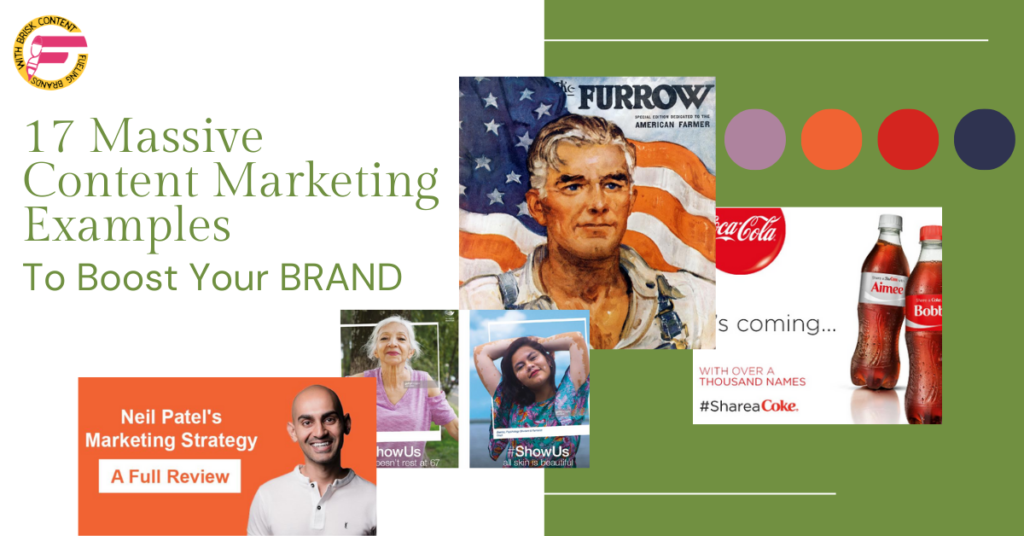
  1. Coca-cola

Coca-Cola launched a new marketing campaign called “Share a Coke,” in which the beverage company printed familiar names on the bottle.

This step by the brand touched the sky with success as people started buying the product just for the name on the bottle.

Who doesn’t enjoy talking about themselves, after all? 

Seeing your name on a bottle sparked joy and conversation, leading to excellent product marketing.

  1. Rolex

Visualization plays a crucial role in marketing. People buy what they find attractive and eye-catching, and this is precisely what Rolex worked on. 

To capture the classic aesthetic of its brand, Rolex uses Instagram photographs. The pictures scream classic, simplicity, and the product’s sparkliness, resulting in millions of followers on the social media app.

Blog Examples

  1. Neil Patel’s Marketing Blog

Neil Patel is everywhere, helping businesses broaden their marketing and educating them. His in-depth guides and blogs on KissMetrics and Quick Sprouts rank him in the top five, and he assists many entrepreneurs who started their businesses from scratch.

Patel is a prolific blogger, earning around 3 million visitors on his blog every month. His aggressive content marketing strategy is the primary reason behind this success.  

Although his articles are straightforward, he goes all in on the information he provides. From using charts and graphs to providing accurate statistics and personal experiences, he always delivers as much content as possible. 

  1. HubSpot

HubSpot is a machine that creates and spreads content. They are doing incredibly well with their work.

HubSpot recommends that amateurs publish 4-6 blogs per day on their site. Posting content frequently will engage you with your audience on any platform. 

HubSpot posts regular blog posts, ebooks, and whitepapers. It also creates and broadcasts multiple webinars and videos. 

  1. Shopify 

Despite its e-commerce niche, Shopify also posts bulk content on its website. Its blog reflects on its journey and that of the people who sell through it.

Shopify had more than 26 million page views in the last year alone. It also conducts a podcast show called “Shopify Masters,” where they interrogate successful store owners and have long conversations with them. 

The primary reason Shopify is doing so well with blogs is that they understand their audience.

We take this away from them: Do not limit your reach and content scope just because you don’t have a niche or if you have a proper niche. 

  1. Etsy

Etsy is also an online marketplace, like Shopify. In its e-commerce niche, Etsy sells handmade and aesthetic vintage goods. The brand uses blogs to market its products and goods on different apps.

Products from Etsy are ideal for marketing on Pinterest, where users, particularly the younger generation, enjoy looking through attractive and cosmetic products. 

Etsy has 9.7 million Pinterest followers, 10 million+ monthly visits, and 3 million Instagram followers.

The brand is famous for its handicrafts, designs, aesthetically pleasing visuals, and photography.

Etsy advertises its work on social media and blogs because its customers admire its presentation.

  1. Zip Recruiter’s podcast

The recruitment site ZipRecruiter collaborated with Shark Tank star Daymond John to create the podcast “Rise and Grind with Daymond John.” 

John invites and features entrepreneurs, athletes, and musicians worldwide in his show. ZipRecruiter made an astounding move, not to promote and talk about his service but to talk about things that motivate people.

People listen to podcasts to be entertained, educated, and motivated; making them interested in you by marketing your company and goods will turn them off. 

  1. Microsoft’s “Stories” blog

Life stories and personal experiences connect us. We hear the life tales of hundreds of people; that is what we connect to and relate to.

Microsoft created a new way of expanding its business through this human act. The new “stories” blog helps consumers become more familiar with Microsoft, which helps build brand loyalty and repeat business.

  1. Xero Blog

Xero is a famous online B2B brand that invests in content marketing to promote and advertise its products through blogs. 

The Xero blog’s target audience is mainly interested in topics related to small businesses, tech, and products. 

It demonstrates the significance of this digital marketing tactic: a well-known B2B company like Xero utilizes content marketing to publish stories on its blog.

Social Media Marketing examples

  1. Starbucks

Starbucks started campaigns like #ShotOfPride and #WhatsYourName to support the LGBTQ+ community and gender-diverse youth, respectively. This move created a huge buzz among the public.

Approximately 70-80K likes were gained on Instagram. Starbucks used real people and a politically uplifting trend to attract its audience.

They also started a “one of the people” trend to share real-life stories.

The critical takeaway from Starbucks is that, as a social media marketer, you must follow the trend that creates a long-lasting impression on people. 

  1. Dove’s #ShowUs project

Dove started an initiative called #ShowUS to shatter beauty clichés. Working with Getty Images, they took photos of everyday individuals and non-binary persons without editing to demonstrate true beauty. 

The project reached around 2 billion people in 39 countries; 500+ women participated; around 660 media pieces were created, and more than 700,000 posts were made on Instagram. 

We realize from this project as marketers that people on social media want to be connected with real people who understand unrealistic beauty standards and want to be featured as such.

As a social media marketer, run a campaign or hashtag that makes people feel noticed and special.

  1. Gillette

In 2019, Gillette posted a short film exclusively on YouTube, aiming directly at the modern interpretation of manhood, called “Gillette: We Believe: The Best Men Can Be”. The film depicted the cases of men going through masculinity, bullying, and sexual harassment.

The film launched in the campaign got more than 27 million views and around 1K likes on Instagram (which is more than the usual post from Gillette). The #GilleteAd reached almost 150 Million people in just one month.

Even though the ad reached millions, some found it offensive and started a hashtag #boycottgillette. Nonetheless, it didn’t get much attention, and men felt appreciated.

It isn’t easy to be politically active, but if you can, do it. This calls for investigation, audience feedback, and a profound comprehension of your brand voice.

Content Marketing examples

  1. LinkedIn

We know that LinkedIn is a vast platform for searching for jobs and hiring. Its marketing relies on visualization.  LinkedIn uses visualization as a significant marketing tool. It uses all images for blogs, quotes, posts, Illustrations, etc.  

Use images and pictures to keep your audience interested and engaged. 80% of LinkedIn users are unlikely to read the posts you make, but they will undoubtedly see the images and videos you upload.

  1. The Furrow

John Deere, the founder of “The Furrow,” has been using B2B content marketing even before we started calling it that (a century ago). Deere was a blacksmith who saved farmers struggling to turn the heavy, sticky prairie soil with traditional plows made for New England’s light, sandier soils.

He published the magazine “The Furrow” to educate farmers with the latest technology to solve the newest farming problems.

His magazine mainly focused on a farmer’s problems rather than his inventions and products.

The article is still published in the journal and discusses the contemporary issues farmers face while scarcely mentioning their products.

“The Furrow” is an excellent example of B2B content marketing.

In a nutshell

Multiple companies are creating epic content on their websites along with these. If these successful companies can occupy the facility of content marketing strategy, why not you?

We explored 17 content marketing examples that boosted their companies even without a content strategy. 

Carefully analyze your approach based on what works best for your brand, where you can find talent and the resources you have at your fingertips. After you have outlined your plan, you can go forward.
Categories
Blogs

SaaS Websites: Is a shorter copy better?

What are SaaS websites?

SaaS websites are online platforms that provide software services accessible over the internet. These websites offer applications and tools that users can use without the need for downloading or installing software locally on their devices. Instead, users can access the software through a web browser, making it convenient and accessible from anywhere with an internet connection. SaaS, or Software as a Service, is a cloud computing model that has gained popularity for its flexibility and cost-effectiveness. Businesses and individuals can subscribe to these services, paying for what they use on a subscription basis. This eliminates the need for upfront investments in software licenses and hardware, making SaaS websites a practical solution for various computing needs.
What is a short copy for SaaS websites?

A short copy for a SaaS website includes a brief and compelling message that communicates the value, benefits, and uniqueness of the software product. It’s a concise piece of text that aims to capture your interest, explain the core offering, and encourage you to take action (such as signing up, requesting a demo, or exploring the features).

For example, on your SaaS website providing project management software, your short copy could be:

“Streamline Your Projects. Boost Collaboration. Try Our SaaS Project Management Tool Today!”

In this, the benefits are highlighted. There is a clear call to action. The software’s value proposition is clearly expressed. At the same time, you are inspired to explore the website more.

Advantages of short copy for SaaS websites

  • Attention Span: A short copy can quickly convey the key value proposition of the SaaS product, capturing your interest before you move on to another website.
  • Clarity and Conciseness: This can be beneficial for quickly conveying the key benefits and features of your SaaS product.
  • Simplified Communication: SaaS products often solve specific pain points and provide streamlined solutions. A short copy helps communicate these benefits without overwhelming you with unnecessary details.
  • Scanning Behavior: You usually have a habit of scanning websites rather than reading every word. Concise copy with clear headings and bullet points caters to this scanning behavior, allowing you to quickly grasp the main points.
  • Visual Appeal: Short copy allows for a clean and visually uncluttered design, which can be aesthetically pleasing and encourage you to explore further. A short and impactful copy with whitespace can create a modern, sleek, and cutting-edge brand image. This aligns with the technology-focused SaaS industry.
  • Mobile-Friendly: Shorter copies are more suitable for smaller screens, ensuring that your message is easily readable without excessive scrolling.
  • Calls to Action (CTAs): Short copy can be particularly effective for emphasizing CTAs, as there’s less text to distract from the desired action. However, you must present CTAs that are compelling and well-placed.
  • Initial Engagement: Short copy is often better for grabbing your attention quickly and encouraging you to explore further. It’s particularly useful for landing pages or introductory sections.
  • Social Media and Sharing: Short copy is more shareable on social media platforms and in email campaigns, making it easier for you to quickly share the product’s benefits with their networks.
  • A/B Testing: Marketers often use A/B testing to optimize conversion rates. A short copy is easier to test and iterate. Thereby, allowing for quicker experimentation with different messaging.

Disadvantages of long copy for SaaS websites

  • Due to limited attention spans, lengthy content can easily overwhelm you.
  • You have a habit of scanning content rather than reading it thoroughly. A long copy can be difficult to skim, leading you to miss important information.
  • Lengthy content can increase page load times. Hence, increasing the bounce rate
  • On mobile devices, long content can be particularly challenging to read. It might require excessive scrolling and pinch-to-zoom actions, leading to frustration.
  • SaaS products often involve technical details and features. You are usually looking for quick and straightforward information.
  • Long content is beneficial for SEO at times. However, if not properly structured and optimized, it dilutes the relevance of specific keywords and topics.
  • Longer content requires more effort to test and optimize. It can be challenging to determine which sections of the content are most effective at conveying key messages.
  • Visual and interactive content formats (videos, infographics, and interactive demos) have become increasingly popular.

Conclusion

SaaS websites offer a dynamic and accessible solution in the ever-evolving landscape of technology. By providing software services over the internet, these platforms streamline processes and enhance efficiency for businesses and individuals alike. Moreover, the advantages of shorter copy in conveying information on these platforms cannot be overstated. The brevity not only captures the attention of users in our fast-paced digital age but also ensures clearer and more direct communication of essential information. Embracing SaaS and recognizing the efficacy of concise messaging exemplifies a modern and effective approach to software usage and communication strategies, marking a pivotal shift towards a more streamlined and impactful digital experience.

CTA

To revolutionize your digital experience and boost efficiency, explore the power of SaaS websites today. Embrace the future of software solutions without the hassle of lengthy explanations. Opt for concise communication to propel your business forward. Are you ready to transform the way you work? Click here to unlock the potential of SaaS and experience the benefits of a shorter, more impactful copy. Elevate your digital journey now!

Categories
Blogs

The 5Cs of Content Marketing

Content marketing is huge. And for the smooth workflow of content marketing, creating a content strategy is an even bigger task. To have effective content marketing that drives results to your website, you need to have effective campaigns and formulas that grow your strategy as well as your marketing. 

Now, what are marketing campaigns and formulas? Marketing formulas are content writing, services, or promotion of your brand, so customers can know about you and your brand, products, or services. Everyone knows about the common content marketing campaigns, which are blog posts, copywriting, social media, etc., but what they don’t know is that these campaigns need the important 5Cs of content marketing for effective content marketing and its strategy.

These 5Cs are what make you stand out from the crowd. These are what help you be different from your competitors. Still, have doubts about the topic? Let’s learn about the 5Cs of content marketing in depth and help your brand grow smoothly and efficiently.

Consistency

Content marketing doesn’t work with just writing simple blog posts and posting them on your website regularly. It also means being consistent on every media that you use to promote your brand and services. Your blog posts are content that you can recreate and post on other media channels in a different way or form. If you have a presence on LinkedIn, Instagram, Facebook, or any other social media platform, then why just post content on your website and be boring? Recreate your past content and be consistent by posting it on other channels. This way, your presence will be noticed by your target audience.

Concise

No one reads lengthy and unnecessarily long content or articles. People want information in as short a time as possible. So be concise; post your content in such a way that it doesn’t make people bored from its length and gives them knowledge in short. Your content won’t have a strong, broad reach if it is lengthy and communicates complexly. Maintain brief, thought-provoking, straightforward posts that convey the main idea instead. 

The most important distinction is between concise and brief. To be brief is to be “short.” Simply remove words from the composition until it is the desired length if you want it to be brief. Concise means telling the whole story in the fewest words possible; it means avoiding rambling and repetition and using more words than are necessary.

Customer

Customers are your business’s lifeline. If you don’t have the right type and the right number of customers, your brand doesn’t mean anything at all. Your content strategy must involve customer satisfaction and providing them with the right service points. Customers are choosy and go for the brand that satisfies their needs and wants. So satisfy them; satisfy their needs and wants. Give them the content and product that give them satisfaction.

Consider the following factors mentioned by Indeed to have a strong bond with your customers:

  • Communication channels
  • Customer behavior
  • Customer Motivation
  • Customer perception
  • Target audience

Competitor

Failures and competitors are the two main forms in our lives that teach us and help us grow without even realizing it. Your competitors give you ideas and new strategies that you might not know about. The competition you have with your competitors helps you grow so much without even trying. The will to be better than someone else will always have a huge impact on marketing. Competitors help you realize how much strength and weakness you have in yourself.

Call-to-action

Last but not least, the 5th C of content marketing is call-to-action. Your content marketing campaign will always be incomplete without a CTA. It helps the audience know what to do next and how to do it. A CTA can be put throughout the content or at the end of the content in a small box or even just a line to stand out from the above content. The desired action you want your target audience to take as a result of engaging with your content is your call to action. It aids in connecting the value you have offered to your goods or services. Despite the value you provide, it strengthens your brand.

Summarizing it all

Content marketing is not easy just because everyone is doing it. It needs thinking and strategizing for a very long time. Your content not only showcases your brand and products but also yourself. Content marketing is a big deal, but doing it right requires a good plan.  It involves the 5Cs—consistency, conciseness, customer-centricity, competitor awareness, and call-to-action that serve as the pillars that set you apart from the competition and establish your brand’s distinct identity.

Get in touch with Content Fayah today to find out how we can help you use content marketing for your business.

Categories
Blogs

How To Write Top Seo Product Descriptions

SEO is more than just ranking high or at the top of Google. SEO content is something that attracts your future customers and present clients. It helps your target audience find websites, blog posts, and marketing material. 

SEO product descriptions play a crucial role in marketing. Can’t sell your products in this competitive market? SEO product descriptions will help you stand out from the crowd.

Just telling your customers about what you sell and how it will help them is boring and lacks attention. Giving a full description of your product is an opportunity to convince your audience that it’s the solution they’ve been looking for.

Let’s discuss how you can craft top SEO product descriptions that will hit the right places!

What are SEO Product descriptions?

SEO product descriptions are the content that is created to inform people about the product in detail with the right keywords. SEO descriptions turn shoppers into loyal customers. 

The use of the right keywords helps Google rank you at the top so that your content is visible to others rather than your competitors. 

Search engine optimization modifies and improves your website content, website ranking, or even an individual piece of content that maximizes its potential rank on SERPs.

SEO product descriptions are not prohibited at any length. They could be as long as 250 characters or as small as 150 characters. 

Why are SEO Product Descriptions Important?

Products are sold online, which means customers do not have personal contact with the product. Therefore, descriptions need to be strong enough for customers to have complete trust and faith in the brand. 

These descriptions replace the customer’s in-store experience as they’re provided with detailed information about the product they need to know. 

53% of millennials are said to purchase their day-to-day needs through online shopping. Hence, SEO product descriptions are what make them have complete trust in the product. 

While writing these descriptions, keep in mind to focus on search engines such as Google so that our clients can be as visible to their audiences as possible.

How to write SEO Product Descriptions?

Now that you are aware of why SEO product descriptions are important for your marketing, you might also want to learn how they are crafted to rank as high as possible. 

Here are the steps on how to create product descriptions that will hit the right notes.

  1. Understand your target audience

Learning and writing product descriptions that sell can not be successful as long as you don’t know who you are writing for. 

Know your target audience and understand what their needs and wants are. Figure out how your products can bring a solution to their problems. Then pen it all out step by step.

Evaluate their interests, needs, demographics, and expectations. Keep in mind to create content that suits the customer’s language and their view of your brand.

  1. Use the right keywords.

SEO is all about ranking high and standing out from the crowd. Using the right keywords that will make Google choose you among other websites is very crucial. 

Your audience will not write complete sentences in order to find your product; they will just type in the keywords related to your product and tap on one of the high-ranked descriptions. 

Using the right keywords as much as possible will help you rank highly in search engine traffic. This helps your costumes prove how relevant and trustworthy your product is.

  1. Using Bullet Points: Staying Clear and Concise

Bullet points are an excellent way to provide information about something in a short and precise manner. Bullet points attract people and keep them on your page. 

It has been reported that 16% of people do not read complete paragraphs and prefer reading short points rather than full sentences. Users and Google both like bullet points, so don’t back out and use this opportunity to describe the features and benefits of your product.

Therefore, providing important information in a concise manner is the key way to get more views. 

  1. Find and adopt the right tone of voice

The tone of voice refers to the personality of the brand that speaks behind the screen. Different brands need different tones of voice when writing any type of content for SEO. 

Different brands need different tones. For example, Firebox used humor to promote their product, “Avocado Gloves,” by promoting it as: “Feeling cold on the go and don’t avo’ pair of gloves to keep you warm? You need this.” 

Using the right tone of voice for the product helps SEO writing assistants score on readability, originality, and SEO.  

  1. Using powerful and captivating words

Words have a strong impact on your audience when selling a product. Using strong words such as “cozy”, “modern”, or “chill” to describe a sweater’s quality explains a lot about the product and makes customers feel they’re choosing the right one. 

Captivating your audience’s interest and choices is what makes you different from your competition. Using such impactful words can easily captivate their attention. 

For example: a fast food seller uses words such as “delicious” and “freshly out of the oven” to describe the food’s quality and taste. There are words that relate directly to the senses of humans: taste, smell, touch, sight, and sound. These words have a huge impact on the consumer’s reading, as they, out of reflex, imagine how your product can help and benefit them.

Wind up

Effective e-commerce product descriptions can have a significant impact on your website’s ranking in search engine results pages (SERPs) and your conversion rate. By investing time and effort into creating high-quality, informative product descriptions, you can improve your website’s relevance and authority, which can lead to increased visibility, traffic, and revenue. 

Additionally, effective product descriptions can help users better understand your products and make informed purchasing decisions, which can lead to an increase in conversions and revenue. 

If you feel that you lack the expertise to perform effective E-commerce SEO, you may want to consider seeking professional assistance to develop a customized strategy that suits your business requirements.

If you are interested in having unique and SEO-friendly product descriptions written for your business, you may want to explore Content Fayah’s product description writing service.

Categories
Blogs

Why Incredible Pictures, & Visuals Are Required for Content

“A picture speaks a thousand words,” they say. It’s amazing how content marketing validates this adage. A business’s marketing works 80% of the time because someone uses visuals and images to prove his point instead of just writing paragraphs to bore people. 

Images and visuals speak louder than words and attract people easily. Influencers display themselves with products rather than just explain them in text because they know customers are drawn by what they see, not just what they read.

Therefore, welcome to content marketing, where ideas are brought to life and words interact with wonder. Let us dive deep into this topic and discuss why visuals, images, and videos are important in content marketing.

  1. Memorable visuals build connections

According to scientific research, it has been proven that visuals are remembered 60 times faster than text. Installing images or visuals that line up with the brand’s message affects the brain’s natural capability to remember images better than text. This increases the audience’s chances of withholding the information conveyed to them.  

Furthermore, it provides an extra layer of comprehension and engagement that catches attention and leaves a strong impression on memory. 

  1.  Visuals increase organic visibility

Using visuals and images not only attracts eyes but also increases engagement and visibility. Using visuals in SEO content will automatically increase its visibility and reach compared to plain text.

Hubspot’s research on social media shows that a post containing an image received 2.3 times more comments than a post with plain text.

Visuals also increase SEO by including keywords as alt text to images and Google’s SERPs.

  1.  People prefer images

The fast-paced generation that we live in requires attention to anything and everything; visuals catch them and keep them hooked on themselves. When people receive a newspaper with an accompanying article template, they tend to be drawn to the vibrant images and design of the template, often overlooking the traditional black-and-white newspaper itself. This is how much an image holds power.

This technique of using visuals stays memorable even after a while, which helps companies build connections with people.

  1.  Expresses emotion 

Emotion is a powerful universal feeling felt by everyone, whether an infant, a grown adult, or an older person. Emotions are expressed by each of them. Visuals have the power to understand and convey people’s emotions better than texts. 

You can evoke sympathy, laughter, or even a few tears with the help of a potent visual narrative.

When a perfect picture with perfect colours, textures, lighting, and background is used in a photograph, people feel connected and recognized. 

  1.  Boosts shareability and engagement

Visuals are the best tools to increase a piece of content’s engagement and reach. Images are more likely to be shared than plain text. A website’s reach will automatically increase when it contains even a slight video, an inspirational image, or an informational gif.

It also benefits you when your visual content overpowers your competitors’ no-image, plain-text content.
The audience is always hungry for attractive content with images, and fulfilling these wishes will only affect your reach and engagement.

  1.  It reaches beyond social media

When it comes to social media, visuals used for marketing make a big impact. Instagram, Twitter, and many more channels are used for either entertainment or news. Content that attracts people to their “for you” page will be clicked by them, and your engagement will increase. 

Hence, social media might be the best place to interact and learn about your audience by using attractive images and posts. Plus, content can also be reshaped into something new, i.e., a blog post into an Instagram post, emails, podcasts, and much more.

  1.  Raises retention

When you have an ample amount of content to distribute, do it with visuals rather than just plain text. Informative images help increase retention and attract more leads. A single YouTube short gains more than 30 billion views per day; hence, there’s no lack of content in this generation. What is lacking are the ideas and processes of how to distribute content smartly and wisely.

Make use of colourful and eye-catching images or videos because people will definitely see what they’re forced to show, even an ad they want to skip, but professionally written content won’t be noticed even after making people forcefully read it.

Wrap up

People’s ability to comprehend, retain, and even interact with information is influenced by visuals. The visuals have an impact on how the content is perceived by viewers and how it performs in organic search.

Use this to your advantage and equip yourself with a camera, a sharp eye, and a dash of creativity, and watch as your content soars to new heights of success thanks to your images! Enhance your messaging with images and other visuals to help readers (and search engines) understand your content more quickly and effectively. Contact Content Fayah today to create and customize visuals just to your liking and professionalism!