Categories
Blogs Content Marketing

The Ultimate Guide to Content Marketing in 2025

Content marketing can be a game-changer for a brand because it aims to stand uniquely in a competitive landscape. Its ability to attract, engage, and grow audiences at a fraction of the cost of traditional advertising has also made it an important tool for businesses seeking sustainable growth.

Addressing clients’ pain points and demonstrating how your solutions meet their demands or overcome obstacles can build trust and long-lasting connections.

Crafting content for your audience that conveys your brand’s expertise and purpose is one of the most effective forms of marketing; you gain the trust and loyalty of your customers while they gain helpful information.

Why are these forms of marketing so impactful? Why has it become so crucial to digital marketing? How does its information and engaging content have such a powerful effect on customer decision-making?

This blog will provide a detailed study of content marketing, including all the knowledge you need to create successful campaigns.

Crating ng is 

What is content marketing?

Content marketing involves creating and distributing beneficial, timely, and consistent material to attract and retain a specific audience. The objective is to promote successful client behavior by offering insights, solutions, and engaging experiences. Examples of content marketing include eBooks, infographics, podcasts, videos, and blogs.

Types of content marketing

A strong content strategy is key to keeping your audience engaged at every stage of their journey. 

Digital experiences: These are highly customized content experiences that are suited to a customer’s interests and purchase  and cover several touchpoints, including webinars and content hubs

Virtual conference: Virtual conferences allow prospective clients from around the globe to participate in events like press conferences and product launches. They also offer a great chance to communicate with your audience directly through tools like live chat, polling choices, and Q&As.

Webinars allow you to address a large audience at once and answer any questions they may have. Examples of these virtual events are workshops to resolve specific issues, panel discussions bringing together subject matter experts to debate the current problems, and even educational courses that grant certificates to participants.

Webinars are beneficial because they are still valuable as an on-demand resource after the live event.

Content Hubs: They are organized collections of content that revolve around a specific topic, designed to provide comprehensive information, insights, or resources. They consist of assets such as blogs, videos, webinars, and infographics, all laid out quickly for your audience to navigate.

Video content: is self-explanatory and can be in a wide range of formats. It includes everything from detailed FAQs to five-second social media animations. Video allows you to get creative with your content marketing.

Blogs are great for delving deeper into topics relevant to your products or services and demonstrating your expertise to your audience. Blogs can boost your visibility and authority by using the optimal keywords and providing valuable information to your customers.

Infographics are ideal for simplifying complex data, statistics, and numbers into a visually appealing and readily comprehensible format. A well-designed infographic can efficiently and properly convey information on channels like social media, where space may be limited, and images are more powerful than words.

Why is content marketing important for B2B?

Content marketing makes your B2B website a very effective conversion tool by enhancing lead quality, improving organic search visibility, educating the customer, overcoming objections, and strengthening brand loyalty. This is why content marketing for B2B matters:

Increasing Recognition of the Brand

Engaging and educational content helps establish awareness and trust by showcasing your expertise and communicating the value of your business. Customers are more likely to select well-known and trustworthy brands. Good content builds stronger relationships with your audience by showcasing your goods and services and embodying your brand’s principles.

Creating Thought Leadership

B2B content marketing establishes your company as an industry leader. If you provide thought leadership content, such as smart articles or expert interviews, your audience will perceive you as a reliable source. This credibility advances potential clients along the buyer’s journey and fosters confidence.

Producing Useful Leads

Beyond narrating your story, B2B content marketing addresses customer demands to generate attention and leads. You strongly argue for involvement by illustrating how your products address issues. Blog entries with product links are optimized content that helps readers explore your website and get closer to converting.

Lead Nurturing

Every customer’s journey is different, and tailored interaction is crucial. Content is essential to encourage these connections and attract readers—even regular visitors—to explore further. As clients go through the sales cycle and content marketing funnel, various forms, including blogs, videos, and infographics, may maintain interest and keep them involved.

Closing Sales

Content takes center stage when it comes to converting leads. Clear, appealing information about your products, such as essential features or client testimonials, can build trust and influence decision-making. A simple yet powerful material, like case studies, may convert interest into commitment by persuading potential customers to arrange a call, schedule a demo, or make a purchase.
How does content marketing drive sales?

Content marketing produces appropriate content that meets your target audience’s interests and requirements.

Educating customers about the advantages of your goods or services is one of the primary ways that content marketing increases sales. You may demonstrate how your products can address their wants or solve their problems by giving them useful information. This promotes trust and positions your brand as a reliable information source.

Leads are nurtured through the sales funnel with carefully considered marketing material. You may influence potential buyers to purchase by producing various kinds of content that address every phase of the buyer’s journey, from awareness to consideration to conclusion.

Content marketing includes blog posts, case studies, white papers, videos, and much more. It is very important in driving sales and marketing efforts by providing valuable information, building trust and credibility, guiding leads through the sales funnel, and ultimately converting prospects into loyal customers.

Producing brilliant, relevant content that appeals to your target audience can elevate your company to the top of your sector and drive business sales.

How to develop strategies for content marketing

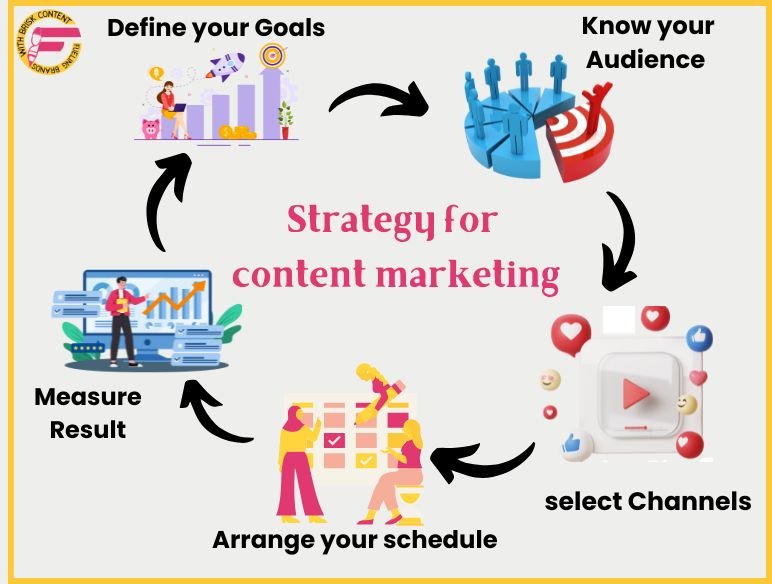
A solid plan is the first step toward effective content marketing. Take these actions:

  • Define your goals: Decide what you want to accomplish, such as generating more leads, retaining customers, or increasing traffic.
  • Know Your Audience: Recognize their habits, preferences, and areas of discomfort.
  • Select Channels: Pay attention to the platforms your target audience uses most frequently.
  • Arrange Your Schedule: It is crucial to maintain consistency. Make a content calendar to guarantee regular releases.
  • Measure Results: Utilize analytics to monitor results and modify your approach.

Top Content Formats to Focus on in 2025

Short-Form Videos

Short videos grab attention quickly and perform well on platforms like TikTok, Instagram Reels, and YouTube Shorts. Use them to showcase products, share tips, or tell engaging stories.

Podcasts and Audio Content

Podcasts give companies a quick and intimate way to communicate with their audiences. Create episodes that share industry trends, expert interviews, or success stories.

User-Generated Content

Motivate clients to produce and share content that highlights your company. Highlight testimonials, reviews, and social media posts to build validity and trust.

Niche Blogs and Articles

Focus on specific industries, challenges, or solutions. Niche content helps establish authority and attracts highly targeted leads who are more likely to convert.

Conclusion

Marketing trends are always changing, but the basic goal always remains to provide value to your audience. Maintaining a solid plan while embracing new trends, such as user-generated content and short-form films, must be relevant in 2025. Create solutions, cultivate relationships, and always keep your audience in mind. Successful companies will know who their customers are and will always provide outstanding content.

If you are looking to take your brand to the next level in 2025, then do connect with us.

Categories
Blogs Content Marketing

How To Create B2B Case Studies That Convert Audience To Clients

B2B case studies are powerful tools for building strategic credibility. They provide leads with concrete evidence of a brand’s capabilities while highlighting unique selling points. A well-constructed case study can be a critical catalyst for increasing lead conversion rates.

Developing an effective B2B marketing case study demands a nuanced understanding of potential leads’ expectations and their complex customer journey. B2B decision-making processes are inherently more intricate, often involving sophisticated solution communication that requires careful navigation.

The most impactful case studies directly address potential client challenges, systematically simplifying complex questions and providing clear, evidence-based insights. By strategically presenting problem-solving narratives, marketers can create compelling content that guides leads through their decision-making process and ultimately supports conversion objectives.

This article explores strategic approaches for marketers to develop case studies that effectively engage potential clients, demonstrate value, and build trust through substantive, solution-oriented storytelling.

Case studies: what are they, and why are they important? 

The most difficult task for small businesses providing goods or services is showing potential customers they can fulfill their commitments.

The most important question for prospective customers when deciding whether or not to buy from you is: “Can this business actually do what it says it can do?”

A case study is useful in this situation. A well-written case study will show potential clients that you have successfully assisted other companies in reaching their objectives and can do the same for them.

Case studies may be very powerful sales tools, but only if they are compelling and engaging to read. To do this, remember a few important points when writing a case study. These will be examined below.

Why is a case study important?

In contrast to other types of material, a captivating case study is designed to help you build credibility and trust with potential clients. Thus, it is an effective marketing tool that helps you sell more.

      Successful case studies will draw attention to a few important details:

  • A captivating story that profiles the target audience.
  • Highlights past clients and how each one started working with you. 
  • Discusses the industry the client works in.
  • Outline the main issues and pain points your client faced when they hired your company.
  • Provides the reader with a detailed account of how you approached resolving the client’s issue.
  • Demonstrate successful outcomes.

1. Different Formats for Case Studies

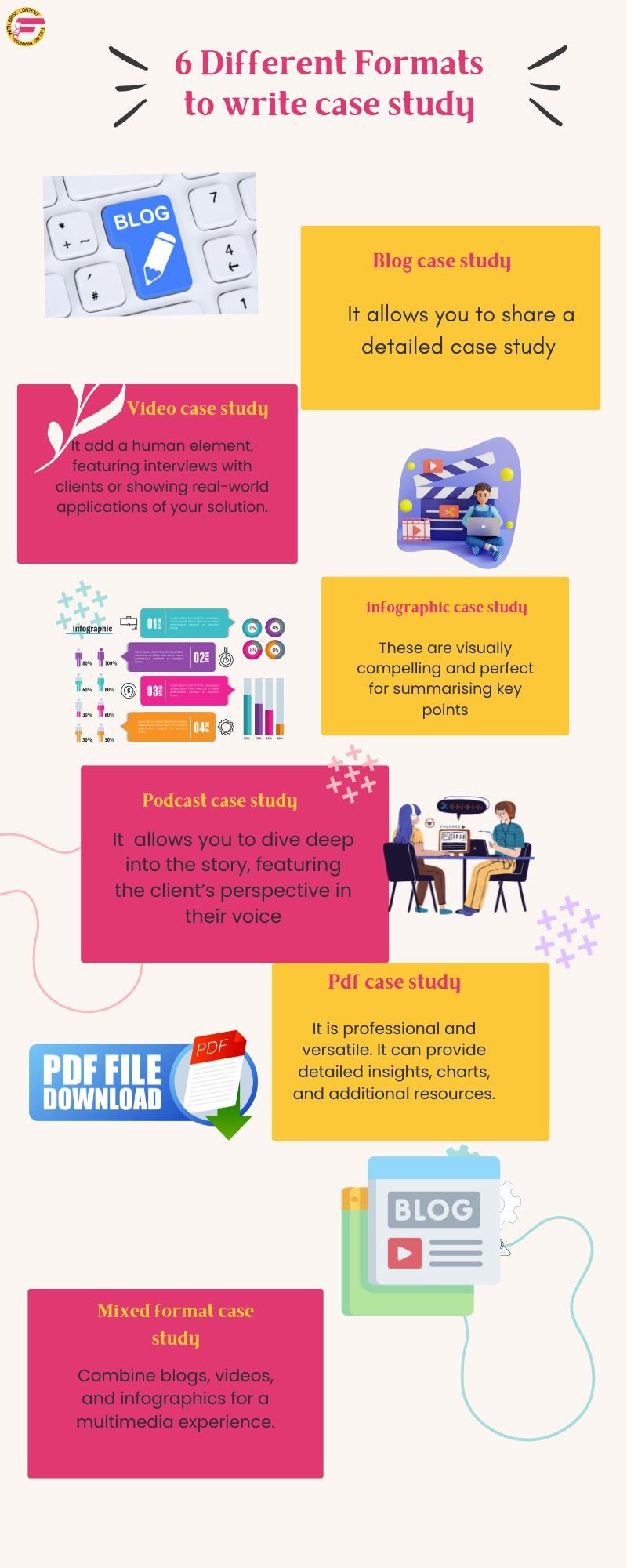
You can use various formats to write a case study. Your description and the information you want to share would decide the format you choose.
  • Blog Writing: This format lets you share a detailed case study while attracting organic traffic through SEO optimization. Use sections with clear headings, client quotes, and links to additional resources for engagement. Read our blog on
  • Videos: Video case studies add a human element. They feature interviews with clients or show real-world applications of your solution. Use animations or client testimonials to make the narrative engaging.
  • Infographics are excellent for summarizing important points and have strong visual appeal. Use timelines, graphs, and icons to present the issue, the remedy, and the outcomes in an understandable manner.
  • Podcasts: Conversational podcasts allow you to dive deep into the story, featuring the client’s perspective in their voice. They are great for B2B audiences who prefer audio content during commutes or multitasking.
  • PDFs: This format is professional and versatile. It can provide detailed insights, charts, and additional resources. PDFs are often shared via email or downloaded from your website.
  • Mixed Formats: Combine blogs, videos, and infographics for a multimedia experience. For example, embed a short video within a blog post or include an infographic link in a podcast description.

2. Pre-Work for a Case Study

  • Find the Right Customer: Look for customers who achieved outstanding results using your product. Ensure their challenges align with the pain points of your target audience.
  • Contact Your Customer: Reach out with a clear explanation of the case study’s purpose. Assure them it will highlight their success and provide positive exposure for their business.
  • Write Your Questions: Prepare a list of open-ended questions to guide the interview. Focus on understanding their challenges, the decision-making process, and specific outcomes. Example questions include:
    • What problem were you trying to solve?
    • Why did you choose our product?
    • What measurable results have you seen?

How do you create an engaging case study?

a) Write Captivating Headlines

A compelling headline blends the success of the customer with the offered solution. 

b) Give a Brief Overview of Your Client

Briefly describe the client’s objectives, industry, and business. This gives readers background information and makes the tale more relatable.

c) Talk About the Issues Your Customer Faces

Talk about their early difficulties in detail. Provide details like:

  • Inadequate operations
  • Reduced income
  • Having trouble fulfilling client requests
  • Make the issue relate to the problems of your target audience.

d) solution

Describe how your service or product helped them overcome their problems. Methodically outline the implementation procedure. Emphasize the aspects of your solution that directly meet their requirements.

 e) Findings

Use data to demonstrate your product’s impact. Add charts, figures, and testimonies.

f) CTA (Call to Action)

Assist readers in moving forward. Examples include: “Appoint a free consultation now to find out how you can replicate this success for your company!”

Conclusion

It takes careful planning and a balance between data-driven insights and captivating narratives to produce B2B case studies that convert well. Measurable outcomes, client changes, and solutions presented in approachable, captivating media such as blogs, films, or infographics are all important components of these case studies. They must be properly selected. A great case study is more than simply data; it portrays a hero’s path of hardships, decisions, and victories. A compelling call to action, a clear message, and a consistent theme can make case studies powerful marketing tools that boost conversions and build trust. A good content marketing agency knows the value proposition of case studies to boost your brand’s image and can help you leverage your business by rightly presenting your success stories or your client experience to the world.

Do connect with us to learn how we can portray your unique projects as awesome case studies for your audience. 


FAQ

What does a business case study aim to achieve?

The purpose of a business case study is to describe how your product or service enabled a particular customer to accomplish amazing outcomes.

What is the ideal length for a case study?

A case study’s duration might change depending on the format you select. A video case study could be a few minutes long, but a textual case study could be many pages long.

When is the best time to request a case study from a client?

Asking clients for a case study is most effective when they have already experienced the benefits of working with you. Ideally, you should hold off on praising them until they are satisfied with the outcome.

Categories
Blogs Content Marketing

Going Viral: Is It Luck or a Content Marketing Formula?

Ever wonder why some content spreads like wildfire online? I’m just kidding, but marketers need to know that, right? Is going viral just dumb luck, or is there a secret formula?

Going viral” in digital marketing seems to be the holy grail. One minute, you are posting, and the next, your content reaches millions, creates conversations, and drives remarkable traffic. Is viral success by pure luck, or is there a method to the madness? Or sometimes, just the right place, right time. Otherwise, it’s just a perfect content strategy. In this blog, we will discuss whether virality is just an accident or if it’s the result of a well-executed marketing formula and how you can make it big, too.

 Let’s dig in and find out with this blog.

The Allure of Viral Content

There is nothing quite like having online content shared with many people. It spreads fast and far, gets people talking, and puts your brand on the map overnight.

But here’s the thing: if viral success were predictable, you’d always get it right. What works once doesn’t work the next time – which makes many people tell you it’s a matter of luck.

The Role of Luck

Let’s be real. Luck does play a part in viral content. You can’t control everything. Sometimes, the stars just align. Your post hits at the perfect moment. The right influencer shares it. And boom – you’ve gone viral.

But relying on luck alone is a risky strategy. It’s not sustainable. And it’s not something you can build a business on. For example, a meme or video could get picked up because it aligns with a current event, a social issue, or viral challenge. This kind of virality feels like winning the lottery.

Luck Isn’t a Business Strategy

Going too much by luck is something quite dangerous. If you build a business or try to grow your brand, then dependence on a mythical concept of luck wouldn’t promise anything to provide you with constant results. Moments that usually lead to going viral happen when no one expects it and can’t be easily replicable. Thus, you cannot depend on the chance of your content going viral. And yet, companies and content creators need what they can control: quality and sharable content, knowledge of whom they serve, and consistency. A good content strategy will grow steadily and, in the long run, instead of betting on luck to give you that one-time boost.

It’s thrilling to play the luck card, but you can’t depend on that. The surest way to guarantee long-term success- whether or not you catch the lucky break- is by building a foundation of smart content marketing.

The Content Marketing Formula

While there’s no foolproof formula for viral success, the most effective strategies help stack the deck in your favor. These are  some of what the pros pay attention to:

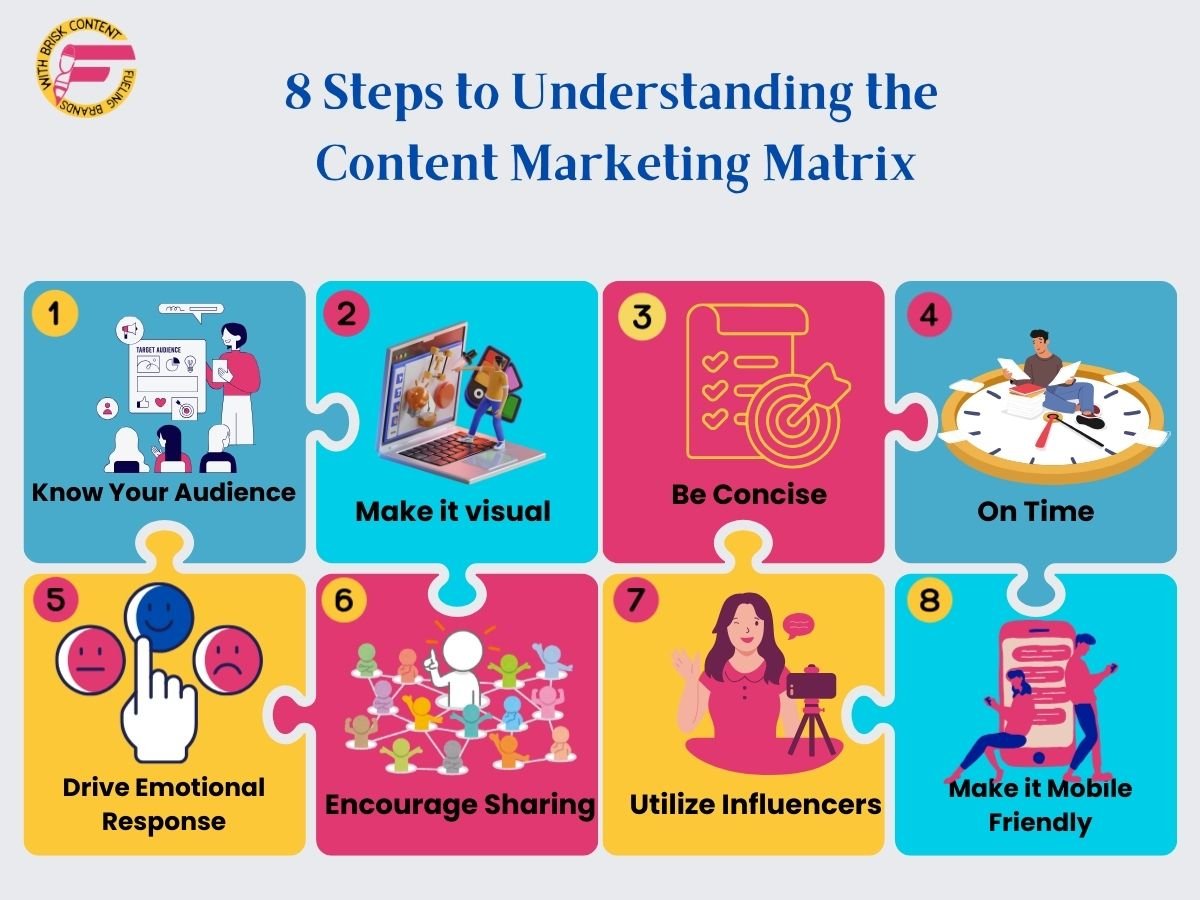
1. Know Your Audience: Who are you trying to reach? What do they care about? What makes them tick? The better you know your audience, the better you can create content that really speaks to them.

2. Be an Emotion Trigger: Generally speaking, viral content hits an emotion buried within you. It makes you either laugh or cry or even get angry. Whatever it is, it should evoke some form of reaction. Neutral stuff is hard to go viral.

3. Shorten it: Your message must be easily digested, understood, and passed on. Complex content makes it hard to go viral. If your content cannot be quickly digested and transmitted, it will not go viral.

4. Be timely: Viral content often follows current events or trends. Stay on top of what is happening in your industry and the world.

5. Make it visual: Images and videos are more likely to be shared than text. People are visual, so give them something eye-catching.

6. Encourage Sharing: Make sharing more effortless for people. Use social sharing buttons. Ask people to share if they have found value in your content.

7. Utilize Influencers: Building a relationship with influencers in your niche will catapult your content into more significant virality. Their share can kick-start the process of going viral.

8. Make it Mobile Friendly: Most social media browsing is accessed on mobile devices. Ensure that your content looks great and works great on small screens.

That’s why it is essential to create consistently good content. Don’t fully depend on viral. Build a solid content strategy that provides value to your audience over time.

The Power of Persistence

Going viral can seem like instant success, but what people don’t see is the hard work that usually leads up to it. Behind most viral hits, there are countless hours of effort, multiple failed attempts, and a lot of learning.

Creators and marketers who achieve viral success often spend months or even years creating content that goes unnoticed. They experiment with different ideas, formats, and platforms. Sometimes, content falls flat. Other times, it gains a little traction but doesn’t explode. But they don’t stop. They keep trying, adjusting their approach based on what works and what doesn’t.

Persistence is key because the more content you produce, the more chances you have of finding that viral moment. Every post or video is a new opportunity to learn what your audience responds to and how trends shift over time. It’s not just about luck or a single “perfect” post; it’s about consistently showing up and refining your strategy.

Continuing to create, experiment, and learn increases your chances of eventually hitting that viral sweet spot. Even if you don’t go viral right away, persistence helps you build a loyal audience, gain valuable insights, and improve your content. Viral success may take time, but persistence ensures that when the moment comes, you’re ready for it.

Balancing Art and Science

Going viral is not just about luck or strategy but a mix of both art and science. On the one hand, it speaks of the art of coming up with something new, interesting, and memorable content. Here, you think outside the box, come up with a great story, and develop visuals or messages that would make a big capture in people’s attention. Creativity will make the content stand out among this sea of information and what is needed in order to emotionally connect with the audience.

There’s science on the other end – the analytical approach to understanding your audience and using data to optimize your content. That takes you to cutting and sorting through metrics in terms of such things as engagement rates, audience demographics, and how your content performs and seeing where you can improve and where you cannot. All this can be outlined by analyzing data: when to post, through which platform, and with what types of content.

The Takeaway

Going viral is neither an art nor a science. Put, it involves the right balance between new, engaging content and enlightened data insights. Content creators or marketers who successfully blend both elements and science have much better chances of success with viral messaging and longer relationships with audiences.

Conclusion

So, Is it luck or a content marketing formula? Let me tell you, and it is a bit of both. Yes, you have an element of luck, but you can stack the odds in your favor. The ability to understand the target audience, quality content, and best practices all increase the prospects of viral success.

Remember, maybe your content won’t go viral, but these strategies will help you build a much stronger, more engaged audience over time. And that’s worth more than any fleeting viral moment.

Keep writing. Keep learning. And who knows? The next piece of content you create might just be the one to make that super-viral-rainbow-troll-town hailed newsbreak.v

Categories
Content Marketing

The Ultimate Checklist for Hiring a Content Marketing Agency

“Without goals and plans to reach them, you are like a ship that has set sail with no destination.” — Fitzhugh Dodson.

To hire a content marketing agency that genuinely elevates your brand, you must first look inward and define what you need.  It’s not about who has the bold portfolio or the most prominent name—it’s about you and your goals. 

Let’s explore with this blog how setting clear, actionable goals is the foundation for choosing the perfect agency to transform your content strategy!

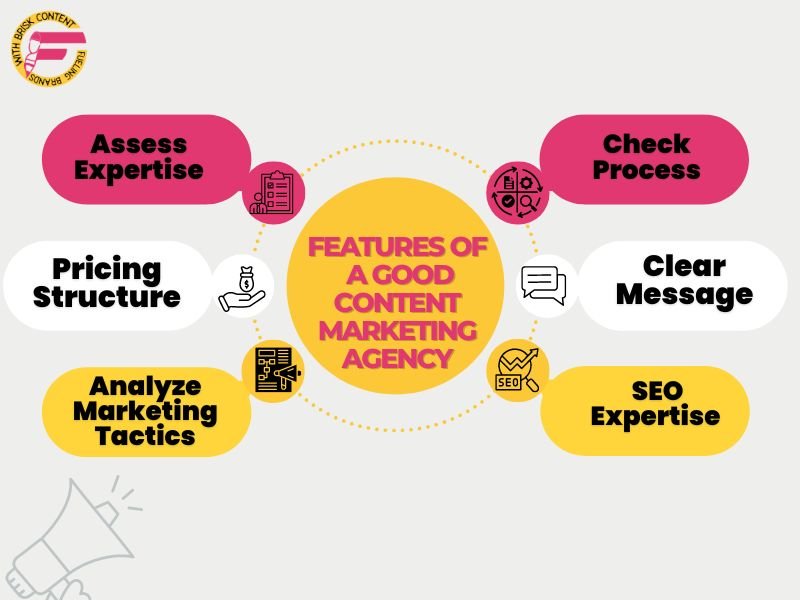
Features of a good content marketing agency

Every content marketing agency has its niche, but you decide who will make it work for your business. This requires you to set the following parameters clearly:

  • Understand your needs and work accordingly.
  • Engage in meaningful discussions to set your content marketing goals.
  • Explain your plans, strategies, and return approaches while valuing your input.

Assess  Expertise

Some of the key considerations are:

  1. Industry Experience: Monitor their experience handling businesses in your industry or comparable ones. Your organization will do well with this knowledge, indicating they know your target audience’s profile and the market dynamics.
  2. Portfolio review: The portfolio is their work, so review examples of previous work. Ensure that the content is high quality, includes various projects, and has good case studies that give you confidence in the work.
  3. Specialization: Sometimes, an agency specializes in certain areas, such as SEO, social media, or email marketing. Specialization leads to more effective strategies for achieving your goals.
  4. Team Credentials: Look for the credentials of the people who will work on your project. Are they good writers? Good designers? Good strategists? A good team is mainly responsible for the quality of your content.
  5. Customer Reviews: Read testimonials and past client reviews. Good reviews will give you an idea of whether the agency is reliable, communicates properly, and has a knack for what it does.

Check Process

Here is what you should look for:

  1. Initial Consultation: Ask about their approach to the initial consultation. A thorough discovery phase should involve understanding your business, goals, and target audience.
  2. Strategy Development: Inquire about how they develop a content strategy. A solid process should include research, goal setting, and defining key performance indicators (KPIs) to measure success.
  3. Content Creation: Understand their content creation process. How do they generate ideas, conduct research, and ensure quality? A systematic approach will yield better results.
  4. Review and Approval: Check how the review and approval process works. Will you have input at various stages? A transparent process helps ensure the content aligns with your vision.
  5. Distribution and Promotion: Ask about their methods for distributing and promoting content. Effective promotion is key to reaching your audience and achieving desired outcomes.
  6. Performance Tracking: Inquire about how they measure the success of their content. A good agency should use analytics to track performance and provide regular progress reports.
  7. Continuous Improvement: Find out how they incorporate feedback and make adjustments. A responsive agency will continuously refine its approach based on results and your input.

Analyze Marketing Tactics To Be Used

Here’s what you need to look for: 

  1. Content Strategy: Find out how they plan to create an effective SEO content strategy. A good strategy should include research on your target audience and content themes, as well as overall execution.
  2. Seek to know the SEO strategies they will utilize to enhance your content. Here, you seek their keyword research, on-page optimization, and link-building ways to make you stand out.
  3. Content Types: Determine the type of content they specialize in. These may range from blog posts to video production, infographics, podcasts, etc. Mixing different kinds of content can engage various segments of your audience.
  4. Distribution Channels: Illustrate how they will distribute your content. Social media, email newsletters, and other distribution channels must effectively engage the audience whose effort they are making.
  5. Performance Monitoring: They should demonstrate a way of measuring the success of their marketing efforts. Look for companies that employ analytics when they track vital metrics and change strategies based on your performance.
  6. Adaptability: Ask how they keep up-to-date with what’s new in marketing and how they update their strategy for their clients. A good agency is flexible, showing readiness to adjust to changing circumstances in the virtual environment.

Ask About SEO Expertise

Effective SEO is the essence of a successful content marketing strategy. So, evaluating an agency’s SEO competence is highly relevant. Here are some key questions to consider:

  1. Keyword Research: Ask how they are conducting keyword research. A good agency should systematically plan out the relevant keywords that will drive traffic and improve search rankings.
  2. On-page optimization: Ask them about their on-page SEO strategies. These include optimizing titles, meta descriptions, headings, and content structure to increase search engine visibility.
  3. Technical SEO will include elements like site speed and mobile friendliness. They must also know how to get indexed properly. All these form the foundation for improving overall site performance.
  4. Link Building: How will they go about link building? A good SEO campaign can only work with linking to high-quality backlinks; find out how they will procure these links and boost the authority on your site.
  5. Content Optimization: Find out how they optimize content for search engines without compromising quality. The key is to balance good SEO best practices and keeping your content interesting.
  6. Analytics and Reporting: They use analytics tools to track SEO performance. Find out which metrics they follow and how often they report on progress.
  7. Keeping in the Know: SEO is constantly evolving. Find out how the agency keeps its staff current with the trends and algorithm changes that affect your content.

Understand Pricing Structure

Pricing models: Ask an agency about its pricing models. Standard options include charging hourly, project-based billing, and retainer agreements. Every model has advantages and disadvantages, so you need to choose one that suits your needs.

  1. Service Packages: Do they offer service packages? Some agencies bundle services such as content creation, SEO, and social media management for a reduced rate. If these packages are available, they may be of really good value.
  2. Breakdown on Costs: Now, request a detailed breakdown of the costs of each specific service. In a more transparent breakdown, you’ll understand your spending and ensure no hidden fees.
  3. Flexibility: Does the agency consider flexibility in pricing? Knowing how they would treat a flexible pricing adjustment would always be useful if you change your requirements or the scope of work.
  4. Payment Terms: As much as payment terms indicate what is supposed to be set as deposits, the payment schedule, and even your cancellation policies, this can get you ready for what’s ahead.
  5. Value for Money: Consider the value you will get for the price. In most scenarios, a higher fee than you require for an established and experienced agency might yield better returns than going for something cheaper.
  6. Return on Investment (ROI): Discuss how the agency measures ROI. Understanding that they can track the success of their efforts will warrant the costs and ensure a sound investment.

Evaluate Communication and Support

Pay attention to the following aspects:

  1. First Contact: Notice how they communicate during the first few conversations. Are they responsive, attentive, and able to explain things clearly? This is basically how everything will start going forward.
  2. Regular updates: Inquire about their procedure for updating the project progress on your side. A good company should give you regular reports and check-ins to keep you updated.
  3. Feedback mechanism: Ask how they design their feedback mechanism. An agency that values your input and is willing to make alterations based on your suggestions demonstrates a commitment to collaboration.
  4. Access: How accessible is the agency to questions or concerns? You don’t want a partner who is challenging to reach and takes a long time to address your needs at critical campaign stages.
  5. Support Structure: What’s their support structure? Is there an assigned account manager or point of contact? Knowing who to go to will refine the actual communication process.
  6. Crisis Management: How will they address potential challenges or crises? An activist agency will have plans and the ability to respond to issues quickly and efficiently, with minimal disruption.
  7. Cultural Fit: Consider whether their communication style matches your company culture. A great fit will make collaboration enjoyable and the relationship at work productive.

Why Is Content Marketing Important To Your Business?

Your small business must stand out and differ from competitors in the dynamic digital marketplace. Content is the fuel for your marketing strategy. Dull and ineffective content could ruin a splendid design and mar your marketing strategy.

With content marketing, you can build up your online business reputation. You’ll be able to serve your viewers with all sorts of content, such as videos, blog posts, infographics, social media posts, and presentations. By offering value to the audience in these forms, you will attract the viewer and build brand trust.

When planned and produced correctly, content can drive the audience toward your company’s website, where they convert into leads and sales. Content marketing becomes a compelling strategy that allows small businesses to differentiate themselves from the competition in the industry. You must find a reliable content marketing agency to help you reach more people and build brand trust.

Conclusion

Once you have marked off the requirements checklist, that’s only some of it. You will also need to do your research to separate the wheat from the chaff. Also, have a list of the agencies you would want to work with and then proceed to narrow down the candidates. Then, you will sit down with them, make them explain what they are offering, and then comfortably decide which one to hire.

Choosing the right content marketing agency is the key to great success for any business, whether online or offline. A strong partnership will elevate your brand, expand your audience, and convert leads to customers. 

Connect with us to know how we can help your business grow.