Categories
Blogs Content Marketing Content Writing NEW

10 B2B Content Marketing Examples That Will Inspire You

Most B2B buyers are no longer convinced by sales pitches alone. They want useful content that helps them make smarter decisions. According to 6sense’s Buyer Experience Report, B2B buyers complete nearly 70–80% of their purchase journey before ever speaking to a salesperson, and 81% have already chosen a preferred vendor by the time they first contact a salesperson. Your content isn’t just marketing. It’s your actual sales pitch

In this blog, we’ll look at real B2B content marketing examples from leading brands and break down what you can learn from them to improve your own strategy and results.

What is B2B Content Marketing?

B2B content marketing entails creating and distributing relevant content to engage business buyers. Unlike B2C content marketing, which focuses on individual consumers, B2C content marketing targets educating and building relationships with other businesses. 

This approach leverages content types such as blogs, ebooks, case studies, and webinars to address the unique needs and challenges of a B2B audience.

Examples of B2B Content Marketing!
Example 1: Hubspot

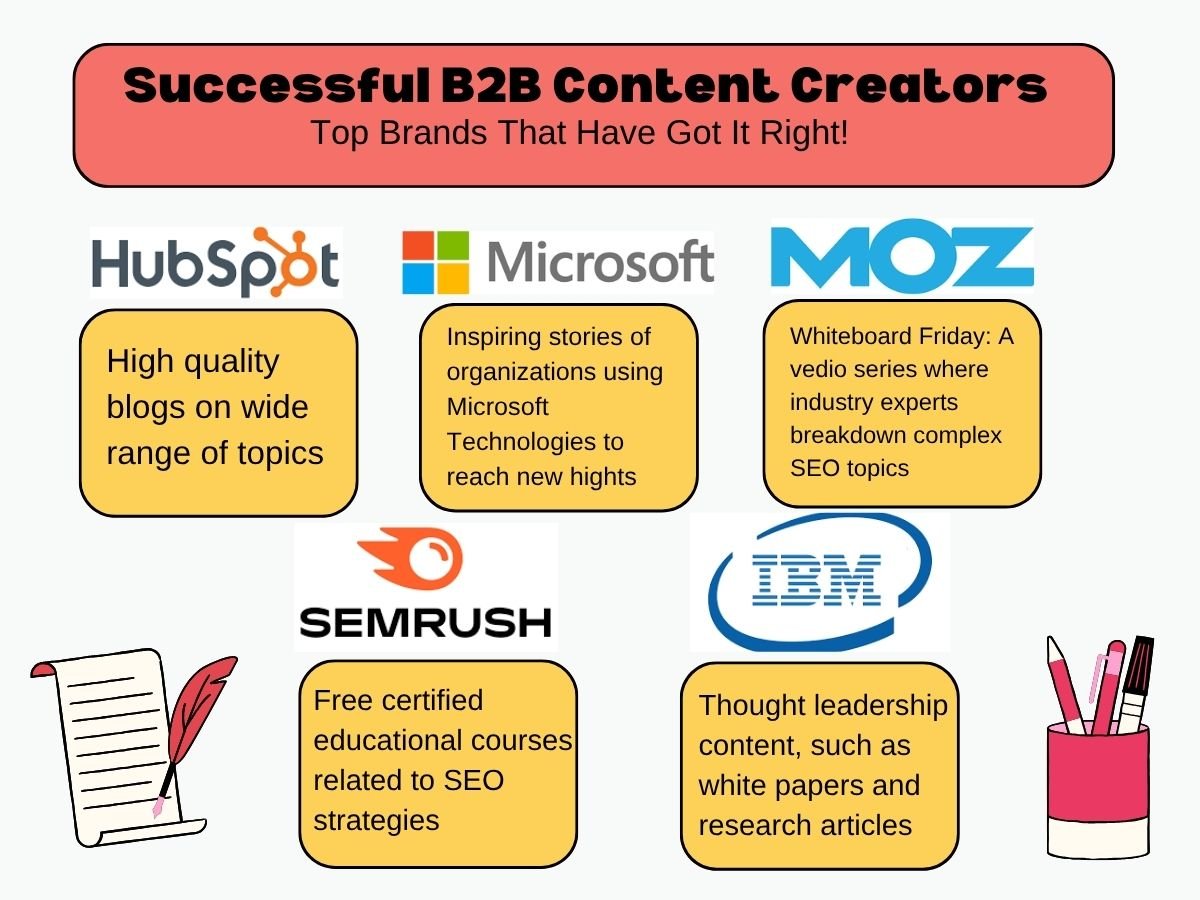
HubSpot has established itself as a reliable resource for marketers by consistently publishing high-quality blog content on a wide range of topics, from SEO techniques to sales strategies. Its educational articles empower businesses to enhance their marketing performance, attract more website visitors, and convert leads effectively. 

Example 2: Semrush

The visibility management SaaS platform Semrush offers free educational courses to help users learn and apply effective SEO strategies. This B2B content marketing approach demonstrates how customers can use its tools while showcasing the value it provides to potential clients. To make the experience more engaging, Semrush rewards learners with certificates upon passing an exam.

Example 3: Shopify

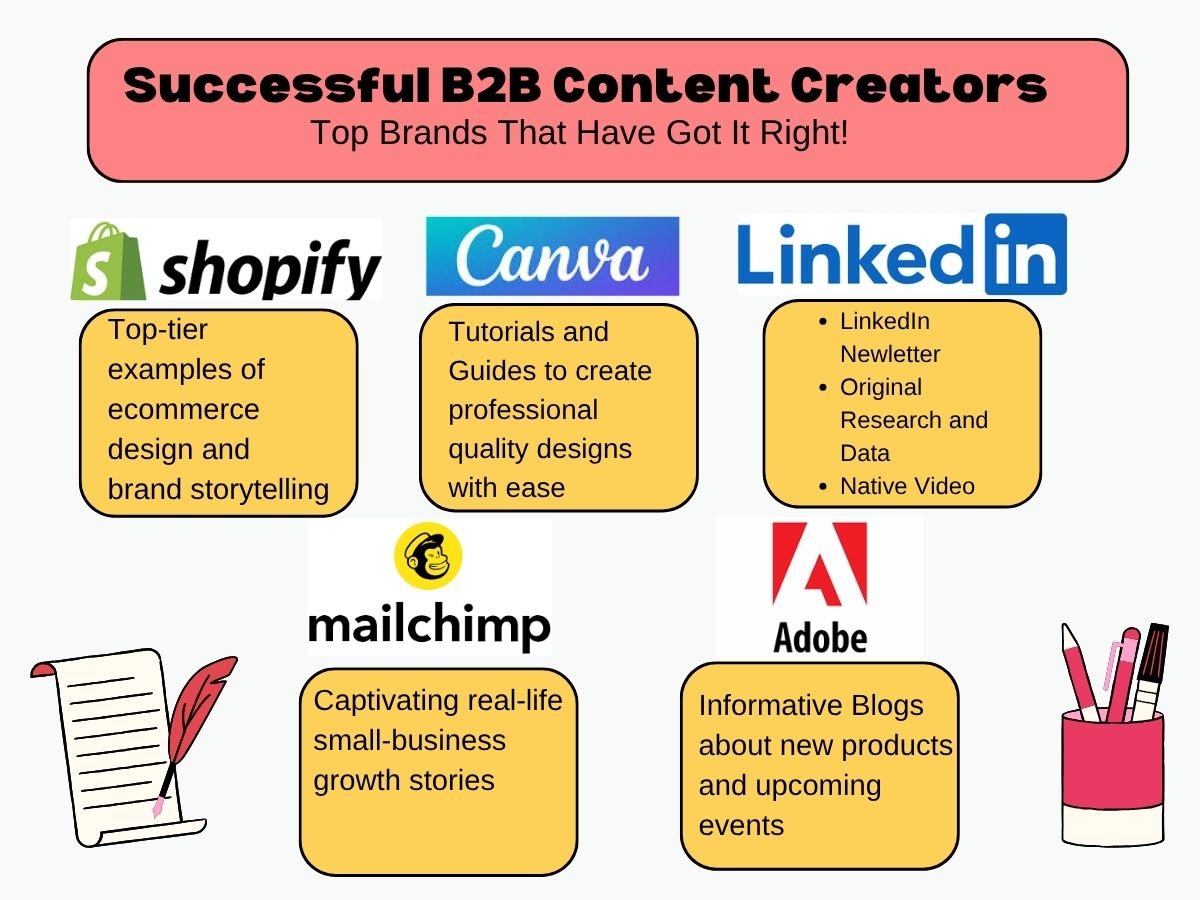
Shopify, a leading Canadian e-commerce platform, provides a large range of services that enable online retailers to create stores, manage sales, process payments, handle shipping, and market to customers. The company benefits from diverse content formats such as blogs, videos, podcasts, online courses, how-to guides, and a user forum to support every stage of its marketing funnel. By improving this content for relevant keywords, Shopify improves its search rankings and generates more traffic to its website.

Example 4: Mailchimp

Mailchimp connects with its audience through captivating and informative content. Sharing insightful stories about marketing and small-business growth helps the brand grab attention and strengthen its reputation as an expert resource in the industry. To learn how to write impactful case studies, read our blog on How to create B2B case studies.

Example 5: Canva

Canva, a popular graphic design platform, helps users create visually compelling social media posts, presentations, and marketing materials. The brand exemplifies effective B2B content marketing by applying the same principles it teaches using appealing visuals, clear messaging, and clean design to engage its audience.

Through blogs, tutorials, guides, and events, Canva focuses on conveying a seamless user experience while showcasing its core value. This consistent, customer-centered approach has made Canva a trusted resource and a strong voice in the design industry.
Example 6: Adobe

Adobe is a strong example of effective B2B content marketing, especially for brands aiming to engage a diverse, creative, and global audience. The company shares a wide variety of content, from inspiring customer stories, such as an artist using creativity to process grief, to filmmakers producing a movie with Adobe Creative Cloud.

It also publishes informative blogs about new products and upcoming events. Adobe’s content consistently educates, motivates, and empowers both its prospects and existing users.

Example 7: Microsoft

Microsoft’s Stories series stands out as a powerful example of B2B content marketing. It throws light on the people and organizations using Microsoft technologies to achieve goals. From students designing robots for social good to innovators using AI to tackle global problems, each story reveals how Microsoft solutions help drive meaningful change. 

By showing how its technology helps people in real life, Microsoft makes it a tool for progress instead of just another product.

Example 8: IBM’s Thought Leadership Strategy

IBM uses thought-leadership content, such as white papers, research reports, and expert articles, to spotlight its technology innovations and expertise. This strategy helps the company earn trust, build credibility, and strengthen its reputation as a leader in the industry.

Example 9: Moz

Moz is an SEO platform and digital marketing toolset designed to help businesses increase their online visibility. The company connects with its audience through its popular educational video series, Whiteboard Friday. Presented in a friendly and approachable style, these videos feature industry experts who share insights on SEO trends, strategies, and best practices. 

Covering topics from new search trends to effective content planning, the series positions Moz as a trusted thought leader while promoting its range of services.

Example 10: LinkedIn B2B Institute

The LinkedIn B2B Institute is a research center that explores new ways to drive B2B growth. It regularly shares content on marketing trends and best practices to help businesses enhance their marketing, attract more valuable website traffic, and generate quality leads. In doing so, it also strengthens LinkedIn’s brand as a go-to platform for B2B marketers looking to stay ahead of the competition.

The B2B Video Shift

If you think video is only for B2C brands, the numbers say otherwise. 58% of B2B marketers consider video marketing as an effective content type, and 37% are actively increasing their video budgets in 2026.

Today’s B2B buyer uses video at every stage of the purchase journey. From short-form LinkedIn videos for discovery, to in-depth explainer videos and webinars before making a final decision. In fact, video has become one of the most effective formats for reducing buyer hesitation and building trust.

Moz has understood this for years. Their Whiteboard Friday series consistently turns complex SEO topics into accessible, engaging videos that educate their audience. Shopify leverages a full mix of video formats, including tutorials, how-to guides, and founder stories, to support every stage of its marketing funnel.

The message is clear: video is the format your buyers are actively seeking out. Whether it’s a 60-second LinkedIn clip or a 20-minute deep-dive webinar, showing up on video instantly builds trust.

Combine AI Speed with Human Depth to Rise Above the Noise

The rise of AI has completely changed how B2B brands create and distribute content. According to recent data, 85% of B2B marketers now rely on AI tools for content creation. Using AI tools to brainstorm ideas, summarize research, and draft content at scale.

But as AI makes content creation faster, the internet is flooded with generic posts that all sound the same. This is why the top brands bet on what AI cannot replicate: original research, first-hand expertise, and real customer stories.

Brands like IBM are already ahead of this curve. Their white papers, research reports, and expert-driven articles are built on genuine insight and credibility. Adobe takes a similar approach by sharing real customer stories that inspire and educate, giving their content a human depth.

So, the final takeaway for your B2B content is to use AI to work smarter, but invest in experience-led content to stand out. Buyers can tell the difference, and so can Google

To learn more about effective B2B marketing stratergies read our blog on 7 content hacks for successful B2B marketing.

Conclusion

The best B2B content marketing examples prove that real success comes from consistently delivering useful, engaging content. When brands share educational resources, real stories, and practical insights, they build trust and long-term relationships. By taking inspiration from these leading companies, you can shape a content strategy that strengthens your brand, attracts quality leads, and supports sustainable business growth. Visit Content Fayah to start building a powerful content marketing strategy customized to your business goals today.

 If you’re ready to create B2B content that not only ranks but also resonates with your audience, let Content Fayah help you.
Contact us
What is B2B content marketing?

B2B content marketing involves creating and sharing valuable content to attract and engage other businesses, build trust, and drive sales or partnerships.

Why is B2B content marketing important?

It helps companies establish authority, nurture leads, and create significant relationships with their target businesses, leading to long-term growth.

What types of content are best for B2B marketing?

Blogs, white papers, case studies, videos, webinars, and podcasts are some of the most effective formats for B2B content marketing.

How can a business start a B2B content marketing strategy?

Start by understanding your audience, setting clear goals, choosing the right content formats, and focusing on consistency and value. Learn from examples set by top B2B content marketing brands such as HubSpot and LinkedIn.
Categories
Content Marketing

What Is Thought Leadership Content?

Did you know that nearly 75% of executives have explored products or services they weren’t initially considering after engaging with quality thought leadership content? Thought leadership is now one of the most trusted ways to learn about a company’s expertise and value, far beyond traditional ads. It helps brands and experts share real knowledge and fresh ideas through posts, blogs, podcasts, or even books. This builds trust, opens new opportunities, and connects you with the right audience. 

This blog will guide you through everything you need to know to successfully create and use thought leadership content to boost your brand and influence.

What Is Thought Leadership Content Marketing?

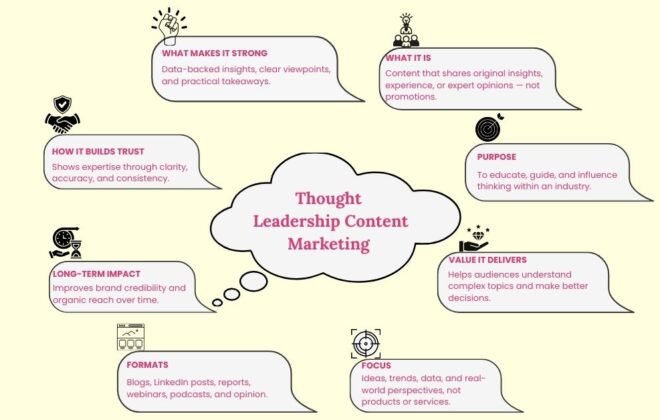
Thought leadership content marketing is when a brand shares useful, high-quality information from experts who really know their field. These experts, known as thought leaders, use formats like articles, infographics, videos, or social media posts to share their knowledge and help others learn something valuable. For brands, this type of content helps build trust, grow credibility, and strengthen their reputation in the industry.

7 types of thought leadership content

Sharing thought leadership content is one of the best ways to show your expertise and connect with your audience. Here are seven popular formats that top leaders use to share their ideas and make a real impact.

  1. LinkedIn/Twitter 

LinkedIn is great for building your professional reputation and connecting with key decision-makers, like CEOs and business leaders. You can share useful industry info, post regularly, join conversations, and mix your own ideas with interesting articles. Twitter is faster and more casual, lets you share quick thoughts, join trending chats, and reach a wider group, including journalists and influencers. Using both together helps you get noticed, build trust, and grab more opportunities in different ways.

     2. Newsletters and blogs

If you have more to say, start a blog or newsletter. These platforms let you share deeper insights and talk directly to your audience without dealing with social media algorithms. Email marketing also offers strong returns, so it’s worth the effort. The challenge is keeping your content engaging and growing your audience over time. This is where a content agency can help maintain quality and consistency.

    3. Op-eds and bylines

If you publish your ideas in respected outlets like Forbes and The Wall Street Journal, it can greatly boost your visibility. A byline lets you speak directly to large audiences while strengthening your personal brand. The more people see your name next to well-known media brands, the more credible your expertise becomes. Partnering with professionals who know how to pitch to editors can help you get your ideas published.

    4. Podcasts

Podcasts are booming, with hundreds of millions of listeners. Starting your own show or appearing as a guest helps share your expertise in an informal, conversation-style setting. It’s perfect for connecting with niche or engaged audiences. If you host your own, be patient and consistent; it takes a while to grow an audience. Joining existing podcasts, however, can quickly expand your reach.

    5. Media interviews and profiles

Being featured in news articles or industry interviews can expose your ideas to much wider audiences , and it boosts trust, since earned media is often seen as more credible than ads. The trick is to stay on message and build good relationships with journalists. If you team up with an agency that already has media contacts, it’s much easier to get noticed and ensure your point of view comes through clearly.

    6. Speeches and presentations

Speaking at events, webinars, or panels positions you as an expert to a ready audience. These opportunities help you create credibility and grow your professional network. Also, data reveals that the speaking gigs can bring a strong return on investment. People will want to hear more from you as you speak, creating a positive cycle of influence and recognition. 

    7. Books

Book publishing shows deep knowledge of your field and offers you an everlasting way to share your ideas. It’s more substantial than a post or an article, and it can even generate passive income. Books help build authority and connect you with decision-makers who respect well-thought-out, long-form ideas. Whether self-published or traditionally released, a book can be a powerful piece of your thought leadership strategy.

Thought Leadership Strategy!

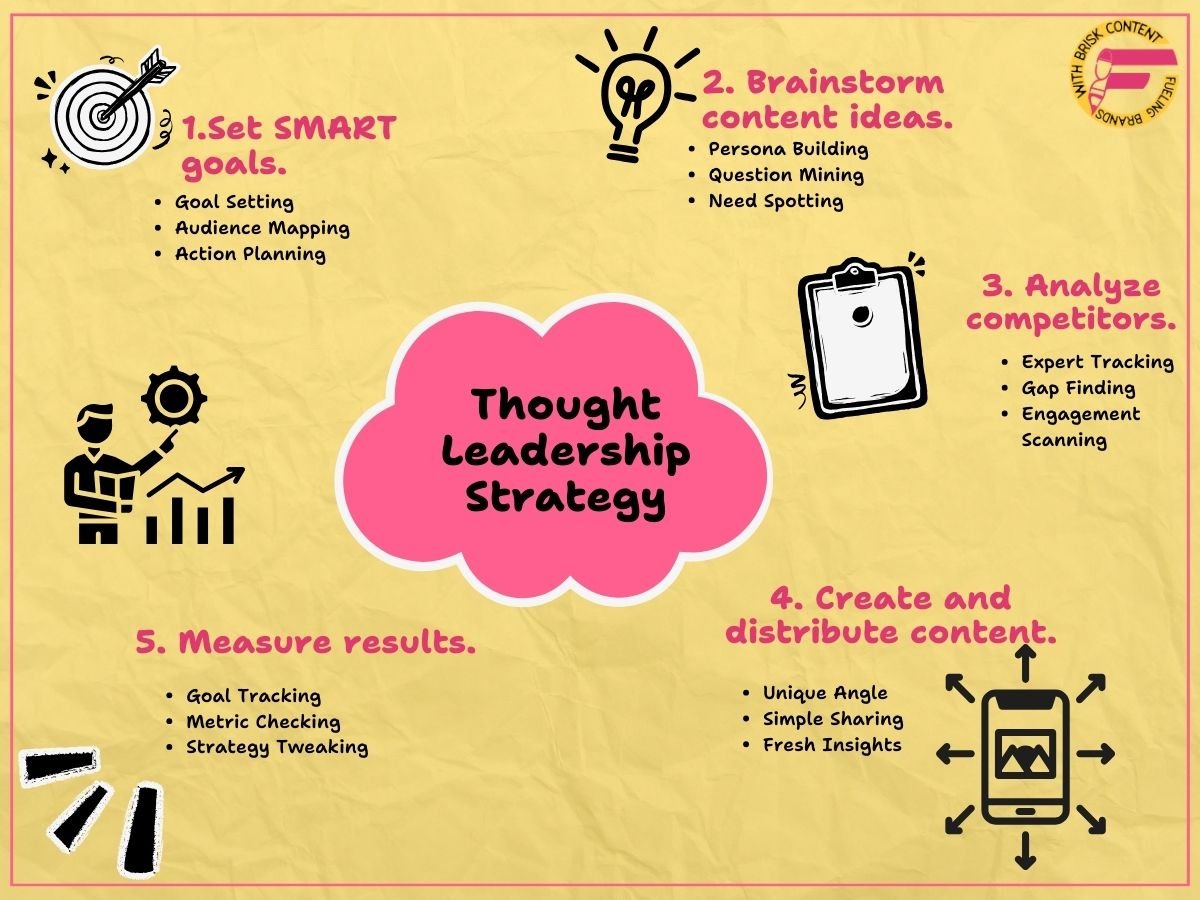
A thought leadership strategy is about building your reputation as an expert, not just pushing sales. It focuses on creating content that answers your audience’s important questions and shows your deep knowledge.

Step 1: Set SMART goals.
Break your big goal into smaller parts using SMART criteria, make your goals Specific, Measurable, Attainable, Relevant, and Timely. For example, aim to attract five new leads in three months. Then list the actions to reach that goal, like starting a blog or growing LinkedIn followers, prioritising what your audience prefers.

Step 2: Brainstorm content ideas.
Think about your audience personas and what they want to read or watch. Look for questions they ask on social media or forums like Reddit. Focus on creating content that meets their real needs.

Step 3: Analyze competitors.
Find out who your audience turns to now and what content they consume. Identify gaps where their needs aren’t met, and check which competitor posts get lots of likes or shares to inspire your ideas.

Step 4: Create and distribute content.
Make your content stand out by sharing your unique view and personality. Keep it easy to understand and share. Avoid copying popular content; instead, bring fresh insights so social media algorithms and readers notice you.

Step 5: Measure results.
Track how your content is doing based on the goals you set. Use relevant metrics to see if your strategy is bringing the impact you want and adjust as needed.

Why You Need Thought Leadership in Your Content Strategy

Thought leadership is important and a must-have in your content strategy because it helps your brand stand out by showing real expertise and building trust with your targeted audience. Instead of just selling, thought leadership focuses on providing valuable insights and answers that your audience is searching for, which forms deeper connections. Such type of content boosts your credibility, attracts new opportunities, and makes you stand out from competitors by positioning you as a go-to expert in your field. Using thought leadership can also help your brand’s image and, over time, make people more interested and loyal to it.

Final Thoughts

Think of thought leadership content like your trusted guide in a crowded marketplace. In 2025, 73% of decision-makers trust this kind of content more than traditional ads or brochures. They spend significant time digging into thoughtful articles and insights because they want real value, not sales talk.​

But here’s the catch: 85% say a lot of content out there misses the mark by lacking fresh ideas or depth. So, it’s not about just pumping out posts; it’s about sharing smart, original ideas that answer real questions. When you nail this, you don’t just build credibility; you open doors to new opportunities and become a go-to expert that people want to engage with and do business with.ContentFayah helps brands master this exact balance through expert content writing that turns insights into influence. Schedule your free strategy call today and elevate your thought leadership game.

FAQs

1. How can I make my thought leadership stand out?

Focus on sharing fresh ideas or new angles that others aren’t talking about. Original research or stories from real experiences really catch attention.

2. Who should be involved in creating thought leadership content?

It’s best to involve experts or leaders in your company who truly understand the topics. Their insights make the content more reliable.

3. How often should I publish thought leadership content?

Consistency matters more than quantity. By posting regularly, even if small, you keep your audience engaged and help build your reputation over time.

Categories
Blogs Content Marketing

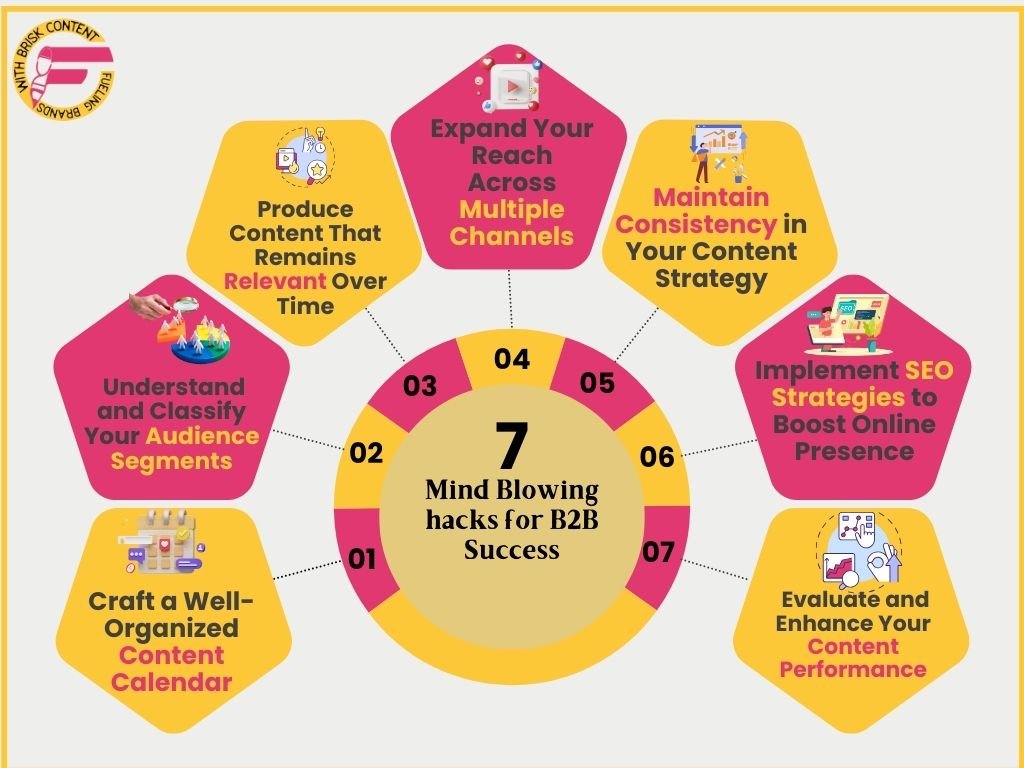
7 Content Hacks for a Successful B2B Marketing

As we enter 2025, effective content marketing remains the foundation for B2B success. However, things are changing; AI is here to aid us and be a partner in our marketing strategies. The B2B marketing team needs to move with this change and get ahead of others. But what AI lacks is the human touch; hence, teams. It is the best tool for B2B success as it brings awareness about your products, and gives trust, leads generation, and traffic generation. 

We shall discuss seven hacks to improve your content marketing strategy.

7 Important Content Marketing Hacks for B2B Success

1. Craft a Well-Organized Content Calendar

The right planning tool for a B2B marketing team is a content calendar. As a strategic road map, it enables planning and scheduling content ahead of time. Organizing your topics, deadlines, and distribution channels helps align your message with the key events or product launches tied to the seasonal trend.

 This proactive approach streamlines the content creation and makes collaboration easier for team members. A content calendar offers a visual of weeks or even months for your content strategy, helping you catch gaps and messaging overlaps more easily.

 It allows consistent posting frequencies – contributing to trust, engagement, and audience-building from your followers’ side. Last but not least, effective content calendars make your team’s work possible by delivering good, engaging, and meaningful content to the audience.

2. Understand and Classify Your Audience Segments

The core of successful content marketing is understanding the audience for content. Audience segmentation splits your broader audience into smaller, more defined subgroups based on specific characteristics, such as demographics, interests, or behaviors. This approach enables you to create the right kinds of content to meet each subgroup’s special needs and preferences.

 A technology company might have different content for IT managers than for other end-users. Using data analytics tools and customer feedback, you can create detailed buyer personas that guide your content creation process. This way, your messages are relevant and engaging, increasing the likelihood of conversion.

 In addition, segmented campaigns often have higher engagement rates because they speak directly to the audience’s pain points and interests. Knowing your audience deeply in a competitive B2B landscape can be the difference between you and competitors who take a more general approach.

3. Produce Content That Remains Relevant Over Time

Evergreen content is a rich element of any B2B content marketing. Unlike news content or article-driven pieces, which quickly lose relevance over time, it remains useful far into the future. 

The basis of such writing usually concerns central industry subjects for which people could use guidance that would last forever and a day. Such content saves time in the long term and guarantees consistent website traffic by attracting visitors over months or years. 

To search engine-optimize by using relevant keywords. Update the content periodically to keep it fresh and aligned with your niche’s current trends or developments. Investing in evergreen content builds a robust library of resources that can establish your authority in the field and nurture leads over time.

4. Expand Your Reach Across Multiple Channels

In today’s digital world, depending on a single platform for distribution can limit your reach and engagement potential. Expanding your reach across multiple channels is key to capturing a wider audience and maximizing the impact of your content marketing efforts.

Consider using blogs, videos, infographics, podcasts, and social media posts to effectively engage with different segments of your audience. Each platform has its own strength; for instance, video content may be best suited for social media, but in-depth articles are better for LinkedIn or industry blogs. This will increase the chances of engagement and sharing, depending on the platform’s specific style and audience preferences.

Furthermore, diversifying your reach allows you to experiment with different types of content and discover what resonates best with your audience. Ultimately, this multi-channel approach broadens your visibility and fosters deeper connections with potential clients.

 5. Maintain Consistency in Your Content Strategy

Consistency is also a key to successful content marketing. Top-tier content published from time to time helps you achieve the audience’s trust and thereby positions your business as an expert in that sector. Whether it’s weekly blog updates or monthly webinars, maintaining such a schedule builds anticipation among viewers and provides them with fresh information regularly.

Maintaining consistency helps you stay at the forefront of consumers’ minds and boosts your website’s search engine results because search engines prefer sites that consistently add new content.

Maintaining a consistent voice and style for all channels helps strengthen brand identification and facilitates audience recognition and connection. Establishing rules for frequency, tone, and style that all team members can follow can help you achieve this level of consistency.

6. Implement SEO Strategies to Boost Online Presence

SEO is important for increasing the visibility of your B2B content online. By optimizing your content with relevant keywords and phrases your potential customers search for, you increase the likelihood of appearing higher in search engine results pages (SERPs). Begin by researching keywords to identify terms that align with your business goals and customer queries. Incorporate these keywords naturally into all content elements, including titles, headings, meta descriptions, and throughout the body text to improve its relevance to search engines without sacrificing user readability. 

Technical aspects of SEO – including site speed and mobile-friendliness – can improve the user experience while making a ripple effect on rankings. Moreover, blogging older posts with new information or even different keywords can be relevant. If SEO is part of your content strategy, you can drive more organic traffic and position yourself as an authority within your niche.

7. Evaluate and Enhance Your Content Performance

Continuously evaluating and optimizing your content marketing efforts is the last hack to B2B success in 2025. Analytics tools let you track KPIs such as website traffic, engagement, conversions, and social shares. It helps you see which types of content resonate best with your audience and which need adjustment or improvement.

For instance, if certain topics generate higher engagement than others, consider creating more related content or exploring those themes further. Additionally, pay attention to user feedback through comments or surveys; this qualitative data can provide valuable insights into what audiences find most valuable or engaging about your offerings.

Optimization should be an ongoing process. Using analytics, you’ll experiment with distribution formats or channels to improve results. By committing to analysis and optimization, you ensure your B2B marketing strategy remains agile and responsive to changing market dynamics.

Conclusion

These seven hacks help you build a strong foundation for B2B content marketing in 2025. Tie strategies to business goals, understand audience pain points, and create evergreen content for lasting value. Diversify channels while staying consistent to boost reach and brand identity.

Regularly review metrics to refine what works, keeping you ahead in the digital landscape through planning, insights, longevity, and optimization.

If you’re ready to supercharge your B2B content with proven hacks that drive leads and growth, Content Fayah can help. Our experts deliver data-driven strategies tailored for success. Get started today for scalable results.

What is a content calendar in B2B marketing?

A content calendar is a planning tool that schedules topics, deadlines, and channels ahead of time. It aligns content with business goals, ensures consistency, and spots gaps for better engagement.

Why is evergreen content important for B2B?

Evergreen content stays relevant long-term, driving ongoing traffic and leads. Optimize it with SEO keywords and update periodically to maintain authority and value.

How do I measure B2B content performance?

Track KPIs like traffic, engagement, conversions, and shares using analytics tools. Use insights to optimize high-performers and refine underperformers for better ROI.