Categories
Blogs Content Marketing Content Writing NEW Post

Content Marketing Strategies for Electric Vehicle Startups

The electric vehicle industry is one of the fastest-growing commercial sectors globally. With rising fuel prices and more people becoming environmentally aware, the demand for EVs is increasing. In 2025 alone, over 20 million EVs are expected to be sold worldwide, with more than one in four new cars sold globally being electric. 

This growth has led to a surge in startups in the EV sector. There are now over 4,350 EV startups operating globally

But building a great electric vehicle is only half the battle. The other half is penetrating markets. To enter and rule the new markets, the buyers need to be educated, reassured, and inspired. 

Since in this digital age the easiest way to learn more about a brand is to search online, buyers (especially Gen X and Z) look for brand reviews on YouTube and social media before they ever walk into a showroom. This is where having an effective content marketing strategy becomes a necessity for EV startups looking to penetrate new markets.

Why Content Marketing Works for EV Startups

For an EV startup’s growth and brand awareness, content marketing is a strategic and budget-friendly weapon that delivers several compounding advantages over traditional paid advertising, such as:

Cost-Effective Market Penetration

Unlike automakers with century-old brand recognition and billion-dollar advertising budgets, EV startups are largely unknown to consumers and have limited budgets. They cannot afford expensive television spots or rely on word-of-mouth to build momentum. 

Digital content marketing generates 3x more leads at 62% lower cost. A well-written SEO blog post or a viral YouTube video can outperform a $100,000 TV spot. For a capital-constrained startup, this could make all the difference.

Builds Trust Before the Sale

EVs represent a transformative shift in the vehicle market. Consumers have concerns about charging infrastructure and long-term reliability. educational content such as blogs, battery explainer videos and webinars directly addresses these concerns and builds trust.

Creates Community and Brand Loyalty

EV buyers are often passionate, value-driven individuals who care about sustainability. Therefore, as a start-up EV brand, you should focus on circulating content that tells authentic stories and builds communities through forums, owner groups and social campaigns. His marketing strategy helps convert customers into brand ambassadors who promote your products for free.

Supports Investor and Media Relations

If you have an authentic content presence, you will be more likely to attract not only customers but also investors. Informative and engaging content lets the investors find and trust your brand organically. 

For example, (1)  If your company’s founder has a well-followed LinkedIn page, it signals credibility and reach, others regularly cite (2) or reports and research published by your company, it positions you as an authority in your space, (3) or if your attractively made product launch video goes viral it depicts the excitement in the market towards your product. These successful content moments carry more weight than any traditional marketing and pitch decks. 

EV Content Marketing for Startup Brands

For an EV startup entering a new market, the content mix needs to educate, inspire, and convert across multiple touchpoints. Here are the key content types you must be creating for effective digital marketing:

Website copy and UX Optimization

An SEO-optimized website ensures you rank highly on search engines for relevant searches such as ‘Most reliable EV vehicle in town’ or ‘EV with best battery life’. Take advantage of keyword analysis, content optimization, and technical SEO to improve organic visibility and drive relevant traffic to your site.

Your website is your digital showroom. Ensure it’s fast, mobile-optimized, and compelling. tuff it with engaging visuals and informative content. A clear call-to-action, such as a demo request or newsletter subscription, is critical to convert curious visitors into customers.

Educational Content

Regularly publish in-depth articles, blogs and ebooks targeting high-intent keywords in your new market. Topics like “Top 5 Electric Cars Under ₹15 Lakh in India 2026” or “Benefits of purchasing an EV” capture buyers in the research phase. The articles and blogs that address the customer’s pain points build trust and drive more leads.

For example, a startup launching in India could publish “EV vs Petrol: 5-Year Cost Comparison” or “Why are EV’s more cost-effective compared to the other vehicles” to capture organic search traffic from budget-conscious buyers.

Video Content

Leverage the popularity of videos, as they are more powerful than images for showcasing a physical product. Invest in making content, like reels, “Day in the Life” owner vlogs, and comparison videos. A well-made, informative and entertaining video, ending with a clear call-to-action such as ‘ Order through this link now to avail 10% discount’ or ‘Type EV to receive a detailed catalog’, can help boost engagement and generate leads. 

For example, A two-wheeler EV startup could film a 90-second “Mumbai Rush Hour in an Electric Scooter” reel to speak directly to urban commuters.        

Social Media Storytelling

Choose from a number of different social media platforms for content marketing. You don’t have to be present and posting on all platforms, but make sure whatever content you make fits each platform naturally. Avoid copying and pasting the same content across all platforms. 

You can use LinkedIn to drive B2B fleet deals by leveraging case studies and webinars to connect directly with decision-makers. Platforms like Instagram and TikTok are best for posting short demo videos and fun road-trip stories by customers.  

Podcasts and Webinars

Podcasts are a powerful platform that is gaining popularity, especially among Gen Z. Appearing as a guest on EV-focused podcasts positions founders as industry experts and leaders. 

Whereas hosting webinars on hot topics in the sector, which everyone wants to know more about, such as “The Future of EV Infrastructure in [Country]”, attracts fleet buyers, government stakeholders, and media attention simultaneously

User-Generated Content & Consumer Stories

The best form of content for marketing is user-generated content (UGC). By providing incentives, get satisfied consumers to share their experiences through a hashtag campaign and referral programs.

Authentic UGC content converts far better than polished ads because buyers trust users more than companies and can relate to it more easily.

For example, A campaign like #MyFirstEVExperience, where owners document their transition from petrol to electric, creates authentic marketing material.

Influencer & Micro-Influencer Partnerships

In new markets, a regional influencer with 80,000 followers who is trusted by local commuters can outperform a national TV campaign.

So, rather than celebrity endorsements, partnering with Micro-Influencers, such as YouTubers and Instagrammers, gives startups access to deeply loyal niche audiences at a fraction of the cost.
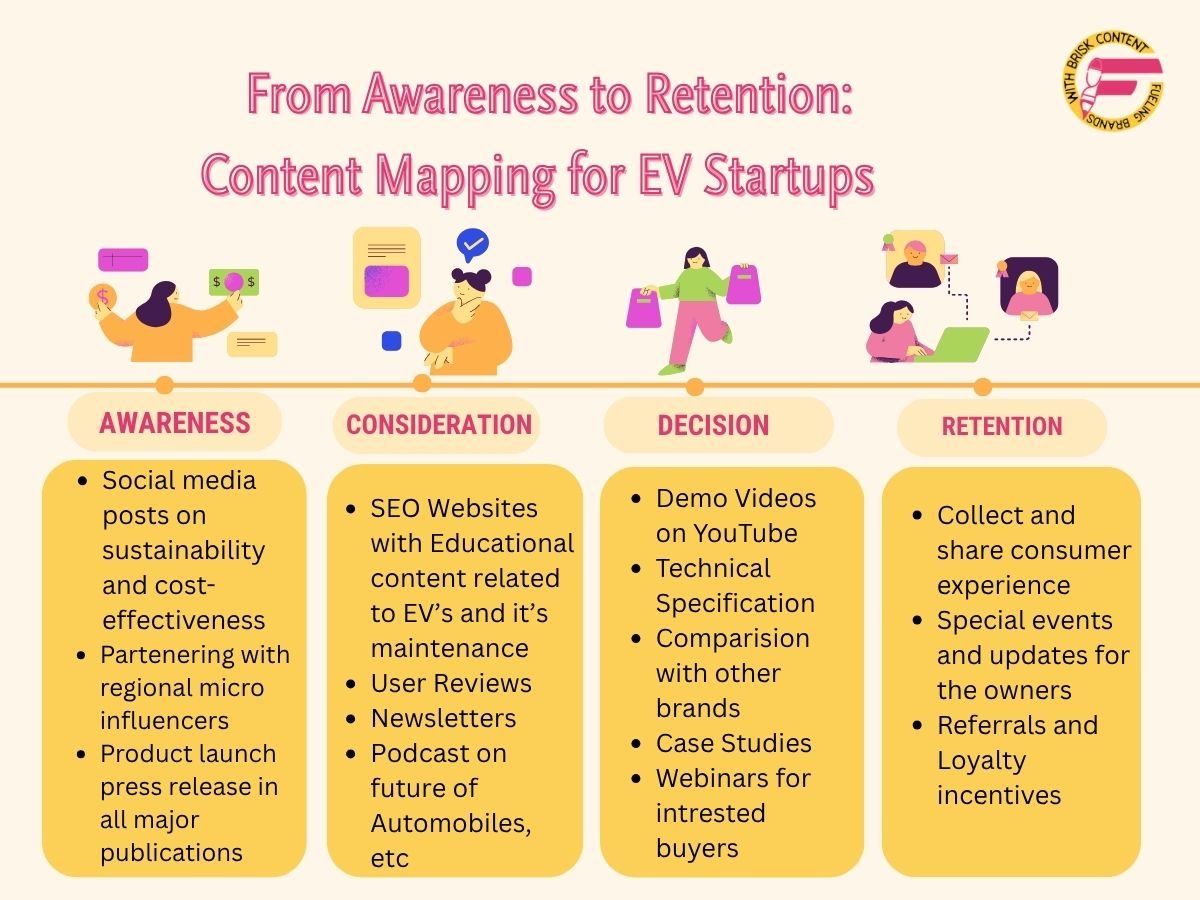
Buyer’s journey content mapping for EV startups

Conclusion

With the Air Quality Index (AQI) dipping in many Indian states and other metropolises, the majority of the urban population is consciously making environmentally viable decisions. V startups seeking to penetrate the market should pitch their products as sustainable, safe and cost-effective to attract Gen Z.

With the help of content marketing, it is not very difficult for startups to penetrate new markets, but the electric vehicle (EV) sector is highly competitive. To succeed, start-ups must differentiate their products. Moreover, to penetrate a new market, they need to clearly understand their audience’s values and needs and devise a content strategy accordingly. It is also critical to understand the market’s economic conditions and social norms.

The type of content you create for marketing should first prioritize understanding local culture, building awareness (for both the environment and the brand), and addressing customer concerns about your product. The content should not only be useful and informative but also entertaining and attention-grabbing to spread awareness quickly.

Use Google PPC (pay-per-click) to reach potential customers instantly. Through an SEO-optimized website and targeted Google Ads, your EV brand will appear when users search online for electric vehicles or sustainable transport solutions.

Digital content marketing is way cheaper, has a wider reach and is more effective than pushy traditional marketing. Thus, it is the best choice for startups looking to make an impact in a new market with limited resources.

FAQ’s

Q1. How much should an EV startup budget for content marketing when entering a new market?

Most growth-stage startups allocate between 8% and 15% of their marketing budget to creating content and distribution. he good news is that content marketing’s ROI compounds over time — a blog post written today continues to drive organic traffic for years, unlike a paid ad that stops working the moment you stop paying for it.

Q2. What types of content are needed to reach buyers in emerging markets such as India, Southeast Asia, and Africa?

Content that directly addresses buyer anxiety around price, charging infrastructure, and product reliability performs best in the emerging market. Also, make sure the content in regional languages adheres to all cultural norms. Short-form video (Instagram Reels, YouTube Shorts) and WhatsApp-friendly infographics also tend to have significant reach, given mobile-first internet usage.

Q3. How long does it take for content marketing to show results for an EV startup?

Content marketing is a medium-to-long-term investment. EO-focused blog content usually takes 4–9 months to rank on search engines and generate consistent organic traffic. While social media community building and YouTube channels usually show meaningful growth in engagement within 3–6 months of consistent posting. However, a viral video, a well-timed press release, or an influencer partnership can dramatically compress this timeline.
Ready to make your EV brand stand out in a crowded market? Partner with our expert content marketing team to craft strategies that drive leads, build trust, and accelerate growth.
Contact US

Categories
Blogs Content Marketing Content Writing NEW

10 B2B Content Marketing Examples That Will Inspire You

Most B2B buyers are no longer convinced by sales pitches alone. They want useful content that helps them make smarter decisions. According to 6sense’s Buyer Experience Report, B2B buyers complete nearly 70–80% of their purchase journey before ever speaking to a salesperson, and 81% have already chosen a preferred vendor by the time they first contact a salesperson. Your content isn’t just marketing. It’s your actual sales pitch

In this blog, we’ll look at real B2B content marketing examples from leading brands and break down what you can learn from them to improve your own strategy and results.

What is B2B Content Marketing?

B2B content marketing entails creating and distributing relevant content to engage business buyers. Unlike B2C content marketing, which focuses on individual consumers, B2C content marketing targets educating and building relationships with other businesses. 

This approach leverages content types such as blogs, ebooks, case studies, and webinars to address the unique needs and challenges of a B2B audience.

Examples of B2B Content Marketing!

Example 1: Hubspot

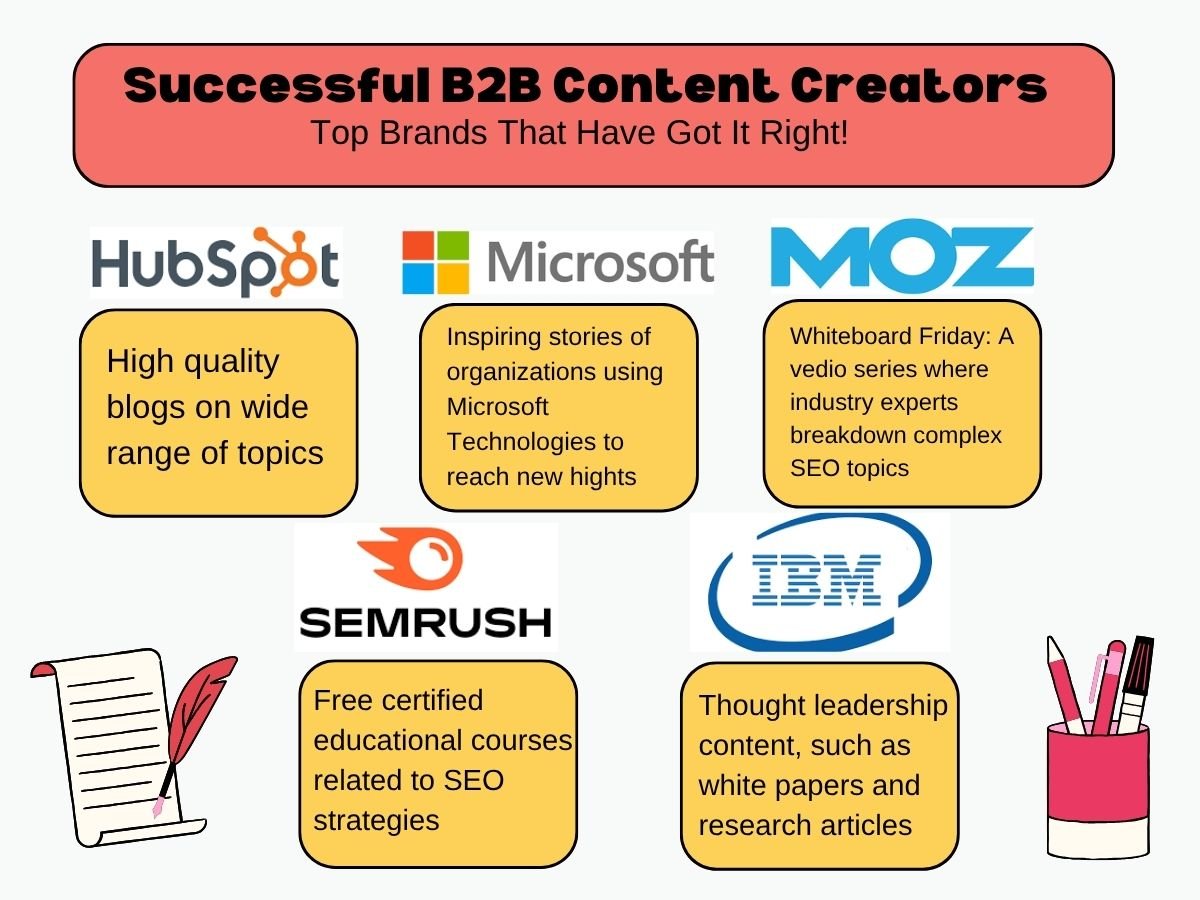
HubSpot has established itself as a reliable resource for marketers by consistently publishing high-quality blog content on a wide range of topics, from SEO techniques to sales strategies. Its educational articles empower businesses to enhance their marketing performance, attract more website visitors, and convert leads effectively. 

Example 2: Semrush

The visibility management SaaS platform Semrush offers free educational courses to help users learn and apply effective SEO strategies. This B2B content marketing approach demonstrates how customers can use its tools while showcasing the value it provides to potential clients. To make the experience more engaging, Semrush rewards learners with certificates upon passing an exam.

Example 3: Shopify

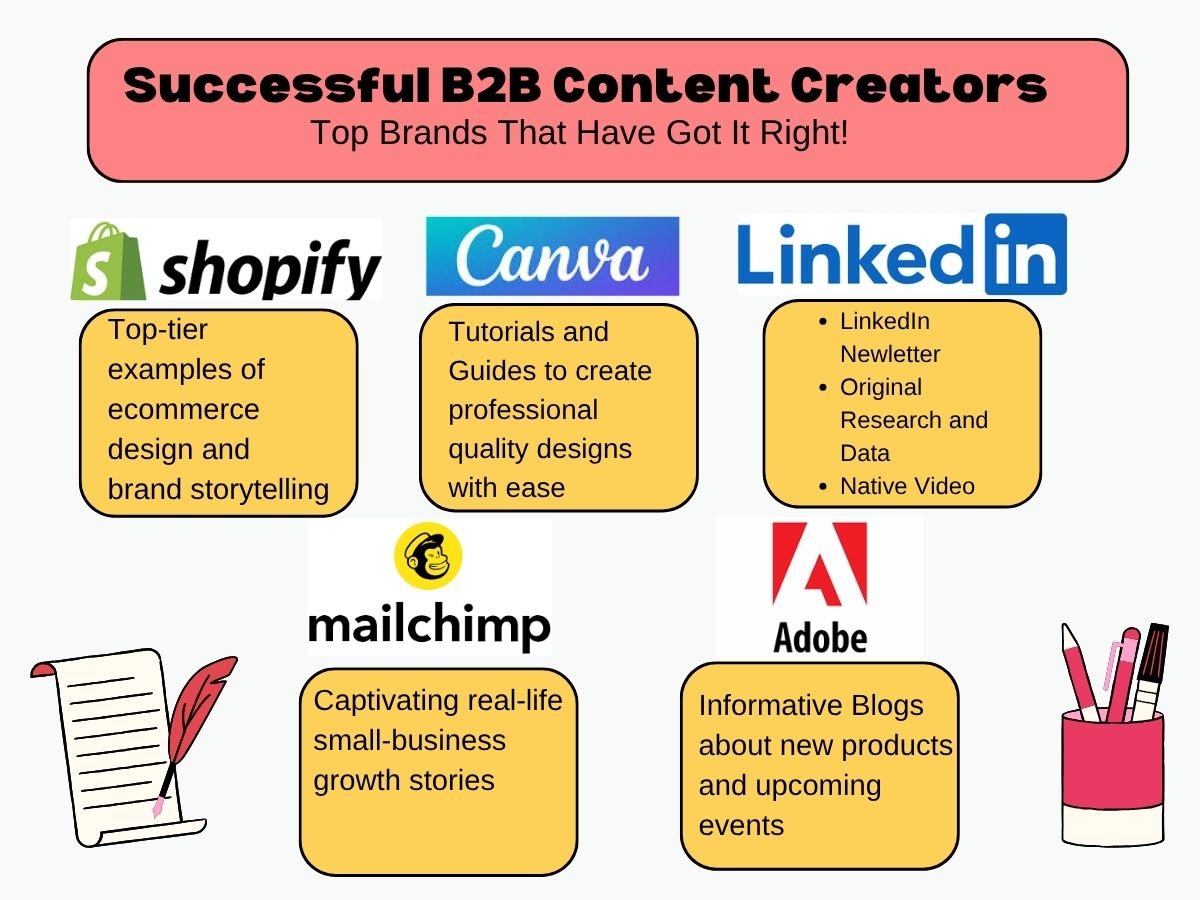
Shopify, a leading Canadian e-commerce platform, provides a large range of services that enable online retailers to create stores, manage sales, process payments, handle shipping, and market to customers. The company benefits from diverse content formats such as blogs, videos, podcasts, online courses, how-to guides, and a user forum to support every stage of its marketing funnel. By improving this content for relevant keywords, Shopify improves its search rankings and generates more traffic to its website.

Example 4: Mailchimp

Mailchimp connects with its audience through captivating and informative content. Sharing insightful stories about marketing and small-business growth helps the brand grab attention and strengthen its reputation as an expert resource in the industry. To learn how to write impactful case studies, read our blog on How to create B2B case studies.

Example 5: Canva

Canva, a popular graphic design platform, helps users create visually compelling social media posts, presentations, and marketing materials. The brand exemplifies effective B2B content marketing by applying the same principles it teaches using appealing visuals, clear messaging, and clean design to engage its audience.

Through blogs, tutorials, guides, and events, Canva focuses on conveying a seamless user experience while showcasing its core value. This consistent, customer-centered approach has made Canva a trusted resource and a strong voice in the design industry.

Example 6: Adobe

Adobe is a strong example of effective B2B content marketing, especially for brands aiming to engage a diverse, creative, and global audience. The company shares a wide variety of content, from inspiring customer stories, such as an artist using creativity to process grief, to filmmakers producing a movie with Adobe Creative Cloud.

It also publishes informative blogs about new products and upcoming events. Adobe’s content consistently educates, motivates, and empowers both its prospects and existing users.

Example 7: Microsoft

Microsoft’s Stories series stands out as a powerful example of B2B content marketing. It throws light on the people and organizations using Microsoft technologies to achieve goals. From students designing robots for social good to innovators using AI to tackle global problems, each story reveals how Microsoft solutions help drive meaningful change. 

By showing how its technology helps people in real life, Microsoft makes it a tool for progress instead of just another product.

Example 8: IBM’s Thought Leadership Strategy

IBM uses thought-leadership content, such as white papers, research reports, and expert articles, to spotlight its technology innovations and expertise. This strategy helps the company earn trust, build credibility, and strengthen its reputation as a leader in the industry.

Example 9: Moz

Moz is an SEO platform and digital marketing toolset designed to help businesses increase their online visibility. The company connects with its audience through its popular educational video series, Whiteboard Friday. Presented in a friendly and approachable style, these videos feature industry experts who share insights on SEO trends, strategies, and best practices. 

Covering topics from new search trends to effective content planning, the series positions Moz as a trusted thought leader while promoting its range of services.

Example 10: LinkedIn B2B Institute

The LinkedIn B2B Institute is a research center that explores new ways to drive B2B growth. It regularly shares content on marketing trends and best practices to help businesses enhance their marketing, attract more valuable website traffic, and generate quality leads. In doing so, it also strengthens LinkedIn’s brand as a go-to platform for B2B marketers looking to stay ahead of the competition.

The B2B Video Shift

If you think video is only for B2C brands, the numbers say otherwise. 58% of B2B marketers consider video marketing as an effective content type, and 37% are actively increasing their video budgets in 2026.

Today’s B2B buyer uses video at every stage of the purchase journey. From short-form LinkedIn videos for discovery, to in-depth explainer videos and webinars before making a final decision. In fact, video has become one of the most effective formats for reducing buyer hesitation and building trust.

Moz has understood this for years. Their Whiteboard Friday series consistently turns complex SEO topics into accessible, engaging videos that educate their audience. Shopify leverages a full mix of video formats, including tutorials, how-to guides, and founder stories, to support every stage of its marketing funnel.

The message is clear: video is the format your buyers are actively seeking out. Whether it’s a 60-second LinkedIn clip or a 20-minute deep-dive webinar, showing up on video instantly builds trust.

Combine AI Speed with Human Depth to Rise Above the Noise

The rise of AI has completely changed how B2B brands create and distribute content. According to recent data, 85% of B2B marketers now rely on AI tools for content creation. Using AI tools to brainstorm ideas, summarize research, and draft content at scale.

But as AI makes content creation faster, the internet is flooded with generic posts that all sound the same. This is why the top brands bet on what AI cannot replicate: original research, first-hand expertise, and real customer stories.

Brands like IBM are already ahead of this curve. Their white papers, research reports, and expert-driven articles are built on genuine insight and credibility. Adobe takes a similar approach by sharing real customer stories that inspire and educate, giving their content a human depth.

So, the final takeaway for your B2B content is to use AI to work smarter, but invest in experience-led content to stand out. Buyers can tell the difference, and so can Google

To learn more about effective B2B marketing stratergies read our blog on 7 content hacks for successful B2B marketing.

Conclusion

The best B2B content marketing examples prove that real success comes from consistently delivering useful, engaging content. When brands share educational resources, real stories, and practical insights, they build trust and long-term relationships. By taking inspiration from these leading companies, you can shape a content strategy that strengthens your brand, attracts quality leads, and supports sustainable business growth. Visit Content Fayah to start building a powerful content marketing strategy customized to your business goals today.

 If you’re ready to create B2B content that not only ranks but also resonates with your audience, let Content Fayah help you.
Contact us
What is B2B content marketing?

B2B content marketing involves creating and sharing valuable content to attract and engage other businesses, build trust, and drive sales or partnerships.

Why is B2B content marketing important?

It helps companies establish authority, nurture leads, and create significant relationships with their target businesses, leading to long-term growth.

What types of content are best for B2B marketing?

Blogs, white papers, case studies, videos, webinars, and podcasts are some of the most effective formats for B2B content marketing.

How can a business start a B2B content marketing strategy?

Start by understanding your audience, setting clear goals, choosing the right content formats, and focusing on consistency and value. Learn from examples set by top B2B content marketing brands such as HubSpot and LinkedIn.