
Categories
Blogs Content Marketing

17 Massive Content Marketing Examples to Boost Your Brand

Are you a new marketing company seeking inspiration and case studies to understand better how branding and promotion may strengthen your business? Worry not because you are exactly where you should be.

In this digital era of business, marketing has become an easy path to success. There are multiple ways and roots to promote your brand like a pro.

Successful entrepreneurs and brands are always here to help and figure out how it all works because they have been through exactly what you’re going through.

We have numerous examples of different brands to boost your fresh new startup company; let’s learn briefly about them and how they’re marketing their products. 

Augmented Reality Examples

  1. Ikea

Who doesn’t like spending time at Ikea, the Swedish furniture brand? We all enjoy roaming the aisles of the lavishly furnished market. Some consumers who are too busy and occupied to purchase new furniture might be unable to find the time to visit the store.

Hence, Ikea has created an app where customers can place furniture in their homes without even buying it. Yes, you read that right. Without buying, we can now determine which art piece will suit our home’s wall.

This is an excellent way of enhancing the products and marketing them smartly.

  1. L’Oreal Paris 

The new L’Oreal Paris app “try before you buy” features a tool that allows users to quickly try on a product virtually and figure out what shade of lipstick or blush will suit their skin tone without even buying it. 

This feature allows customers to try the product without even purchasing it from the comfort of their home.

This is an excellent idea for promoting or marketing your product while making customers happy with the new updates.

  1. McDonald’s 

McDonald’s new customer service feature, “question time,” helps people understand what ingredients are in the food they’re about to consume. 

We can now determine what product is used in the burger patty we’re about to devour. This feature helped McDonald’s build connections with customers by being honest. 

Customers can feel more free and connected with the brand. It also drove authenticity across different platforms. 

  1. Coca-cola

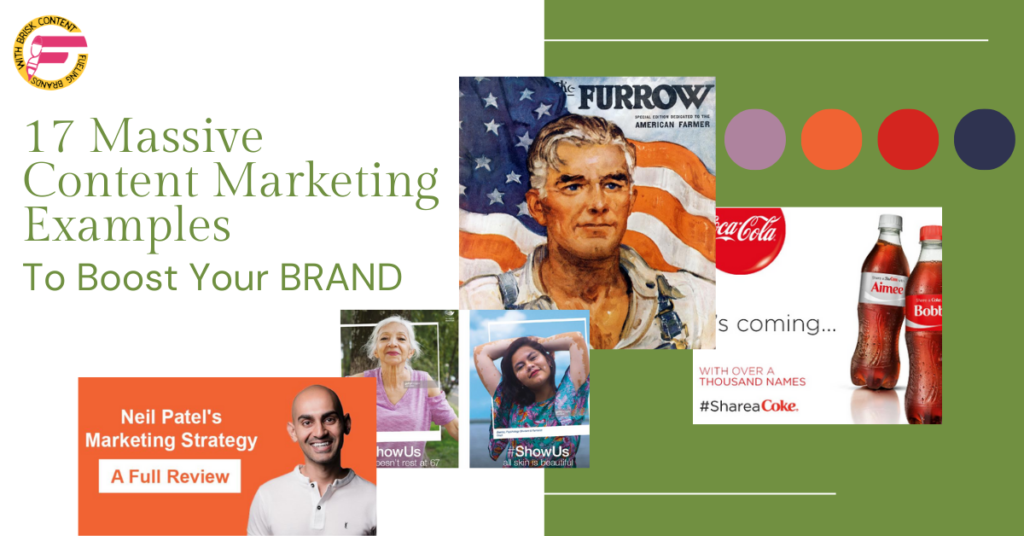
Coca-Cola launched a new marketing campaign called “Share a Coke,” in which the beverage company printed familiar names on the bottle.

This step by the brand touched the sky with success as people started buying the product just for the name on the bottle.

Who doesn’t enjoy talking about themselves, after all? 

Seeing your name on a bottle sparked joy and conversation, leading to excellent product marketing.

  1. Rolex

Visualization plays a crucial role in marketing. People buy what they find attractive and eye-catching, and this is precisely what Rolex worked on. 

To capture the classic aesthetic of its brand, Rolex uses Instagram photographs. The pictures scream classic, simplicity, and the product’s sparkliness, resulting in millions of followers on the social media app.

Blog Examples

  1. Neil Patel’s Marketing Blog

Neil Patel is everywhere, helping businesses broaden their marketing and educating them. His in-depth guides and blogs on KissMetrics and Quick Sprouts rank him in the top five, and he assists many entrepreneurs who started their businesses from scratch.

Patel is a prolific blogger, earning around 3 million visitors on his blog every month. His aggressive content marketing strategy is the primary reason behind this success.  

Although his articles are straightforward, he goes all in on the information he provides. From using charts and graphs to providing accurate statistics and personal experiences, he always delivers as much content as possible. 

  1. HubSpot

HubSpot is a machine that creates and spreads content. They are doing incredibly well with their work.

HubSpot recommends that amateurs publish 4-6 blogs per day on their site. Posting content frequently will engage you with your audience on any platform. 

HubSpot posts regular blog posts, ebooks, and whitepapers. It also creates and broadcasts multiple webinars and videos. 

  1. Shopify 

Despite its e-commerce niche, Shopify also posts bulk content on its website. Its blog reflects on its journey and that of the people who sell through it.

Shopify had more than 26 million page views in the last year alone. It also conducts a podcast show called “Shopify Masters,” where they interrogate successful store owners and have long conversations with them. 

The primary reason Shopify is doing so well with blogs is that they understand their audience.

We take this away from them: Do not limit your reach and content scope just because you don’t have a niche or if you have a proper niche. 

  1. Etsy

Etsy is also an online marketplace, like Shopify. In its e-commerce niche, Etsy sells handmade and aesthetic vintage goods. The brand uses blogs to market its products and goods on different apps.

Products from Etsy are ideal for marketing on Pinterest, where users, particularly the younger generation, enjoy looking through attractive and cosmetic products. 

Etsy has 9.7 million Pinterest followers, 10 million+ monthly visits, and 3 million Instagram followers.

The brand is famous for its handicrafts, designs, aesthetically pleasing visuals, and photography.

Etsy advertises its work on social media and blogs because its customers admire its presentation.

  1. Zip Recruiter’s podcast

The recruitment site ZipRecruiter collaborated with Shark Tank star Daymond John to create the podcast “Rise and Grind with Daymond John.” 

John invites and features entrepreneurs, athletes, and musicians worldwide in his show. ZipRecruiter made an astounding move, not to promote and talk about his service but to talk about things that motivate people.

People listen to podcasts to be entertained, educated, and motivated; making them interested in you by marketing your company and goods will turn them off. 

  1. Microsoft’s “Stories” blog

Life stories and personal experiences connect us. We hear the life tales of hundreds of people; that is what we connect to and relate to.

Microsoft created a new way of expanding its business through this human act. The new “stories” blog helps consumers become more familiar with Microsoft, which helps build brand loyalty and repeat business.

  1. Xero Blog

Xero is a famous online B2B brand that invests in content marketing to promote and advertise its products through blogs. 

The Xero blog’s target audience is mainly interested in topics related to small businesses, tech, and products. 

It demonstrates the significance of this digital marketing tactic: a well-known B2B company like Xero utilizes content marketing to publish stories on its blog.

Social Media Marketing examples

  1. Starbucks

Starbucks started campaigns like #ShotOfPride and #WhatsYourName to support the LGBTQ+ community and gender-diverse youth, respectively. This move created a huge buzz among the public.

Approximately 70-80K likes were gained on Instagram. Starbucks used real people and a politically uplifting trend to attract its audience.

They also started a “one of the people” trend to share real-life stories.

The critical takeaway from Starbucks is that, as a social media marketer, you must follow the trend that creates a long-lasting impression on people. 

  1. Dove’s #ShowUs project

Dove started an initiative called #ShowUS to shatter beauty clichés. Working with Getty Images, they took photos of everyday individuals and non-binary persons without editing to demonstrate true beauty. 

The project reached around 2 billion people in 39 countries; 500+ women participated; around 660 media pieces were created, and more than 700,000 posts were made on Instagram. 

We realize from this project as marketers that people on social media want to be connected with real people who understand unrealistic beauty standards and want to be featured as such.

As a social media marketer, run a campaign or hashtag that makes people feel noticed and special.

  1. Gillette

In 2019, Gillette posted a short film exclusively on YouTube, aiming directly at the modern interpretation of manhood, called “Gillette: We Believe: The Best Men Can Be”. The film depicted the cases of men going through masculinity, bullying, and sexual harassment.

The film launched in the campaign got more than 27 million views and around 1K likes on Instagram (which is more than the usual post from Gillette). The #GilleteAd reached almost 150 Million people in just one month.

Even though the ad reached millions, some found it offensive and started a hashtag #boycottgillette. Nonetheless, it didn’t get much attention, and men felt appreciated.

It isn’t easy to be politically active, but if you can, do it. This calls for investigation, audience feedback, and a profound comprehension of your brand voice.

Content Marketing examples

  1. LinkedIn

We know that LinkedIn is a vast platform for searching for jobs and hiring. Its marketing relies on visualization.  LinkedIn uses visualization as a significant marketing tool. It uses all images for blogs, quotes, posts, Illustrations, etc.  

Use images and pictures to keep your audience interested and engaged. 80% of LinkedIn users are unlikely to read the posts you make, but they will undoubtedly see the images and videos you upload.

  1. The Furrow

John Deere, the founder of “The Furrow,” has been using B2B content marketing even before we started calling it that (a century ago). Deere was a blacksmith who saved farmers struggling to turn the heavy, sticky prairie soil with traditional plows made for New England’s light, sandier soils.

He published the magazine “The Furrow” to educate farmers with the latest technology to solve the newest farming problems.

His magazine mainly focused on a farmer’s problems rather than his inventions and products.

The article is still published in the journal and discusses the contemporary issues farmers face while scarcely mentioning their products.

“The Furrow” is an excellent example of B2B content marketing.

In a nutshell

Multiple companies are creating epic content on their websites along with these. If these successful companies can occupy the facility of content marketing strategy, why not you?

We explored 17 content marketing examples that boosted their companies even without a content strategy. 

Carefully analyze your approach based on what works best for your brand, where you can find talent and the resources you have at your fingertips. After you have outlined your plan, you can go forward.
Categories
Blogs

7 Lead Generation Strategies for Start-ups

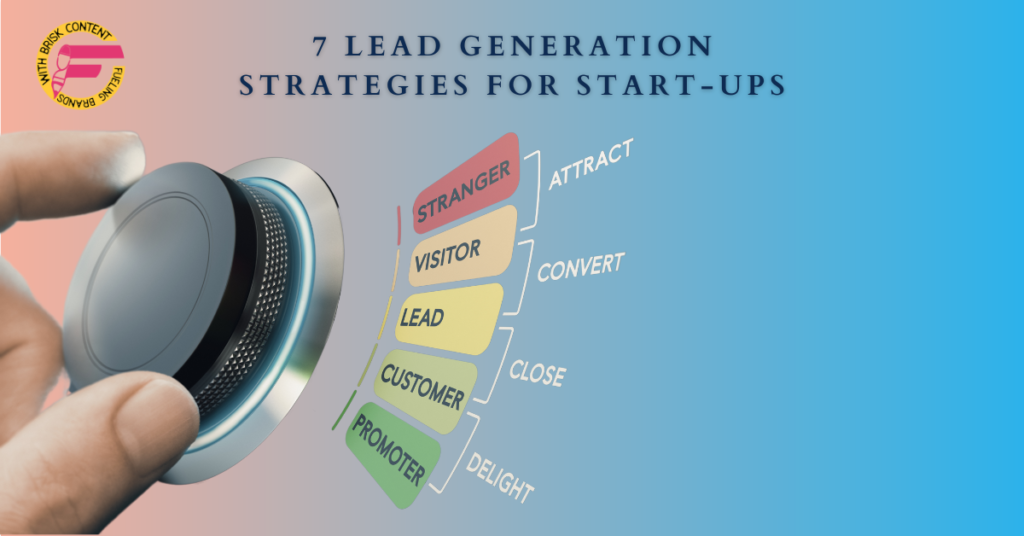
Are you tired of feeling like your startup is stuck in neutral? You know you have a fantastic product or service, but you just can’t seem to reach the right people. Well, don’t throw in the towel just yet because, with the right lead generation strategies in place, you can quickly and effectively attract new customers and take your business to new heights.

In this article, let us reveal seven proven tactics that can help you generate leads, from leveraging the power of social media to harnessing the potential of referral marketing. So, buckle up, and get ready to learn how to take your startup from struggling to thriving!

  1. Content Marketing:

As a startup, you’re inclined to spread the message about your product or service. But how do you reach your target audience and show them what your brand offers?

This is where content marketing comes in. By creating valuable and relevant content, such as blog posts, videos, infographics, or e-books, you can establish yourself as an industry expert and attract potential customers.

For example, if you sell workout clothes for women, creating a blog that provides workout tips, nutrition advice, and healthy living inspiration can be an excellent way to engage with your target audience and generate leads.

By offering them helpful content, you’re not only showcasing your knowledge and expertise but also providing them with something of value, making them more likely to remember your brand and return for future purchases. So, start brainstorming some topics that would be of interest to your target audience, and let your content do the work of attracting and engaging potential customers.

  1. Social Media Marketing:

As a startup, you have a unique opportunity to harness the power of social media to reach a wider audience and build brand awareness. By creating and sharing content, you can engage with potential customers and show them what your brand has to offer.

Social media platforms also offer advertising options that can help you target specific audiences. For instance, if you sell handmade jewelry, creating a Facebook page and running a social media campaign that targets women interested in fashion and accessories can be an effective way to get your brand in front of the right people.

By showcasing your products in a visually appealing and engaging way, you can entice potential customers to visit your website and make a purchase. So, start by identifying which social media platforms your target audience uses most and create a plan for regularly posting engaging content that showcases your brand and products. With a little time and effort, social media can be a powerful tool for growing your startup.

  1. Email Marketing:

Email marketing can be a powerful tool for reaching your potential customers. And as a startup, it’s a cost-effective way to promote your products or services and build relationships with potential customers.

By sending relevant and personalized emails, you can capture the attention of potential customers and encourage them to take action. Email campaigns can nurture leads, keep subscribers informed of new developments in your startup, and promote your products or services.

For example, if you offer monthly subscription boxes, sending email campaigns to promote your latest box and encourage subscribers to refer friends and family can be an effective way to generate more leads and grow your customer base. By providing subscribers with a sneak peek of what’s inside the box and offering them incentives to refer others, you’re not only promoting your product but also building relationships with your subscribers.
So, start by building a list of email subscribers and creating campaigns that provide value and encourage action. With a little bit of creativity, email marketing can be a powerful tool for growing your startup.

  1. Search Engine Optimization (SEO):

It is vital for a startup to appear at the top of search engine results. And with search engine optimization (SEO), startups can improve their website’s visibility and attract potential customers who are searching for their products or services.

By using relevant keywords, high-quality content, and link-building, you can improve your search engine ranking and increase your chances of being found by potential customers.

For example, if you offer online interior design services, using relevant keywords and high-quality content on your website can improve your search engine ranking for terms such as “online interior design services”.

By creating blog posts or articles that offer helpful tips and advice, you’re not only improving your search engine ranking but also showcasing your expertise and building trust with potential customers.

So, start by identifying which keywords are relevant to your startup and create high-quality content that incorporates those keywords. With a little bit of effort, SEO can be a powerful tool for growing your startup and reaching a wider audience.

  1. Paid Advertising:

Paid advertising can be an effective mode for reaching a wider audience. And for startups, it can be a quick and convincing way to generate leads and promote their products or services.

With options such as pay-per-click (PPC) advertising, display advertising, or social media advertising, startups can choose the type of advertising that best fits their target audience and budget.

For example, a startup that sells eco-friendly cleaning products can use Google Ads to target customers searching for eco-friendly household cleaning products.

By using relevant keywords and ad copy, the startup can ensure that their ads are being seen by potential customers who are actively searching for their products.

Social media advertising is also a great option for startups looking to promote their products or services on platforms such as Facebook or Instagram. By targeting specific demographics and interests, startups can reach a wider audience and generate leads quickly.

So, if you’re looking to grow your startup quickly and efficiently, paid advertising is definitely something to consider.

  1. Referral Marketing:

Have you ever recommended a product or service to a friend or family member? Referral marketing is based on that same concept of word-of-mouth recommendations.

It can be a powerful way for startups to generate leads and build customer loyalty. By offering incentives such as discounts, free products, or exclusive access, startups can encourage existing customers to refer their friends and family to the business.

And let’s be real, who doesn’t love a good discount or freebie? As a consumer, I know I’m more likely to try a new product or service if it’s been recommended by someone I know and trust.

For example, a startup that sells plant-based meal delivery services can offer a discount to existing customers who refer to a friend.

By doing so, the startup generates new leads and builds customer loyalty by rewarding existing customers for their support.

  1. Networking:

As the saying goes, “it’s not what you know, it’s who you know.” And when it comes to startups, networking can be a game-changer. By attending industry events and conferences, startups have the opportunity to meet other entrepreneurs and industry leaders.

Not only can networking help startups build valuable relationships, but it can also lead to potential partnerships and referrals. As a business owner, you will soon realize that some of your best opportunities will come from networking events.

For example, a startup that offers social media management services can attend a social media marketing conference to connect with potential customers and industry leaders.

By doing so, they can not only generate leads but also learn from other experts in their field and stay up-to-date on the latest industry trends.

To wrap it up
Lead generation is like planting seeds for the future success of a startup. By using a mix of the above-mentioned methods, startups can cultivate a thriving customer base. It’s important to know your audience, set clear goals, and use a combination of strategies that fit your budget and resources. Just like a farmer tends to their crops, startups need to continuously monitor and optimize their lead generation efforts to ensure growth and success. With the right approach, and good quality human-generated content your startup can attract and convert more potential customers, leading to a brighter future for your company.

Connect with Content Fayah to know how our content marketing ideas can give a boost to your startup.