Categories
Blogs Content Marketing

How can your written content boost your SEM Strategy 

Search engines may run on algorithms, but SEM wins or loses depending on how clearly you talk to people, not robots. In fact, the average landing page converts at about 6.6% across industries, while the top 10% push above 11%, which shows how much your on‑page message and structure can separate you from the pack. When your ads and landing pages use the same everyday language your audience types into Google, you earn better Quality Scores, cheaper clicks, and more chances to turn those searches into sales. 

Strong headlines, simple ad copy, and focused landing pages help people see, in a split second, that they are in the right place, which is why “good words” often beat “big budgets.” With the right message, Search Engine Marketing becomes less about bidding wars and more about attracting people who are ready to act.

What is Search Engine marketing?

Search engine marketing (SEM) means paying to show ads on search engines like Google when people type certain keywords. Ads appear above the organic results so you can catch users who are ready to buy or learn more. SEM covers search ads, shopping ads, and branded campaigns that drive traffic to pages designed to convert visitors into leads or customers. Clear writing helps your ads promise real value, and your landing pages deliver on that promise, boosting Quality Score and potentially lowering your cost per click.

Users leave quickly if the page doesn’t match what they searched for, so relevance earns top spots at better prices. Simple headlines with clear benefits and copy that answers basic questions turn more clicks into customers without always raising your bids.

​How Can Keyword Research Align SEM and Content?

Keyword research syncs SEM and content by matching user queries to tailored pages, skyrocketing Quality Scores and slashing costs.

Alignment Roadmap

  • Discover Intent: Analyze tools like Ahrefs for volume, difficulty, and searcher goals to pinpoint high-value terms.
  • Map Strategically: Assign keywords to funnel stages top for awareness posts, bottom for sales pages, which ensures ad-to-content flow.
  • Optimize Deeply: Weave terms naturally into titles, intros, and CTAs, lifting relevance and dwell time by 30%.
  • Measure & Iterate: Track conversions in Google Analytics, refining clusters to achieve 20%+ ROI gains.

​If you want to learn all about keywords, then read our blog on the best keyword optimization techniques

How Do Search Engine Marketing & Ad Auctions Work?

Search engines use ad auctions to decide which ads show and where they appear on the page every time someone searches. In Google Ads, your Ad Rank depends on your bid, Quality Score, and expected impact of ad extensions and formats, not just how much you are willing to pay. 

Quality Score itself looks at expected click‑through rate, ad relevance, and landing page experience, so your words and on‑page content directly affect how much you pay per click.

  1. Search intent

Search intent indicates what the user wants to do, such as learn something, find a site, or buy a product. When your ad and landing page match that intent, Google marks your ad as more relevant and rewards you with higher Quality Scores and lower CPCs. You can spot intent in words like “how” or “best” for research, and “buy,” “price,” or “near me” for shoppers, then tailor your headline and copy to match.

  1. Keyword competition

Keyword competition measures rival bids and ad strength, rated by Quality Score (1-10). Fierce fights hike costs, but relevance-focused ads outrank higher bidders. Target mid-tier or long-tail keywords to claim spots at an affordable rate.

  1. Keyword volume and cost

Keyword volume tracks monthly searches, balancing high-traffic terms with rising costs against niche ones with lower CPC. High volume draws more auctions but demands premium bids; tools forecast costs to target value. Aim for 1,000+ volume keywords with CPC under $2 for scalable ROI.

Why Are High-Quality Landing Pages Vital for SEM?

High‑quality landing pages are vital because they decide what happens after the click, and they feed back into your Quality Score. Google checks whether your landing page is appropriate, easy to use, and transparent, and this “landing page experience” score affects your ad position and CPC. When landing page experience and ad relevance are rated above average, click‑through rates can rise by 87% and conversion rates by 750%, underscoring the importance of clear content and structure.

A good SEM landing page repeats the core promise from the ad, answers key questions quickly, and points to one main call to action. Pages that focus on a single offer, avoid clutter, and load quickly tend to convert far better than generic homepages and send a strong signal of relevance back to the ad platforms. Recent data shows that landing pages from PPC search traffic convert at about 10–11%, but high performers that test headlines, copy, and forms can reach much higher rates. This means every improvement you make to the written content on your landing page can both increase conversions and lower CPC at the same time.

How Can Content Drive Higher Conversions in SEM?

Content drives higher conversions in SEM when it speaks directly to the user’s problem and makes the next step feel safe and easy. Strong headlines echo the user’s search terms and highlight a clear benefit, such as saving time, reducing risk, or getting a better price. Supporting copy then addresses the main objections, explains what happens after the click, and uses social proof such as reviews or case results to build trust quickly.

In the checkout area, simple wording and short, clear labels can reduce friction and drop-offs. Many landing pages convert best when they ask for only the most important fields, because every extra field can lower completion rates. Testing content through A/B experiments, such as trying different headlines or calls to action, often shows that small language changes can lift conversions by meaningful margins. When your copy aligns with user intent and keeps the promise made in the ad, you turn more clicks into customers without always increasing ad spend. 

How Content Drives Higher Conversions in SEM?

What Role Does Retargeting Content Play in Search Engine Marketing?

Retargeting content pulls back visitors who left your site or saw your ads. These warm leads convert 43-70% better than new leads, with some campaigns achieving 150% lift. Tailor messages to past actions, like cart abandoners, who see free shipping ads. Use friendly reminders with urgency, not pushy sales. Retargeting cuts acquisition costs by half and increases click rates compared to display ads. Pair it with a search for full coverage. Clear, helpful copy nudges users to finish without annoyance, turning browsers into buyers across the funnel.

How Should You Use Analytics to Optimize Search Engine Marketing(SEM) Content?

Analytics reveal how users respond to SEM content to inform smart fixes. Track CTR, bounce rate, time on page, and conversions per keyword in Google Analytics. High click-through rate but low sales signal an intent mismatch. Rewrite the copy to fit better. Compare devices and audiences to spot wins, like shorter mobile intros. A/B test headlines and CTAs for proven lifts. 

Regular checks turn data into better writing that exceeds average rates of 10-11%. This loop refines ads and pages so each change brings more revenue from the same spend.

Conclusion 

Written content is the thread that connects every part of your SEM strategy, from keyword research and ad auctions to landing pages and retargeting. When your words match real search intent and lead to helpful, focused pages, you earn higher Quality Scores, lower CPCs, and stronger conversion rates. Instead of treating SEM as a pure bidding game, treat every keyword as a conversation and every click as a chance to prove value. 

Review your current ads and landing pages, update the language to match user intent, and test one improvement this week. With each round of better writing and smarter targeting, you build a system that attracts the right visitors, earns their trust, and converts more of them into loyal customers.

How does better written content improve SEM results?

Better-written content improves SEM results by aligning with user intent, boosting Quality Scores, and helping landing pages convert more clicks into leads or sales.

 How often should I update my SEM ad copy and landing page content?

You should review and update your SEM ad copy and landing page content at least every few weeks, using performance data to test new headlines, offers, and calls to action.

What is the first content change I should make to boost SEM performance?

A good first change is to rewrite your main headline so it repeats the key search keyword and clearly states one strong benefit for the user.

Categories
Blogs

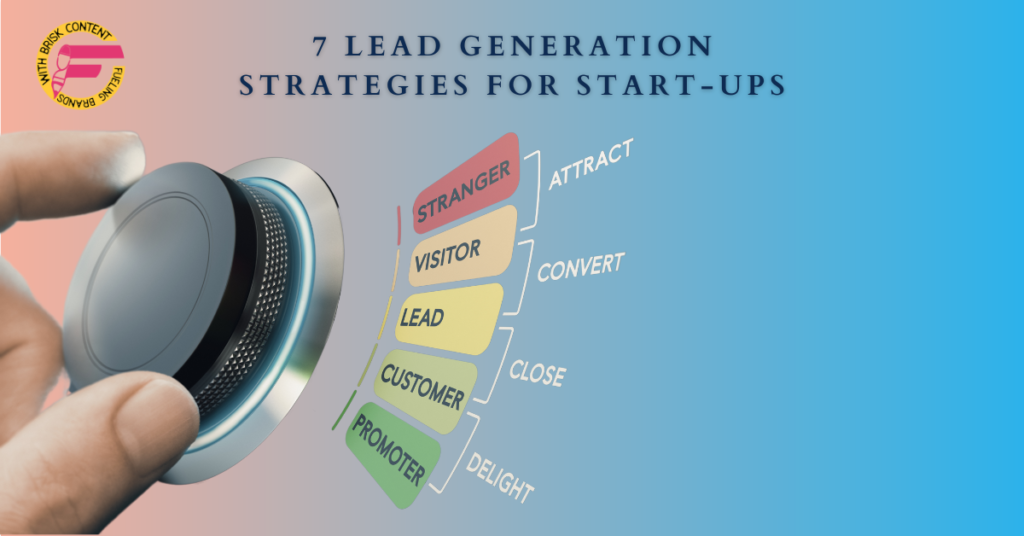
7 Lead Generation Strategies for Start-ups

Are you tired of feeling like your startup is stuck in neutral? You know you have a fantastic product or service, but you just can’t seem to reach the right people. Well, don’t throw in the towel just yet because, with the right lead generation strategies in place, you can quickly and effectively attract new customers and take your business to new heights.

In this article, let us reveal seven proven tactics that can help you generate leads, from leveraging the power of social media to harnessing the potential of referral marketing. So, buckle up, and get ready to learn how to take your startup from struggling to thriving!

  1. Content Marketing:

As a startup, you’re inclined to spread the message about your product or service. But how do you reach your target audience and show them what your brand offers?

This is where content marketing comes in. By creating valuable and relevant content, such as blog posts, videos, infographics, or e-books, you can establish yourself as an industry expert and attract potential customers.

For example, if you sell workout clothes for women, creating a blog that provides workout tips, nutrition advice, and healthy living inspiration can be an excellent way to engage with your target audience and generate leads.

By offering them helpful content, you’re not only showcasing your knowledge and expertise but also providing them with something of value, making them more likely to remember your brand and return for future purchases. So, start brainstorming some topics that would be of interest to your target audience, and let your content do the work of attracting and engaging potential customers.

  1. Social Media Marketing:

As a startup, you have a unique opportunity to harness the power of social media to reach a wider audience and build brand awareness. By creating and sharing content, you can engage with potential customers and show them what your brand has to offer.

Social media platforms also offer advertising options that can help you target specific audiences. For instance, if you sell handmade jewelry, creating a Facebook page and running a social media campaign that targets women interested in fashion and accessories can be an effective way to get your brand in front of the right people.

By showcasing your products in a visually appealing and engaging way, you can entice potential customers to visit your website and make a purchase. So, start by identifying which social media platforms your target audience uses most and create a plan for regularly posting engaging content that showcases your brand and products. With a little time and effort, social media can be a powerful tool for growing your startup.

  1. Email Marketing:

Email marketing can be a powerful tool for reaching your potential customers. And as a startup, it’s a cost-effective way to promote your products or services and build relationships with potential customers.

By sending relevant and personalized emails, you can capture the attention of potential customers and encourage them to take action. Email campaigns can nurture leads, keep subscribers informed of new developments in your startup, and promote your products or services.

For example, if you offer monthly subscription boxes, sending email campaigns to promote your latest box and encourage subscribers to refer friends and family can be an effective way to generate more leads and grow your customer base. By providing subscribers with a sneak peek of what’s inside the box and offering them incentives to refer others, you’re not only promoting your product but also building relationships with your subscribers.
So, start by building a list of email subscribers and creating campaigns that provide value and encourage action. With a little bit of creativity, email marketing can be a powerful tool for growing your startup.

  1. Search Engine Optimization (SEO):

It is vital for a startup to appear at the top of search engine results. And with search engine optimization (SEO), startups can improve their website’s visibility and attract potential customers who are searching for their products or services.

By using relevant keywords, high-quality content, and link-building, you can improve your search engine ranking and increase your chances of being found by potential customers.

For example, if you offer online interior design services, using relevant keywords and high-quality content on your website can improve your search engine ranking for terms such as “online interior design services”.

By creating blog posts or articles that offer helpful tips and advice, you’re not only improving your search engine ranking but also showcasing your expertise and building trust with potential customers.

So, start by identifying which keywords are relevant to your startup and create high-quality content that incorporates those keywords. With a little bit of effort, SEO can be a powerful tool for growing your startup and reaching a wider audience.

  1. Paid Advertising:

Paid advertising can be an effective mode for reaching a wider audience. And for startups, it can be a quick and convincing way to generate leads and promote their products or services.

With options such as pay-per-click (PPC) advertising, display advertising, or social media advertising, startups can choose the type of advertising that best fits their target audience and budget.

For example, a startup that sells eco-friendly cleaning products can use Google Ads to target customers searching for eco-friendly household cleaning products.

By using relevant keywords and ad copy, the startup can ensure that their ads are being seen by potential customers who are actively searching for their products.

Social media advertising is also a great option for startups looking to promote their products or services on platforms such as Facebook or Instagram. By targeting specific demographics and interests, startups can reach a wider audience and generate leads quickly.

So, if you’re looking to grow your startup quickly and efficiently, paid advertising is definitely something to consider.

  1. Referral Marketing:

Have you ever recommended a product or service to a friend or family member? Referral marketing is based on that same concept of word-of-mouth recommendations.

It can be a powerful way for startups to generate leads and build customer loyalty. By offering incentives such as discounts, free products, or exclusive access, startups can encourage existing customers to refer their friends and family to the business.

And let’s be real, who doesn’t love a good discount or freebie? As a consumer, I know I’m more likely to try a new product or service if it’s been recommended by someone I know and trust.

For example, a startup that sells plant-based meal delivery services can offer a discount to existing customers who refer to a friend.

By doing so, the startup generates new leads and builds customer loyalty by rewarding existing customers for their support.

  1. Networking:

As the saying goes, “it’s not what you know, it’s who you know.” And when it comes to startups, networking can be a game-changer. By attending industry events and conferences, startups have the opportunity to meet other entrepreneurs and industry leaders.

Not only can networking help startups build valuable relationships, but it can also lead to potential partnerships and referrals. As a business owner, you will soon realize that some of your best opportunities will come from networking events.

For example, a startup that offers social media management services can attend a social media marketing conference to connect with potential customers and industry leaders.

By doing so, they can not only generate leads but also learn from other experts in their field and stay up-to-date on the latest industry trends.

To wrap it up
Lead generation is like planting seeds for the future success of a startup. By using a mix of the above-mentioned methods, startups can cultivate a thriving customer base. It’s important to know your audience, set clear goals, and use a combination of strategies that fit your budget and resources. Just like a farmer tends to their crops, startups need to continuously monitor and optimize their lead generation efforts to ensure growth and success. With the right approach, and good quality human-generated content your startup can attract and convert more potential customers, leading to a brighter future for your company.

Connect with Content Fayah to know how our content marketing ideas can give a boost to your startup.