Categories
Blogs

13 CUTTING-EDGE CONTENT WRITING SERVICES YOUR BUSINESS NEEDS

Content writing services play a vital role in establishing robust groundwork for virtually every business. Research at Hubspot shows, that 56% of surveyed consumers have made a purchase from the company after reading their blog. Content services help your business by enhancing the search engine ranking of your website and pulling in new clients.

Agencies offer various content writing services to enable more organizations to profit from the power of content. 

So, are you primed and ready to explore the art of storytelling through various content services that can empower you to harness your brand’s success?

Through this blog, let’s delve deeper into the diverse realm of content writing services!

Top content writing services in high demand

Product Description

The product description highlights the feature, specifications, and benefits of the product to persuade customers to buy the product. The purpose of the product description is to capture people’s interest by emphasizing its features, attributes, and advantages. A great product description helps you pitch your product to potential customers and help influence sales.

Newsletters

Newsletters are the most cost-effective method of taking your brand advertisement to the next level. They help you paint a broader picture of your business and facilitate you to maintain regular contact with your clients and customers. A well-written newsletter can be a powerful asset for your brand in strengthening its market presence. 

Proofreading

Proofreading is another invaluable content writing service that ensures your documents are flawlessly written and error-free. When executed with precision and attention to detail, it enables you to deliver a polished and crafted piece of work. Proofreading ensures language consistency and writing improvement. It can help you polish your material by fixing flaws such as grammatical errors, punctuation, and the overall readability of your material.

Blog writing

Through blog posts, businesses can build credibility and engage with their target audience at the same time. A professionally written blog acts as a platform to increase search engine visibility and enhances the overall online presence of the brand. 

SoP writing

A beautifully presented Statement of Purpose (SoP) is important for students to embark on their academic journey. Hence, it is very crucial to compose an impactful SoP to open doors to valuable educational opportunities and professional journeys. And who could be more suitable than a professional content writer to help you whip up the perfect SoP?!

Email writing

According to Hubspot, 86% of consumers like to receive promotional emails from companies they do business with. The marketing world is changing dynamically. Email marketing is the best way to keep up with the latest trends and connect with your target audience and content writers can help your brand by skillfully composing your emails. Professionals can help you optimize your email, maximize your click-through rates and spark conversations. 

LinkedIn articles 

LinkedIn articles are a powerful medium for establishing professional authority, expanding your network, and enhancing your personal brand. Linkedin has become a dominant force, serving as an influential platform for establishing valuable connections and showcasing one’s expertise. With the help of content writing services, you can make a lasting impression that can help you unlock advancement and growth in your career.

Facebook Posts

Facebook posts serve as a direct platform of communication between your brand and its followers. Engaging in Facebook posts requires research, creativity, and an understanding of the target audience. Content writers can help you incorporate relevant hashtags and keywords to attract new followers and potential customers. By having a professional craft your posts you can use their creative prowess to post impactful content. 

Script Writing

Scriptwriting is applicable to multiple platforms such as films, television, and now online web series. The essence of exceptional screenwriting lies in the ability to externalize the internal; you have to transform your emotions and feelings into words to tell a story visually. Scriptwriting is immensely important in the world of storytelling and entertainment. It is a strong foundation that helps bring stories to life.

Article writing

Articles are a powerful tool for Search Engine Optimization (SEO). High-quality articles filled with relevant keywords improve your website’s ranking in search results. Articles drive organic traffic expanding your reach to potential customers. By sharing valuable insights with your article you can set your brand apart from your competitors. In summary, articles inspire, engage and inform readers to boost your online presence. 

Ad copywriting 

Ad copywriting plays a pivotal role in shaping a brand’s image. A well-crafted ad captures attention and effectively connects with customers. Ad copy delivers a concise yet grabbing message that motivates action. The copy should be persuasive and tap into consumers’ emotions evoking a desire to buy the product or service. Witty ad copy can effectively communicate with the audience and leave a lasting impact.

Business proposals

When it comes to business proposals, persuasive and captivating words are all you need. The foundation of a great business proposal depends on how well can you present your ideas in a visually compelling and impactful way. The perfect blend of creativity and knowledge can boost your chances of winning the deal. Professional writers can help you customize your proposal, making it resonate with the readers. 

Case Study 

In the fast-paced world of business, finding ways to streamline operations and maximize efficiency is paramount. Content creation is one such area where outsourcing can be very efficient and make a significant impact on your business.  Writing a case study requires a unique set of skills, and professionals can help you whip up a case study that can hook readers from beginning to end. By carefully building your case study you can showcase your success stories and drive growth. 

To paint a vivid summary

In the highly competitive business landscape, professional writers are like your ace in the hole, your winning edge, and your strategic advancement. They can help you with their dynamic narratives to win over potential partners and customers.  From articles, and ad copies to business proposals content writing services help you boost business growth, deliver high-quality content, and always ensure that your documents are flawless. In a nutshell, these wordsmiths will have your academic and business front covered. So embrace their expertise, harness the power of words, and see your business sail to lofty altitudes. 

Categories
Blogs

A Guide To Create Innovative Content To Align With Your Brand

Disruptive, startling, disorderly, or intrusive. These words may not sound positive in day-to-day sentences or actions, but they have a marvelous effect on marketing lives. 
Marketing is a unique place where new creations and innovations never disappoint in their ability to entertain and satisfy people.

Since people are the source of all services, we are all aware of the audience’s constant desire for new, inventive, and contemporary offerings. They’ve been too cooperative to work with the same old technologies and fashions. Because of this, marketers are constantly looking for fresh, original content for their audiences.

Disruptive innovations have created a buzz among merchants and marketers. They are very aware of how crucial it is to use the “disruptive innovations” that are a staple of contemporary civilized marketing. Customers are undoubtedly happy with it as businesses move forward and implement this tactic. 

Without further ado, let’s explore this subject in depth.

What is Disruptive Innovation content marketing?

In 1997, Harvard professor Clayton Christensen provided the following definition of the term “disruptive innovation” as, “A procedure by which a smaller business with fewer resources can successfully challenge long-standing newly elected companies.”

Although the term is a new trend that marketers are excited to use in their work, the process was executed for many years before the term was even coined. Disruptive innovations come from all industries, including manufacturing, healthcare, telecommunications, agriculture, education, transportation, financial services, and many others.

Disruptive innovations have given startup companies a chance to rise and shine after putting their game plan into action. With the right resources and enough budget, this strategy helps creators get a kick.

Benefits of a disruptive marketing strategy

You might wonder why you would want to incorporate innovations when you already have a complete marketing strategy in place, but these advantages of disruptive innovation may change your thoughts.

  1. It meets your customers’ expectations.

Who doesn’t enjoy their work when they do it correctly? But your work is considered good when your audience is satisfied. Customers are like young infants; new things and practices always catch their attention. Disruptive innovation will help you meet your customer’s expectations and earn their trust when done right. Bring new services and products to the market, and tell your audience about all the amazing jobs that you can do for them. It increases your reach and their expectations. 

  1. It helps you stay competitive

As discussed earlier, every industry can innovate and incorporate disruptive marketing, which not only increases your competition but also challenges you to do more and more. You and your business are not the only ones to get the benefits of disruptive innovations, there are a ton of other companies doing their best to ace this trend. This process of innovation pays off for your brand and keeps your niche competitive.

  1. It helps you stay updated on new technologies

Marketing has come such a long way through all the years; innovations and technologies keep coming, and keeping up with them sometimes gets difficult. A disruptive marketing strategy allows you to stay up to date on all the new buzz about technology. Be it social media or mobile marketing, innovations will keep you on trend.

How to create disruptive innovation.

Use inside story

Running a business either brings good or bad comments, or sometimes both. It’s up to the man behind the screen, reading all the comments, to decide how he takes it in. Therefore, starting with a new marketing strategy might not bring critics to your side. 

Be ready for negative and positive responses from your audience, and give them time to adapt to your new niche and strategy. Your goal is to start a new way of working while also understanding what it depends on.

Make use of your audience’s reaction, listen to them properly, and take notes from the businesses of your competitors you admire the most. 

Discover the reason behind your flopwork.

Failures help you learn from your mistakes, it shouldn’t make you a loser. Learn that not every disruptive innovation turns out to be a big hit, few go flop, while few don’t even try giving it another chance. 

Be consistent and have patience, When a movie fails, it doesn’t stop the director from making more movies, and that is exactly what you have to do. Keep making more innovations and trying new things. Your resources and lack of patience shouldn’t stop you from crafting something that goes above and beyond your expectations. 

Run A/B Tests

With the help of the effective technique of A/B testing, you can compare the effectiveness of two iterations of a digital asset to see which one connects with your audience more strongly. A/B testing divides your audience into two groups and serves each group a different version of the asset, whether it be landing pages, display ads, marketing emails, or social media posts. This data enables you to identify the option that performs the best and engages the audience the most.

Disruptive marketing vs traditional marketing

“Is disruptive marketing better than traditional marketing because it’s something new and full of technology?” absolutely not. Disruptive marketing being a new trend and traditional marketing being old-fashioned does not agree with the fact that they have a huge difference. Traditional methods have been a source of success for almost all successful companies for many years. Just because innovations and creations are updated every year doesn’t mean they will change the way of life in the future.

Artificial intelligence is one of the best examples to make you understand how disruptive marketing might not be better than traditional marketing. Bots and machine learning might be taking over the world’s finest industry jobs, but they can never compete with human resources. AI and robots cannot understand human emotions, which concludes that traditional marketing might be better than disruptive marketing. 

After all, who wouldn’t choose the original human version over the artificially computerized one? No matter how fast and hard AI does our work for us, somewhere or another, we all need that one piece of art that is created by talent and not by a computer.

Traditional marketing understands people on a deeper level; it connects with them and provides them with the best quality content they can expect. AI and bots are computers that work efficiently and consistently, which is indeed very beneficial for a creator, but at the same time, they do not understand and feel human emotions and provide them with something out of the box.

Conclusion

Taking everything into account and going through the complete guide, are you now ready to create some blockbuster disruptive innovation content for your marketing strategy? 

Since it is time you understand why marketing needs you to incorporate disruptive innovation, you might now bring ideas to life and be willing to upend the status quo. 

Be ready and don’t be afraid of the new challenges; you will undoubtedly achieve the desired results if you continue to test innovative and disruptive content marketing strategies.

Uncover potential content and high-quality, value-filled keywords. Tools like these will distinguish you from the competition. Get in touch with Content Fayah and find out how to leverage this data.

Categories
Blogs

Crafting A Small Business: Content Marketing Strategy

The most vital and difficult aspect of content marketing is standing out in this society of fierce competition. When you run a small business or a start-up company, it is even more important.

We have a solution for you with that, so don’t worry. Through strong thought leadership and consistent, high-quality content marketing, your company can easily stand out.

According to the Hubspot State of Marketing, for 54% of marketers, expanding website traffic is the top priority in marketing. 

Let’s examine this issue closely to determine: 

  • What is content marketing, 
  • How to create and craft it well, and
  • What are the best practices to help you catch traffic and grow your business through content marketing?

What is content marketing?

Content marketing is a marketing approach that highlights the production and spreading of high-quality content. In other words, it could be defined as an amazing way to advertise and market your product/services on online platforms no matter if the business is online or offline. 

People want entertainment and knowledge at the same time, so be it! Provide your audience with interesting, entertaining, and knowledgeable content that builds and increases your connection with them. 

According to CoSchedule, content marketing has a simple formula: 

  1. Create helpful content that enriches the lives of your readers.
  2. Spread that content through chosen channels
  3. Share that content through social channels and encourage others to do the same.
  4. Know and grow your audience to deepen their trust in your brand.

How to Boost Business with Content Marketing

  1. Track your targeted audience and wisely choose content channels.

First things first, you’re not aiming to connect with everybody and anybody. There is a specific and special type of bunch of people who are loyally interested in your work and content, so don’t rush in pleasing each and everybody. Know your audience and grow efficiently with them. 

After exploring your audience and interacting consistently with them, wisely figure out and choose where your audience is most active. Choosing a specific platform for your content is just as important as finding your targeted audience. 

Are they enjoying your content on social media posts or are they searching for your blogs on your website? Post your content accordingly.

  1. Create a content schedule.

You’ve explored your audience; you’ve figured out where to find them and flood them with content. Now, start with it! Distribute your content to your readers and provide them with what they’ve been searching for. But, do it smartly, make a plan, make a calendar, schedule your work, and then start flooding it in. 

Acknowledge when is the best time to publish your content. When will your readers most likely engage with it? What time do they prefer prioritizing you? How consistent is your work? 

Coming from this, we all know consistency is the key to success. Consistent and timely work will never go to waste. You will either start bringing traffic to your website or your SEO will keep on expanding.

  1. Establish SMART Goals.
S: Specific
M: Measurable
A: Attainable
R: Relevant
T: Time-based

Setting goals is a strong-based content marketing strategy. Small businesses should set specific goals and aim to achieve them for future success. You can use the principle of SMART goals to make your business achieve long-term success. Make your goals Specific, measurable, attainable, relevant, and time-based.

For more knowledge and information, check out our blog: 5 content marketing goals you must track. 

You can even contact us to set up your personalized goals at Content Fayah!

  1. Track the results 

After frequent posting of content, you will notice how you’ve started gaining pageviews, hourly views, monthly views, likes, comments, and engagement in a specific period. Over a while, you will also notice more conversational rates, return on investment, and more engagement. 

You can also track your website traffic through Google Analytics, Databox, and Excel.

  1. Repeat the process

Consistency of efficient content is a key way to bring the clients and audience to your doorstep. The more you repeat your activity, the more positive results will be noticed.

After some time, the consistency of your work will turn your small business into a large one!

To know more about consistency and its benefits, check out our blog: 10 benefits of consistent high-quality content marketing.

Methods and Tips for Content Marketing.

1. Blog Posts

A very simple, short, and easy way to bring people to your website is by publishing blog posts. According to TechClient, having a blog on your website increases your chances of ranking higher in search by a massive 434%.

In addition to that, it also increases:

  1. Your SEO ranking
  2. Your Exposure
  3. Leads and conversation
  4. Value to your customers.

2. Email Newsletter

According to ConstantContact, more than 90% of businesses consider email marketing as an important overall business success. 

An email newsletter is an outstanding way to make your way into email marketing. It informs your audience about the new products/services you will provide, new upcoming events, and any other business happenings. 

3. Create a content calendar.

Organizing has always been a key way to manage and customize your work properly. Creating a content calendar gives you an outlook on your monthly work. It shows you where efficiency is lacking and what spot needs flawlessness. 

Make a monthly content calendar of your blog posts, social media posts, LinkedIn posts, or any platform that you use to showcase your work. 

This way, you are not only organized but your work will be consistent and efficient too. You will realize what content to be posted at which time and on which networking platform.

4. Create a presence on all social media platforms.

Being a small business owner, we are aware that most of our customers and clients find out about us through our social presence. Just being involved in social media platforms with other competitors may not be enough, you have to be completely active too. 

Showcase your work and services to as many social media platforms as you can but just like we discussed earlier, you’re not talking to everybody and anybody, a specific group of people are the only ones who will understand you, so make sure you’re talking directly to them.

5. Redesign and Create different content every time.

Creating different content every time means creating a new variety of past content. If explained in simple words, we repeat an outfit a lot of times, but with a different look each time. Creating different content is just like that. You don’t have to think about new content and stuff to post, you can change the type of their look every time.

Redesign a past post in a completely different form. It could be a blog post changed into a social media post, an article into a podcast, your infographic into a whitepaper, and many such ways. 

Be creative while producing or replicating stuff like these, and do it in such a smart way that no one figures out that the content has been posted in the past or on a different channel. Work smart, not hard!

To sum up

When every 9 out of 10 businesses is including content marketing and taking advantage of it, why not jump on this trend and produce an organization that increases your sales and reach?

Content marketing decreases your effort and makes it easy to increase SEO and ROI, consistent high-quality is all that matters.

Try using the Content Fayah Platform to arrange your efforts and make them more data-driven. You can boost your online visibility, draw in fresh customers, and also use content to expand your business. 

Categories
Blogs

Everything you need to know about A+ Content

Lately, Amazon A+, formerly known as Enhanced Brand Content (EBC), has generated a lot of talk and discussion among sellers. 

Selling your product internationally is not as easy as it sounds. You have to make sure your product is appealing to a large audience to be sold there.

A+ content is a useful tool for product listing optimization to boost sales and views. This enables exporters and international vendors to change the photographs, words, and product descriptions so that clients can understand what you’ve created, the materials you utilized, the designs, etc.

You’ve certainly heard a lot about this, but have you ever questioned whether the hype is justified? In this article, let’s learn more.

What is A+ Content?

A+ Content is simply the most effective way for sellers to share their enhanced brand stories, with features such as high-quality lifestyle images, high-definition video content, and enhanced product descriptions. 

A+ Content allows merchants to change the product description of their branded ASIN (Amazon Standard Identification Number) by using rich texts and embedded videos in product descriptions.

Rich content like photographs, videos, product setups, specifications, and product comparisons is available in A+ Content, allowing you to explore deeper features.

According to Amazon.in, A/B tests are also available to optimize conversations using their Manage Your Experiments Tool.

Qualifications for Amazon A+ Content

A+ Content is a vendor program that is accessible only to those who are invited. Professional merchants who are approved as brand owners by the Amazon Brand Registry (ABR) are the only ones who have access to Amazon A+ content.

A+ content is available only for seller and vendor centrals.

Seller Central: 

  • Sellers who have registered with ABR, or professional sellers, can avail themselves of the basic features of A+ content.
  • Seller Central has the feature of enhanced brand material
  • It is open to everyone
  • It is for third-party sellers who sell directly to customers through Amazon
  • It has limited options for advertising.

Vendor Central:

  • Merchants who are approved as brand owners by Amazon are invited to use A+ content.
  • Vendor Central has A+ content.
  • It is available only to invitees.
  • It is for first-party sellers who sell under the name of Amazon.
  • It has multiple options for advertising.

Premium A+ (A++) Content

Premium A+ is basically the pro version of A+ content. Here, you have more features than just the basic features of A+ content. It provides larger visuals, improved comparison charts, and more interactive modules with content that goes above and beyond the standard A+. 

This function was initially restricted to brand-registered vendors or those using Amazon Launchpad. But now brand-registered retailers are also welcome to use it. 

Steps to create Amazon A+ content

As was previously mentioned, in order to access the features of A+ content, Amazon must first approve you as the brand owner. Hence, after being approved, you will be able to add A+ content to products that are approved as brand catalogs. Click here to download the Amazon Seller App.

Following are the 10 simple steps to creating Amazon A+ content:

  1. Log into your Seller or Vendor Central account.
  2. Go to merchandising and click on A+ Content Manager.
  3. Moving forward, you will find two options here: “self-service” and “Amazon builds”. select the one you want to opt for
  4. On selecting “self-service”, you will be redirected to a page where you have to enter the ASIN or the content you wish to create. 
  5. After entering the ASIN, you have to choose any 5 Build Layout modules out of 12 (10 Standard, 2 Advanced) 
  6. On the other hand, if you select “Amazon Builds”, you’ll be redirected to a page where you just have to upload texts and images on Amazon.
  7. Enter a descriptive and easy-to-remember project name.
  8. Design your layout content according to your tastes and upload it.
  9. Don’t forget to preview it to make sure there are no mistakes.
  10. Click the “Finish” button to upload it once you’re satisfied with the way your listing looks.

After uploading it, Amazon will review your listing, and if it is approved, it will certainly go live in 7 business days. If it is rejected, you can still edit your listing and resubmit.

Cost of Amazon A+ Content

Amazon does not charge you for any A+ content if you are a brand owner enrolled in the Amazon Brand Registry Program. You can create and publish A+ content using the Amazon A+ Content Manager tool at literally no cost.

However, according to Deliverr.com, the self-service module costs about $400 USD per listing, and Amazon Builds costs about $1500 USD per listing. 

Benefits of A+ Content

  1. Digital shopping experience: Customers that purchase A+ Content gets a thorough comprehension of the product, which can only be experienced virtually. Conversion rates and graphic traffic increase for better evaluations and an enhanced user experience.
  2. 10% higher sales: As mentioned above, A+ content boosts conversation rates, which results in A+ content having 10% higher sales than non-A+ content products.
  3. Creates a strong impression: A+ content makes your product stand out among the other listed products, depending on the visuals and descriptions.
  4. Easy to skim: with the help of big, bright pictures and texts, A+ content makes your product easy to showcase.
  5. Appealing to different types of customers: Every customer is different and unique. Some consumers read and understand the complete description provided, while others just understand images and videos. This offers a quick impression and appeals to customers.
  6. Grabs customer’s attention: A+ content shows big, eye-catching, and HD images, which easily grabs the attention of customers.

Wrap Up

A+ content is a great way to increase the conversion rate for your product. However, it may bring up the question “Is it worth it”. The answer to that might not be clear or specified. If you’re a seller who wants to sell products in a dynamic way, A+ content might be the right thing for you. If we acknowledge the ROI, the investment benefits us for long-term growth.

Premium A+ content providing interactive modules, great visuals, and comparison charts is the cherry on top. Get your personalized A+ content with Content Fayah today.

Categories
Blogs

4 Elements of a Blockbuster Brand Story

Introduction

What is a brand story?

A brand story means storytelling of a brand that connects with the audience on an emotional level and builds trust and loyalty. A good brand story is authentic, relatable, and memorable, and try making it clear, concise, and easy to understand for your audience.
Why is it important?

An Effective Brand story is important as It helps you connect with your audience on an emotional level. An effective Brand story allows us to share our experiences, learn from others, and feel empathy. It gives a sneak peek to your audience about your company’s values, mission, and vision building trust and loyalty with your customers.

It helps you stand out from the competition in today’s crowded marketplace, a good story can help you differentiate your brand from the competition and make your brand more memorable to the audience or the customers

A good brand story increases brand awareness, generates leads, and drives sales resulting in more sales. When your brand connects with the customer emotionally they will most likely buy from you.

For Example, Nike’s brand story is about empowering athletes to achieve their goals. The company’s “Just Do It” tagline is a call to action that inspires people to push themselves to be the best they can be.

What are the 4 elements of a blockbuster brand story?

  • A clear and compelling message
  • A relatable protagonist
  • A plot that keeps readers engaged
  • A satisfying ending

Body

A clear and compelling message

Crafting a creative brand story needs to have a strong message that is appealing to your target market. People should be able to understand and recall this message with ease.  Additionally, it must be something to which they can emotionally relate.

Here are some tips for crafting a clear and compelling message for your brand story:

Start by identifying your target audience. To whom are you hoping your brand story will appeal? What are the people’s wants and needs?

What does your brand’s main message consist of? After hearing your story, what do you want listeners to recall about your brand?

Keep it short and simple when communicating. In a few seconds, people should be able to comprehend your message.

Bring your message to life by using vivid language and imagery. Help people understand your ideas by providing examples.

Use language that is appropriate for your target audience when telling your story. Ensure that your tale speaks to their interests and needs.

A relatable protagonist

The protagonist of your brand story is the character that your audience will try to see themself in the character and relate with. It’s important to make this character someone they can root for and care about. 

There are a few considerations when making the protagonist relatable to your audience. 

The character must, firstly, be someone with whom your target audience can identify. They ought to share the same fears, aspirations, and hopes as your audience. 

Second, the character ought to be someone who closely resembles the audience in terms of personality. They should be likable even if they make mistakes. 

Thirdly, they should be someone that your audience has no trouble visualizing.

Here is an example of relatable protagonists from popular brand stories:

Harry Potter from the Harry Potter series is a relatable protagonist because he is an orphan who is trying to find his place in the world. He is also a talented wizard who is trying to overcome the evil Lord Voldemort.

A plot that is full of conflict and resolution

A good brand story has a plot that is full of conflict and resolution. This conflict should be something that the protagonist must overcome in order to achieve their goals. The resolution should be something that is satisfying and leaves the audience feeling good.

A conflict is what makes a story interesting. It is what drives the plot forward and keeps the audience engaged. Without conflict, a story would be boring and predictable.

Conflict can take many different forms and be used in brand stories.

Internal conflict is a struggle the protagonist has with themselves. A conflict between the protagonist’s desires or between their beliefs and their desires could exist. An external force and the protagonist are at odds in an external conflict. A person, a group of people, or even an inanimate object can be this force.

The conflict in a brand story should be something that the protagonist can overcome. This will make the story more satisfying for the audience. The resolution should be something that is believable and satisfying. It should leave the audience feeling good about the protagonist and their journey.

Here are a few examples of plots with conflict and resolution from popular brand stories:

In the Hunger Games books and movies, Katniss Everdeen deals with the conflict of the Hunger Games which is a bloody event where kids are made to compete to the death. By utilizing her abilities and forming alliances with other competitors, Katniss triumphs over this conflict.

Here are a few tips for creating a plot with conflict and resolution:

  • Make sure the conflict is something that the protagonist can overcome.
  • Make the resolution believable and satisfying.
  • Leave the audience feeling good about the protagonist and their journey.

A memorable ending

Your brand story should come to a memorable conclusion that piques the audience’s interest. Long after they have finished reading or watching it, they should be left with something to reflect on.

A successful brand story must have a memorable conclusion. The likelihood that someone will remember the brand associated with a story increases when they can recall the ending. Making an ending that leaves the audience thinking is essential for this reason.

The conclusion should, first and foremost, make sense in the context of the entire story. It should not be shocking or unanticipated by the audience. 

It should also be satisfying and ought to provide a sense of closure for the audience and leave them satisfied with the tale. Finally, the conclusion ought to provoke thought. Long after they have finished reading or watching it, it should continue to occupy the audience’s thoughts.

Brand Storytelling: 5 Key Brand Attributes

Incorporate your brand’s 5 key attributes into your brand storytelling to maximize your marketing impact.

  1. Brand voice. What language does your brand use? Is it casual or formal?
  2. Brand tone. What emotions does your brand portray? How does your audience understand that they’re key to your brand?
  3. Perspective. How do you tell your story for maximum impact? Stories are often told in a formal third person or less formal first person. Many online writers address their audience in the second person (aka you).
  4. Language. What words do your readers use? What images do these words evoke?
  5. Personality. How do the words and sentence construction convey your brand’s personality?

Here are some Statistics on the topic

90% of consumers claim that the backstory of a brand influences their choice.

Consumers are 70% more likely to make a purchase from a company that has a compelling narrative.

In order to get a product or service from a company with a compelling story, 50% of consumers are willing to pay more.

30% of consumers claim that a brand’s origin story has positively impacted their perception of the company.

Conclusion

Brand storytelling sets your business apart and makes it memorable. In the process, it contributes to building your brand to make it stand out.

More importantly for today’s distracted audience, brand stories pull your potential audience into your marketing.  

Integrating stories into your marketing to add personality and details that your target audience needs to capture their attention.

Don’t feel locked into a linear plot line. Instead, tap into interactive and multi-channel options to enhance your brand approach.

The key to brand storytelling is to set your brand apart by infusing your story with brand elements that hook your reader into consuming it.

Categories
Blogs

6 Most Effective Types Of Content To Help Your Business Grow

INTRODUCTION

You must have heard that “Content is King”, but that’s actually a misleading and vague statement. Content is the kingdom. It’s actually made up of various individual pieces that are combined to develop something greater i.e., an effective Content Marketing strategy. 

You need to focus on the type of content that actually aids you to reach out to a wider audience, increase engagement, boost brand awareness, and improve the ROI of your brand.

To reach your target audience effectively, here are 6 types of content to add to your marketing toolkit to drive growth. 

6 most effective types of Content- 

Various content formats are available out there and each type present here serves a different objective and promotes your brand differently. Choose the one that suits your business needs and offers the best ROI to help your company grow.

1. Blog posts

A recent case study reveals that 84% of customers decide upon the final purchasing action of any product/service only after reading about them on a blog. That is why blog posts are considered as one of the most effective content marketing strategies to increase brand awareness and customer engagement.  

  • Blog posts inform consumers about your products, brand, knowledge & expertise in a particular field.
  • Blogs with detailed, relevant, and high-quality content can be a great tool to make it interesting for the audience, thereby building trust and authority among the audience and subsequently driving conversion rate.
  • They’re highly shareable and easily get discovered by search engines if it contains relevant and up-to-date content that consumers seek.
  • Blog posts are goldmines for keyword Optimization and increasing inbound links. So post blogs with multiple targeted & relevant keywords, specifically the long-tail ones that boost traffic and growth and increase link ratings on the SERPs towards your website.

2. Infographics

You must have a lot of ideas and concepts regarding your brand in mind. But delivering them completely through a blog format might get complex and becomes way too hard to explain to potential customers. 

  • The use of organized visuals i.e., Infographics to share your ideas will work as a solution, as they prioritize bullet points and numbers instead of long-form content. 
  • In fact, as shown in research, Infographics make a piece of content 30 times more fully consumable by consumers as compared to a blog post and they are shared 3 times more often than any other content type. 
  • Infographics make proper use of statistics and facts in a visual format (including the use of icons and images) that becomes engaging, shareable, and easy to read and understand. 
  • Since it is easily understood by the consumers, the chances of driving more quality traffic toward your website and content get higher. 
  • Numerous tools are available out there like Canva, PiktoChart, Visme, and co to help you develop infographic content online.  

3. Ebooks and Whitepapers 

  • Ebooks also known as Electronic books are a type of long-form content often available as PDF downloads or in HTML format.
  • Similarly, White Papers are a type of long-form content, only that it contains more information than the article, but less than an eBook.
  • If you have a potential audience that focuses more on fact-based research to back up their claims, then a whitepaper and ebooks are where they’ll find solutions to all their problems. 
  • They have numerous benefits including lead generation, growing email lists, and demonstrating and establishing authority. 
  • Make sure to use chapters, bullets, graphics, statistics, facts, and other formatting elements to break up the content and make the content visually more appealing to the audience.
  • Focus on the title and design too, because that is what attracts and engages the audience to read it.
  • Since both Ebooks and whitepapers require information like name and email address before getting downloaded, you have a benefit for your email marketing strategy. 
  • It will help you to gain and retain subscribers if you provide them with valuable takeaways from your content.

4. Social Media

A recent study has shown that over 4.41 billion people will be having their presence across various social platforms. So, do you still have a query on how to connect with prospective audiences? Well, you don’t have to look much further as Social Media is the answer to all your queries.  

  • Multiple content marketing strategies & tools have been created to specifically attract and engage with audiences on social media platforms.
  • You might find it tough to attract new consumers to your website or any other social platforms, but once they arrive, there are numerous social media tactics to tell them how to stay in touch.
  • Frequently update your social profiles to let the audience stay alert about new content/services, exciting updates, or promotional offers.  
  • Consider what your audience is looking out for and what they’re expecting from your brand and provide help through social media platforms accordingly.

5. Newsletters and Email Lists

If you have a business that consistently has new products launched, updates or information to deliver to the potential audience, an email newsletter will work most effectively for reaching out to a wider audience.

  • Email content has far away generated the highest ROI through content used by both B2B and B2C organizations.
  • They’re simple, precise, and compelling and 64% of businesses find it the most effective and beneficial way to reach out to consumers. 
  • Give some extra focus on email headlines, so they won’t end up in the spam or trash folders.
  • Add relevant CTA at the end of the mail to encourage your reader to move in a specific direction and take action.
  • Form a trigger-based email system that creates semi-personalized email content based on user behavior. 
  • Two most essential components of email strategy- Newsletters and Drip campaigns.

6. Podcasting

  • A podcast typically is a collection of audio content, often coming in a series of episodes that features different hosts to discuss a particular topic or event.
  • Unlike any other type of content, podcasts have grown in popularity in recent years. They are a great way to reach a wider audience, and increase conversion and ROI.  
  • Podcasts let you consume the content passively like you can listen to them while driving or at the gym, but can’t read an article in the same space. 
  • You can even invite guests, speakers, or networks to discuss relevant issues, share stories or connect with the audience during episodes and can also ask the audience to send in questions or topics for further episodes. 
  • Streaming giants like Spotify and Youtube are embracing and promoting the podcast trend, so definitely they’re going to be part of our future 

 Conclusion: 

There are various content formats available that can give your brand a competitive edge. So, Choose the right type of content for your business that will help you develop an effective digital marketing strategy. Using a unique combination of content formats, can aid you in attracting a wider audience and driving traffic toward your brand. Contact Content Fayah to grow your business with content.

Categories
Blogs

Can Google Detect Ai-Generated Content?

Before we jump to the answer let us discuss the terms used for our new readers. And slowly and gradually reach our question Can Google detect AI-generated content?
What is AI-generated content? 

The term “AI-generated content” refers to any written, visual, or auditory information produced by artificial intelligence tools like Scikit Learn, TensorFlow, PyTorch, CNTK, Caffe, Apache MXNet, Keras, OpenNN, AutoML, and H2O, etc. 

How does an AI tool work?

In the case of text, an AI language model is trained on a sizable dataset of human-written material to learn linguistic patterns and structures. After which it can produce new content that closely resembles the tone and style of the training data. 

Remember, Any human with a higher reading level is likely to bounce soon and never return if your blog and website are littered with AI-generated content. Therefore a human touch is always essential. 

How and where is AI-generated content used?

Millennials are in a habit of using artificial intelligence in their digital strategy. It is a crucial step in the process of a successful content marketer today. These are used to create news stories, chatbot replies, and even artistic writing. 

AI-generated content is diversified and utilized for a range of tasks. It can save publishers and content creators time and money while also enabling them to generate material at a scale that would be challenging or impossible for them to do manually.

For businesses to expand and develop their web presence, AI-generated content must be considered as a real alternative; provided your content is helpful for the audiences and written specifically for them and not for ranking on Google. 

Is AI-generated content misused? 

This is an era where everything is misused. AI-generated content too has the potential to be used in harmful ways, such as the production of propaganda or fake news.

There are also worries about its authenticity and quality. Because of this, efforts are being made to guarantee that AI-generated content is utilized morally and sensibly through continual study and development.

How does Google detect AI-generated content? 

The ability of Google to recognize AI-generated content is improving.

It employs several methods, including natural language processing (NLP) algorithms that scan the text for typical grammar and pattern usage in computer-generated writing, to recognize and flag information created by an AI tool.

Which are the most commonly used AI detection tools?

The most commonly used Free AI Detection Tools are: 

  • Content at Scale
  • Originality.AI
  • Hugging Face
  • GLTR
  • Kazan SEO
  • Writer.
  • GPTZero
  • Corrector App

How do AI Detection tools work?

  • The process is simple, select and copy the entire content you have to check. 
  • Then paste it in the dialogue box available on your preferred detection tool. 
  • Click to check to analyze option. 
  • Hence you will get an answer in the form of a percentage as to how much is unique i.e written by you and how much has been written by the AI tool. 
  • It even highlights the sentences, paragraphs, or anything from the entire content that has been AI-generated. 
  • You don’t have to dig deeper to investigate it. 

Can Google detect AI-generated content?

Google has a set of guidelines that are used to evaluate the quality of content on websites. It is popularly known as E-E-A-T. It stands for Experience, Expertise, Authoritativeness, and Trustworthiness.

Entrepreneurs, founders, company owners, and content marketers who wish to increase the visibility of their websites on Google will find Google’s E-E-A-T rules and AI content production to be quite helpful.

So the question arises amongst you all is, What is the issue with AI-generated content? 

The answer is simple and it is that any content that the business or content creator creates to assist readers has the potential to rank. When it is developed and directed with that goal, even Artificial material is acceptable.

But, even if it was authored by people, ANY material created only to improve search rankings is a problem.

The one-line solution is Always to create content to help people, to spread knowledge to them. It doesn’t matter whether a human writer or an AI wrote the first draft.

The content must be For the People and By the People. 

How does Google detect AI-generated content? 

  • The algorithms used by Google are created to assess the quality and relevancy of information using a variety of criteria, such as grammar, spelling, coherence, and general readability. 
  • Google may flag and punish AI-generated content in its search results if it doesn’t adhere to these standards or seems spammy or of low quality.
  • In addition, Google has been focusing on building natural language processing models that can recognize patterns and other characteristics in the text that are typical of content produced by artificial intelligence. 
  • This covers elements like the usage of certain vocabularies, phrase constructions, or syntactic patterns that are frequently connected to content produced by AI.
  • In particular, if the AI model is sophisticated and trained on a big dataset, it may be challenging to differentiate between the content provided by AI and the content created by humans. 

Google has been making investments in the creation of algorithms and tools to recognize and eliminate information produced by AI, particularly when it comes to recognizing and punishing spam and low-quality content.

Ultimately, it’s tough to say for sure how good Google’s AI detection techniques are, but it’s obvious that the company is spending money to create advanced algorithms and tools to deal with the problem. These

detection techniques are probably going to get increasingly more efficient as AI technology keeps developing.

How to qualify the Google’s AI Detection test? 

Let us accept the fact that we all write the first draft with the maximum support of AI tools. But How can you ensure that neither search engines nor people can identify that an AI created the initial draft of your content?

Here comes plagiarism checker tools handy! 

Just drop the content into the text box and choose “Check for AI content.” You’ll see a number score on the screen ranging from 0 (your material was developed by you) to 100 (all of your content was generated by AI).

What happens if Google detects AI-generated content?

Google’s rules do not prohibit you from using AI content-generating techniques. Avoid, however, using AI/automation technologies to create material that is SEO-optimized automatically. 

Instead, utilize them to generate only the crucial portions of your content, edit them, and then use the revised information to produce high-quality pieces that are beneficial to your audience.

Do you intend to develop content with ChatGPT or AI tools? How will you make advantage of them while adhering to Google’s rules? Let us know in the comment section below. 

Often you all are bewildered with why has Google kept us in the confusion about whether to take the help of AI tools or not. 

If Google isn’t in favor of AI-generated content then why is the internet flooded with so many AI-generation tools?  Hope all of these questions have been answered above. Let us know in the comments below. 

Categories
Blogs

Content Hacks to Increase Traction

With the evolving market scenario at a fast pace, content creators are constantly consumed with creative unique high-quality marketing strategies. 
Let us dig deeper to know a couple of content hacks to increase traction: 

  1. Merge with influencers: 

There is a trend when influencers in your news feed share about their experiences with the products/ services then a certain trust is created and we get an urge to at least try it once. These influencer marketing hacks are proving good for businesses for their products and services because of the way they create engagement with real-life experiences. These influencers have a habit of creating content with a touch of regular habits hence we as consumers connect better. This results in helping them to increase traction. 

  1. TikTok & Instagram: 

The content creators on TikTok and Instagram have an immense number of followers. They present the content in uniquely creative ways which are displayed multiple times on the news feed and people also searched for or people also viewed lists. This hack has shown to have increased traction because of its multiple times being shown on the wider space to diversified viewers. 

  1. Call to action: 

When we are shown that by using the special promo codes for a limited time period then there is a drive of excitement to try the highly rated and the buzz around the product/service. We end up DM-ing to know the special promo code. We participate in the giveaway tasks that are asked to be done like following the page, commenting, tagging friends, sharing the story for 24 hours on our personal page while tagging that brand, etc. All these are smart hacks to increase traction. 

  1.  In-app shops: 

When we are shown ads on Facebook, Instagram, YouTube, etc. i.e. all the social media platforms then we prefer to instantly grab the offer displayed. For this in-app shops come in handy to us. This content hack has proven to increase traction so much more. The moment we are directed to the website page we lose interest. If you notice, Digital media platforms that have in-app shops show better sales. 

  1. News hacking: 

You must incorporate the trending news if you desire to increase traction in your business. The more relevant the content is to the trending news the better the rise in engagement for consumers to feel connected and tend to find solutions to their issues. Everyone is sailing in a similar boat so it is easier to grasp the touch if regular scenarios are creatively displayed and provide aid to the consumers. This trending news hacking tactic has proven to be good to increase traffic for the business. 

  1. Keep an eye on your competitors: 

The shortest way in finding the right keywords used so that google and Seo pick up your business in the highest ranks is by keeping track of competitors strategies. Decode it and then visualize your plans similarly in a creative way. This quick hack of increasing traction can be done by using keyword research tools and most importantly modeling the competitors. 

  1. Involve humor: 

You respond better to memes and content which has a lighter happier note. After all, we all are looking for an escape from our monotonous dull lives. This is the reason we dwell on social media platforms. You respond better to trending news that must be digitalized into memes and eventually creatively used by businesses for their increased traffic i.e. customer acquisition. The phenomenon of memes is highly effective in a major increase in traction. 

  1. Repeat the dress but in a different style each time: 

Just like you end up filling your cupboards because you are never ready to part ways with those favorite dresses because when you wore it you got the maximum number of compliments. It is similar when a post shows massive acceptance and engagement from customers who are really important and close to your hearts as well as pocket-filling to your business. So, in this case, the hack is to redesign the same post, it can be used as a podcast episode, YouTube video, email marketing, social media posts/reels/stories, etc. the audiences who didn’t watch it earlier it is new to them. But the trick is not to bore the ones who have already seen it so make sure it is all done at the correct time. After all, you desire to increase traction not lose it. 

  1. Infographics: 

Consumers are moody and always prefer looking at things that are prettier and at the same time provide useful insights into the topic. This is when infographics come has a hack to increase traction. Every piece of information and at the same time call to action can be merged creatively and aesthetically in infographics. 

  1. Customer satisfaction: 

At the end of the day, your business is meant to provide satisfaction to the customers and be profitable to you at the same time. You must believe in the power of customer loyalty for a successful business. Each customer’s feedback and rating should be taken into consideration and then strive towards more success. After all, success is happily felt when there is customer retention. A quick hack to increase traction is by spreading positive feedback on various social media channels of your business. It is helpful to your business for trust building. 

  1. Quick hack for the landing page: 

You come across appealing offers and instantly add products to the shopping cart from the in-app stores. All this is done in a fraction of a second because of the amazing deal displayed creatively in the advertisements. But at the time of payment, we all have a habit of thinking once so this is when we read the product/service reviews. To increase traction, you must display organic reviews to make the potential customer click on the “order now” option. 

  1. The power of the recommendation engine: 

There is always a moment when you come across words like these “Style with,” “Others also bought,” and “If you liked this post, you’d love these related articles” etc., and because this piece of content was interesting and engaging to you then you take further steps to dig deeper. This is an e-commerce marketer hack to increase traction. Since the recommendation was from a trustworthy page/ influencer then you as a potential customer give a trial to explore more. 

  1. Show options:  

You like it when everything similar is instantly shown so that it is easier to compare and make a decision. more color options available for the same product, when shown together on the same page, is better to keep the interest of customers intact. rather than clicking back to explore all the options for that specific category of the product then the interest is lost. At the same time when the option below shows how to style it further and what more can be teamed up then customers get excited hence it is a hack that increases the traction on the page. 

Share in the comments your personal hack for increasing traction on your page. 

Wouldn’t it be exciting to guide others and be their role model by letting them know your set of hacks to increase traction to your business?

Need professional help in increasing traction on your website? Contact Content Fayah today and get a free consultation.

Categories
Blogs

7 Lead Generation Strategies for Start-ups

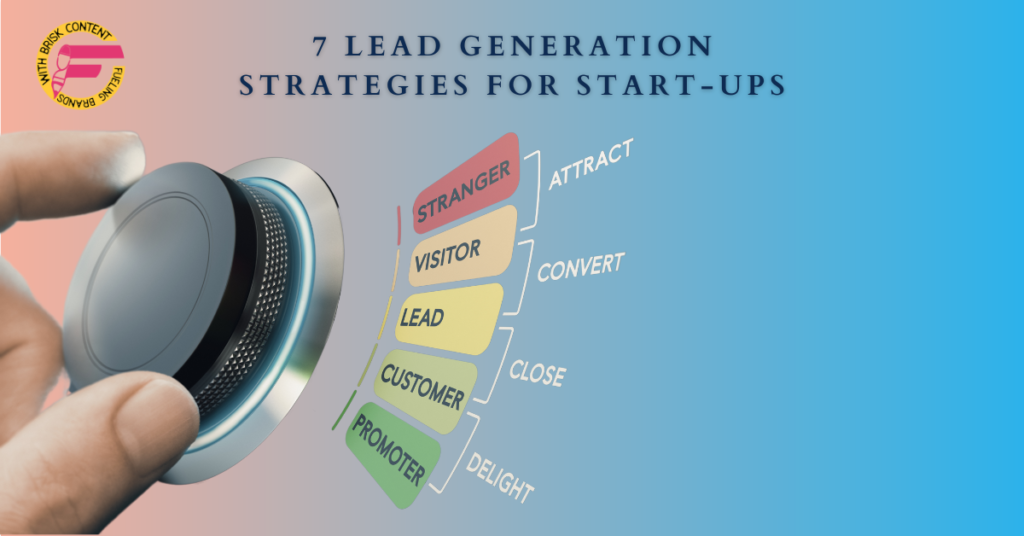
Are you tired of feeling like your startup is stuck in neutral? You know you have a fantastic product or service, but you just can’t seem to reach the right people. Well, don’t throw in the towel just yet because, with the right lead generation strategies in place, you can quickly and effectively attract new customers and take your business to new heights.
In this article, let us reveal seven proven tactics that can help you generate leads, from leveraging the power of social media to harnessing the potential of referral marketing. So, buckle up, and get ready to learn how to take your startup from struggling to thriving!

  1. Content Marketing:

As a startup, you’re inclined to spread the message about your product or service. But how do you reach your target audience and show them what your brand offers?

This is where content marketing comes in. By creating valuable and relevant content, such as blog posts, videos, infographics, or e-books, you can establish yourself as an industry expert and attract potential customers.

For example, if you sell workout clothes for women, creating a blog that provides workout tips, nutrition advice, and healthy living inspiration can be an excellent way to engage with your target audience and generate leads.

By offering them helpful content, you’re not only showcasing your knowledge and expertise but also providing them with something of value, making them more likely to remember your brand and return for future purchases. So, start brainstorming some topics that would be of interest to your target audience, and let your content do the work of attracting and engaging potential customers.

  1. Social Media Marketing:

As a startup, you have a unique opportunity to harness the power of social media to reach a wider audience and build brand awareness. By creating and sharing content, you can engage with potential customers and show them what your brand has to offer.

Social media platforms also offer advertising options that can help you target specific audiences. For instance, if you sell handmade jewelry, creating a Facebook page and running a social media campaign that targets women interested in fashion and accessories can be an effective way to get your brand in front of the right people.

By showcasing your products in a visually appealing and engaging way, you can entice potential customers to visit your website and make a purchase. So, start by identifying which social media platforms your target audience uses most and create a plan for regularly posting engaging content that showcases your brand and products. With a little time and effort, social media can be a powerful tool for growing your startup.

  1. Email Marketing:

Email marketing can be a powerful tool for reaching your potential customers. And as a startup, it’s a cost-effective way to promote your products or services and build relationships with potential customers.

By sending relevant and personalized emails, you can capture the attention of potential customers and encourage them to take action. Email campaigns can nurture leads, keep subscribers informed of new developments in your startup, and promote your products or services.

For example, if you offer monthly subscription boxes, sending email campaigns to promote your latest box and encourage subscribers to refer friends and family can be an effective way to generate more leads and grow your customer base. By providing subscribers with a sneak peek of what’s inside the box and offering them incentives to refer others, you’re not only promoting your product but also building relationships with your subscribers.
So, start by building a list of email subscribers and creating campaigns that provide value and encourage action. With a little bit of creativity, email marketing can be a powerful tool for growing your startup.

  1. Search Engine Optimization (SEO):

It is vital for a startup to appear at the top of search engine results. And with search engine optimization (SEO), startups can improve their website’s visibility and attract potential customers who are searching for their products or services.

By using relevant keywords, high-quality content, and link-building, you can improve your search engine ranking and increase your chances of being found by potential customers.

For example, if you offer online interior design services, using relevant keywords and high-quality content on your website can improve your search engine ranking for terms such as “online interior design services”.

By creating blog posts or articles that offer helpful tips and advice, you’re not only improving your search engine ranking but also showcasing your expertise and building trust with potential customers.

So, start by identifying which keywords are relevant to your startup and create high-quality content that incorporates those keywords. With a little bit of effort, SEO can be a powerful tool for growing your startup and reaching a wider audience.

  1. Paid Advertising:

Paid advertising can be an effective mode for reaching a wider audience. And for startups, it can be a quick and convincing way to generate leads and promote their products or services.

With options such as pay-per-click (PPC) advertising, display advertising, or social media advertising, startups can choose the type of advertising that best fits their target audience and budget.

For example, a startup that sells eco-friendly cleaning products can use Google Ads to target customers searching for eco-friendly household cleaning products.

By using relevant keywords and ad copy, the startup can ensure that their ads are being seen by potential customers who are actively searching for their products.

Social media advertising is also a great option for startups looking to promote their products or services on platforms such as Facebook or Instagram. By targeting specific demographics and interests, startups can reach a wider audience and generate leads quickly.

So, if you’re looking to grow your startup quickly and efficiently, paid advertising is definitely something to consider.

  1. Referral Marketing:

Have you ever recommended a product or service to a friend or family member? Referral marketing is based on that same concept of word-of-mouth recommendations.

It can be a powerful way for startups to generate leads and build customer loyalty. By offering incentives such as discounts, free products, or exclusive access, startups can encourage existing customers to refer their friends and family to the business.

And let’s be real, who doesn’t love a good discount or freebie? As a consumer, I know I’m more likely to try a new product or service if it’s been recommended by someone I know and trust.

For example, a startup that sells plant-based meal delivery services can offer a discount to existing customers who refer to a friend.

By doing so, the startup generates new leads and builds customer loyalty by rewarding existing customers for their support.

  1. Networking:

As the saying goes, “it’s not what you know, it’s who you know.” And when it comes to startups, networking can be a game-changer. By attending industry events and conferences, startups have the opportunity to meet other entrepreneurs and industry leaders.

Not only can networking help startups build valuable relationships, but it can also lead to potential partnerships and referrals. As a business owner, you will soon realize that some of your best opportunities will come from networking events.

For example, a startup that offers social media management services can attend a social media marketing conference to connect with potential customers and industry leaders.

By doing so, they can not only generate leads but also learn from other experts in their field and stay up-to-date on the latest industry trends.

To wrap it up
Lead generation is like planting seeds for the future success of a startup. By using a mix of the above-mentioned methods, startups can cultivate a thriving customer base. It’s important to know your audience, set clear goals, and use a combination of strategies that fit your budget and resources. Just like a farmer tends to their crops, startups need to continuously monitor and optimize their lead generation efforts to ensure growth and success. With the right approach, and good quality human-generated content your startup can attract and convert more potential customers, leading to a brighter future for your company.

Connect with Content Fayah to know how our content marketing ideas can give a boost to your startup.

Categories
Blogs

12 Best Tips to Take Your Content to the Next Level

With the thriving progress of web technology, content has been proven as one of the crucial aspects of the internet. Catering to the newest & relevant content has become a necessity to sustain and outshine in today’s competing era.
One of the best ways to cause a stir among the spectators is by content marketing strategy. Content writing has seen tremendous growth, as the company’s outlook is on writing as an investment for attracting an audience and increasing brand engagement. 

What is content writing?

Types of content

Content writing is the creative process of generating content through careful planning, research, writing, editing, and publishing content in a digital format.

The content writing includes blog writing, video manuscripts, e-books, whitepapers, press releases, informative articles, landing pages of websites, social media copies, and many more.

Regardless of format, a content writer is crucial for developing high-quality content that signifies and strengthens a brand’s voice, thereby engaging, delighting the target audience, and creating opportunities for sale.

12 Content Writing Tips and best practices

While there’s no one-size-fits-all approach to content writing, let me help you take your content to the next level by diving into some basic content writing tips:

1. Set an Objective

It’s crucial to visualize from the beginning of a content drive, what goals you want to hit at every stage of content creation. It can vary from generating leads to converting readers into customers; educating readers, informing, or entertaining them.

Setting objectives can help you govern:

  • Type of content
  • Style and tone setting
  • Target audience breakdown
  • The Overall effect on business planning

You are obliged to develop and shape the content that sounds most impactful and conversion-worthy to the audience.

2.   Bring uniqueness & authenticity to your content

Working on any piece of content requires numerous researching-but that’s not where it halts.

After searching for relevant content about the particular topic online, create an outline of what all subheads and pointers will be added to make your content surround that theme.

Try to fill the content with the information gained after researching and the perspective you have formed on that topic. It helps you bring originality, factual data, real-life examples, and tips into your content.  

3. Conduct Keyword Research

Regardless of the content you write, it’s crucial to create content format around keywords. Selecting keywords can be challenging since SEO benchmarks and search engine upgrades change frequently.

Keywords allow you to discover specific terms widely used by searchers to gather information, which can ultimately accelerate traffic to your website.

Extensive knowledge about the topic you’re writing should include statistics, data, and metrics to signify credibility and act as a foundation for your claims.

4. Good hook can let you grab the reader’s attention.

The most essential part of any content?
Of Course, it has to be, The Headline.

If the headline isn’t thought-provoking, the reader won’t bother hitting the back button leaving the content unread in the first place, you simply won’t attain the expected results with your content.

Head-turning headlines cover- controversy, questions, humor, and uniqueness as all of them are big attention-grabbers and help you generate traffic to your content.

To keep your audience hooked, along with headlines focus on adding images, illustrations, and audio wherever required to make it more engaging and unique. It will provide you with an opportunity to use your writing skills to inspire, surprise, move, and be ready to commit actions.

5.  Get to Know Your Audience

As the old proverb goes, if you attempt to acquire audience attention by pleasing everyone around, you please no one.

So, to ensure that your content is appealing to a wider market, yet distinctive to your target audience, you need to speak with them directly and look out for their personas. 

·   Audience objective and obstacles.

·   How they look at your products & services and compare them with your competitors.

·   Your solutions for their concern.

·   The content format, styling, and social channel they prefer.

Once you know what your target audience personas look like, you can fine-tune your messaging and create content accordingly.

6. Blend multimedia constituents to split up the text

While writing, focusing on adding multimedia components like images, videos, graphs, etc wherever possible, can help you add up additional value and split up the text making it simpler for your audience to engage with.

They can also help make pieces more readable and scannable, thereby increasing traffic generation on your content.

7. Cater to readers with relevant calls-to-action

When you create any content format, your ultimate objective is to build a brand, drive traffic toward your content and convert leads or readers to paying customers. 

Calls-to-action (CTAs) throughout your content are ways to both explicitly and involuntarily put the thought in the audience’s head that they require your products &  services.

8. Edit and optimize everything you write

Editing is as critical a step as writing. After creating your first draft, consider how you might refine the rough edges of writing. It will help you recheck for grammatical mistakes, relevancy checks, uncertain segments, or any important data being missed out. This will ensure you that the content is plagiarism free & is ready to get published.

9. Pick your interesting angle

Multiple contents are readily available on the same topic, so why should the reader opt to read yours? How does your viewpoint make a difference?

You need to frequently analyze new, astounding angles to keep the readers engaged. It is not only crucial for the target audience but also for the SEO. It will help you frame content & target different keywords on the same matter with an increment in search traffic.

10. Enact your brand voice

Your brand’s voice depicts your brand’s personality. The way you demonstrate the content expresses a lot about your brand’s value and that should be unique.

Use and maintain a tone of voice specific to your target audience, as it presents you with the right path to communicate with them. The tone of voice depicts who you are, who your target audience is, and what you need to accomplish.

11. Merge creative quotes from pioneers to outline a well-developed statement-

Even after creating content on a certain matter from your end, sometimes adding expert quotes and opinions can sound fruitful, as it generates a more well-developed argumentation. 

The newer statement formed will influence readers and showcase to them that the quality & factual content they’re spotting on your website won’t be obtained anywhere else on the searched pages.

12. Support your perspective with storytelling strategy and examples-

Conveying viewpoints through storytelling techniques, examples, and personal experience can be found beneficial as the audience can comprehend your content in a better sense from beginning to end.

One of the best ways to bring engagement to your content is through storytelling skills. It helps the audience in connecting with your opinions in a different light and gives them a purpose to respond by making a move.