Categories
Blogs Content Marketing

The Ultimate Guide to Content Marketing in 2025

Content marketing can be a game-changer for a brand because it aims to stand uniquely in a competitive landscape. Its ability to attract, engage, and grow audiences at a fraction of the cost of traditional advertising has also made it an important tool for businesses seeking sustainable growth.

Addressing clients’ pain points and demonstrating how your solutions meet their demands or overcome obstacles can build trust and long-lasting connections.

Crafting content for your audience that conveys your brand’s expertise and purpose is one of the most effective forms of marketing; you gain the trust and loyalty of your customers while they gain helpful information.

Why are these forms of marketing so impactful? Why has it become so crucial to digital marketing? How does its information and engaging content have such a powerful effect on customer decision-making?

This blog will provide a detailed study of content marketing, including all the knowledge you need to create successful campaigns.

Crating ng is 

What is content marketing?

Content marketing involves creating and distributing beneficial, timely, and consistent material to attract and retain a specific audience. The objective is to promote successful client behavior by offering insights, solutions, and engaging experiences. Examples of content marketing include eBooks, infographics, podcasts, videos, and blogs.

Types of content marketing

A strong content strategy is key to keeping your audience engaged at every stage of their journey. 

Digital experiences: These are highly customized content experiences that are suited to a customer’s interests and purchase  and cover several touchpoints, including webinars and content hubs

Virtual conference: Virtual conferences allow prospective clients from around the globe to participate in events like press conferences and product launches. They also offer a great chance to communicate with your audience directly through tools like live chat, polling choices, and Q&As.

Webinars allow you to address a large audience at once and answer any questions they may have. Examples of these virtual events are workshops to resolve specific issues, panel discussions bringing together subject matter experts to debate the current problems, and even educational courses that grant certificates to participants.

Webinars are beneficial because they are still valuable as an on-demand resource after the live event.

Content Hubs: They are organized collections of content that revolve around a specific topic, designed to provide comprehensive information, insights, or resources. They consist of assets such as blogs, videos, webinars, and infographics, all laid out quickly for your audience to navigate.

Video content: is self-explanatory and can be in a wide range of formats. It includes everything from detailed FAQs to five-second social media animations. Video allows you to get creative with your content marketing.

Blogs are great for delving deeper into topics relevant to your products or services and demonstrating your expertise to your audience. Blogs can boost your visibility and authority by using the optimal keywords and providing valuable information to your customers.

Infographics are ideal for simplifying complex data, statistics, and numbers into a visually appealing and readily comprehensible format. A well-designed infographic can efficiently and properly convey information on channels like social media, where space may be limited, and images are more powerful than words.

Why is content marketing important for B2B?

Content marketing makes your B2B website a very effective conversion tool by enhancing lead quality, improving organic search visibility, educating the customer, overcoming objections, and strengthening brand loyalty. This is why content marketing for B2B matters:

Increasing Recognition of the Brand

Engaging and educational content helps establish awareness and trust by showcasing your expertise and communicating the value of your business. Customers are more likely to select well-known and trustworthy brands. Good content builds stronger relationships with your audience by showcasing your goods and services and embodying your brand’s principles.

Creating Thought Leadership

B2B content marketing establishes your company as an industry leader. If you provide thought leadership content, such as smart articles or expert interviews, your audience will perceive you as a reliable source. This credibility advances potential clients along the buyer’s journey and fosters confidence.

Producing Useful Leads

Beyond narrating your story, B2B content marketing addresses customer demands to generate attention and leads. You strongly argue for involvement by illustrating how your products address issues. Blog entries with product links are optimized content that helps readers explore your website and get closer to converting.

Lead Nurturing

Every customer’s journey is different, and tailored interaction is crucial. Content is essential to encourage these connections and attract readers—even regular visitors—to explore further. As clients go through the sales cycle and content marketing funnel, various forms, including blogs, videos, and infographics, may maintain interest and keep them involved.

Closing Sales

Content takes center stage when it comes to converting leads. Clear, appealing information about your products, such as essential features or client testimonials, can build trust and influence decision-making. A simple yet powerful material, like case studies, may convert interest into commitment by persuading potential customers to arrange a call, schedule a demo, or make a purchase.
How does content marketing drive sales?

Content marketing produces appropriate content that meets your target audience’s interests and requirements.

Educating customers about the advantages of your goods or services is one of the primary ways that content marketing increases sales. You may demonstrate how your products can address their wants or solve their problems by giving them useful information. This promotes trust and positions your brand as a reliable information source.

Leads are nurtured through the sales funnel with carefully considered marketing material. You may influence potential buyers to purchase by producing various kinds of content that address every phase of the buyer’s journey, from awareness to consideration to conclusion.

Content marketing includes blog posts, case studies, white papers, videos, and much more. It is very important in driving sales and marketing efforts by providing valuable information, building trust and credibility, guiding leads through the sales funnel, and ultimately converting prospects into loyal customers.

Producing brilliant, relevant content that appeals to your target audience can elevate your company to the top of your sector and drive business sales.

How to develop strategies for content marketing

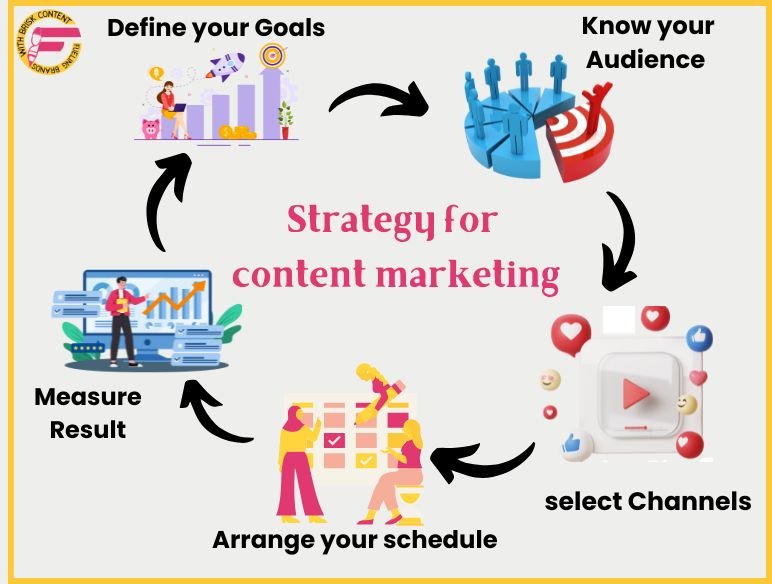
A solid plan is the first step toward effective content marketing. Take these actions:

  • Define your goals: Decide what you want to accomplish, such as generating more leads, retaining customers, or increasing traffic.
  • Know Your Audience: Recognize their habits, preferences, and areas of discomfort.
  • Select Channels: Pay attention to the platforms your target audience uses most frequently.
  • Arrange Your Schedule: It is crucial to maintain consistency. Make a content calendar to guarantee regular releases.
  • Measure Results: Utilize analytics to monitor results and modify your approach.

Top Content Formats to Focus on in 2025

Short-Form Videos

Short videos grab attention quickly and perform well on platforms like TikTok, Instagram Reels, and YouTube Shorts. Use them to showcase products, share tips, or tell engaging stories.

Podcasts and Audio Content

Podcasts give companies a quick and intimate way to communicate with their audiences. Create episodes that share industry trends, expert interviews, or success stories.

User-Generated Content

Motivate clients to produce and share content that highlights your company. Highlight testimonials, reviews, and social media posts to build validity and trust.

Niche Blogs and Articles

Focus on specific industries, challenges, or solutions. Niche content helps establish authority and attracts highly targeted leads who are more likely to convert.

Conclusion

Marketing trends are always changing, but the basic goal always remains to provide value to your audience. Maintaining a solid plan while embracing new trends, such as user-generated content and short-form films, must be relevant in 2025. Create solutions, cultivate relationships, and always keep your audience in mind. Successful companies will know who their customers are and will always provide outstanding content.

If you are looking to take your brand to the next level in 2025, then do connect with us.
Categories
Blogs Content Marketing

How To Create B2B Case Studies That Convert Audience To Clients

B2B case studies are powerful tools for building strategic credibility. They provide leads with concrete evidence of a brand’s capabilities while highlighting unique selling points. A well-constructed case study can be a critical catalyst for increasing lead conversion rates.

Developing an effective B2B marketing case study demands a nuanced understanding of potential leads’ expectations and their complex customer journey. B2B decision-making processes are inherently more intricate, often involving sophisticated solution communication that requires careful navigation.

The most impactful case studies directly address potential client challenges, systematically simplifying complex questions and providing clear, evidence-based insights. By strategically presenting problem-solving narratives, marketers can create compelling content that guides leads through their decision-making process and ultimately supports conversion objectives.

This article explores strategic approaches for marketers to develop case studies that effectively engage potential clients, demonstrate value, and build trust through substantive, solution-oriented storytelling.

Case studies: what are they, and why are they important? 

The most difficult task for small businesses providing goods or services is showing potential customers they can fulfill their commitments.

The most important question for prospective customers when deciding whether or not to buy from you is: “Can this business actually do what it says it can do?”

A case study is useful in this situation. A well-written case study will show potential clients that you have successfully assisted other companies in reaching their objectives and can do the same for them.

Case studies may be very powerful sales tools, but only if they are compelling and engaging to read. To do this, remember a few important points when writing a case study. These will be examined below.

Why is a case study important?

In contrast to other types of material, a captivating case study is designed to help you build credibility and trust with potential clients. Thus, it is an effective marketing tool that helps you sell more.

      Successful case studies will draw attention to a few important details:

  • A captivating story that profiles the target audience.
  • Highlights past clients and how each one started working with you. 
  • Discusses the industry the client works in.
  • Outline the main issues and pain points your client faced when they hired your company.
  • Provides the reader with a detailed account of how you approached resolving the client’s issue.
  • Demonstrate successful outcomes.

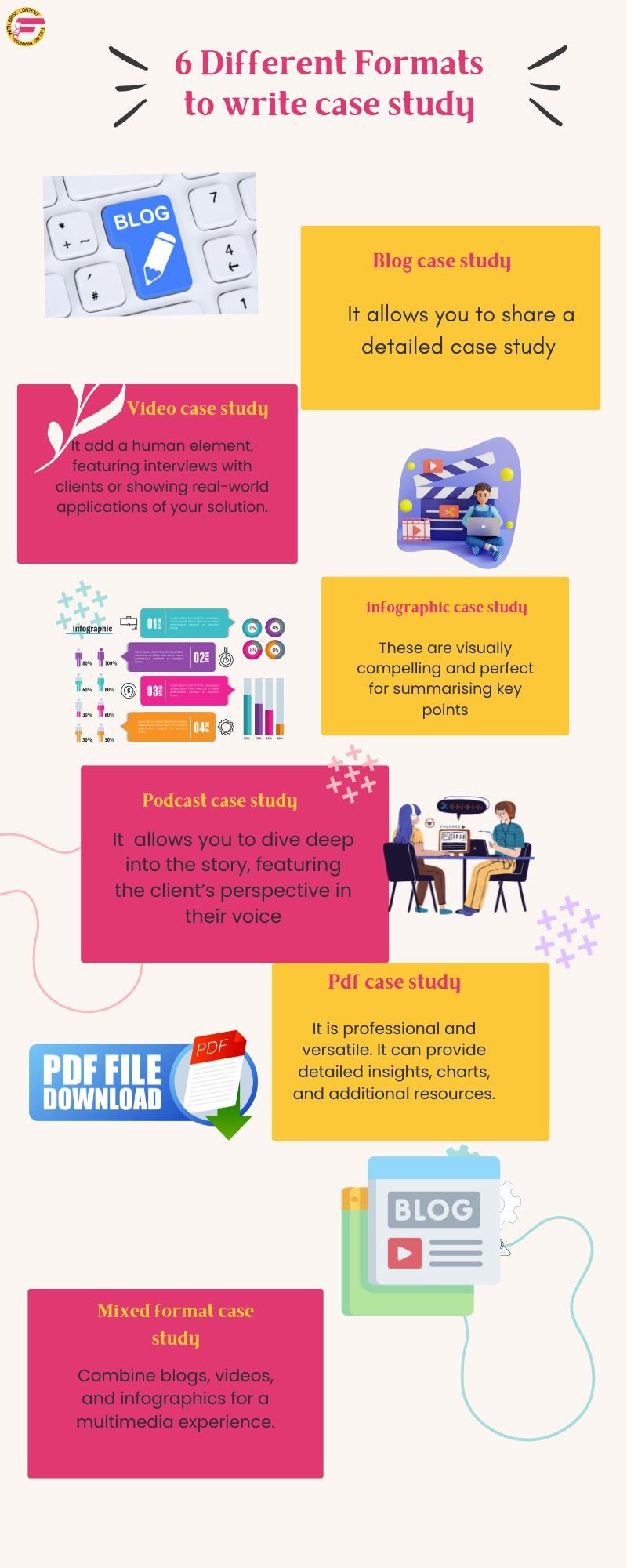
1. Different Formats for Case Studies

You can use various formats to write a case study. Your description and the information you want to share would decide the format you choose.
  • Blog Writing: This format lets you share a detailed case study while attracting organic traffic through SEO optimization. Use sections with clear headings, client quotes, and links to additional resources for engagement. Read our blog on
  • Videos: Video case studies add a human element. They feature interviews with clients or show real-world applications of your solution. Use animations or client testimonials to make the narrative engaging.
  • Infographics are excellent for summarizing important points and have strong visual appeal. Use timelines, graphs, and icons to present the issue, the remedy, and the outcomes in an understandable manner.
  • Podcasts: Conversational podcasts allow you to dive deep into the story, featuring the client’s perspective in their voice. They are great for B2B audiences who prefer audio content during commutes or multitasking.
  • PDFs: This format is professional and versatile. It can provide detailed insights, charts, and additional resources. PDFs are often shared via email or downloaded from your website.
  • Mixed Formats: Combine blogs, videos, and infographics for a multimedia experience. For example, embed a short video within a blog post or include an infographic link in a podcast description.

2. Pre-Work for a Case Study

  • Find the Right Customer: Look for customers who achieved outstanding results using your product. Ensure their challenges align with the pain points of your target audience.
  • Contact Your Customer: Reach out with a clear explanation of the case study’s purpose. Assure them it will highlight their success and provide positive exposure for their business.
  • Write Your Questions: Prepare a list of open-ended questions to guide the interview. Focus on understanding their challenges, the decision-making process, and specific outcomes. Example questions include:
    • What problem were you trying to solve?
    • Why did you choose our product?
    • What measurable results have you seen?

How do you create an engaging case study?

a) Write Captivating Headlines

A compelling headline blends the success of the customer with the offered solution. 

b) Give a Brief Overview of Your Client

Briefly describe the client’s objectives, industry, and business. This gives readers background information and makes the tale more relatable.

c) Talk About the Issues Your Customer Faces

Talk about their early difficulties in detail. Provide details like:

  • Inadequate operations
  • Reduced income
  • Having trouble fulfilling client requests
  • Make the issue relate to the problems of your target audience.

d) solution

Describe how your service or product helped them overcome their problems. Methodically outline the implementation procedure. Emphasize the aspects of your solution that directly meet their requirements.

 e) Findings

Use data to demonstrate your product’s impact. Add charts, figures, and testimonies.

f) CTA (Call to Action)

Assist readers in moving forward. Examples include: “Appoint a free consultation now to find out how you can replicate this success for your company!”

Conclusion

It takes careful planning and a balance between data-driven insights and captivating narratives to produce B2B case studies that convert well. Measurable outcomes, client changes, and solutions presented in approachable, captivating media such as blogs, films, or infographics are all important components of these case studies. They must be properly selected. A great case study is more than simply data; it portrays a hero’s path of hardships, decisions, and victories. A compelling call to action, a clear message, and a consistent theme can make case studies powerful marketing tools that boost conversions and build trust. A good content marketing agency knows the value proposition of case studies to boost your brand’s image and can help you leverage your business by rightly presenting your success stories or your client experience to the world.

Do connect with us to learn how we can portray your unique projects as awesome case studies for your audience. 


FAQ

What does a business case study aim to achieve?

The purpose of a business case study is to describe how your product or service enabled a particular customer to accomplish amazing outcomes.

What is the ideal length for a case study?

A case study’s duration might change depending on the format you select. A video case study could be a few minutes long, but a textual case study could be many pages long.

When is the best time to request a case study from a client?

Asking clients for a case study is most effective when they have already experienced the benefits of working with you. Ideally, you should hold off on praising them until they are satisfied with the outcome.

Categories
Blogs Content Marketing

Why do identity verification platforms need a content marketing agency?

Introduction

It is super important to keep our online identities safe. Identity checks help keep us safe on the internet or help us with immigration and study abroad documentation. From police checks to document verification and from Apostille to notarization, identity verification platforms are pivotal. 

However, marketing an identity verification platform is a tough job. Although everyone needs it, but its a trick to market these services in an engaging and intriguing format.

Companies doing this vital work face a problem with getting their message out to the right people. That’s where writing experts can step in and lend a hand.

A good content marketing agency knows how to spread the word about identity verification in a way that sticks. Let’s examine why making deals with a content marketing agency is a smart choice for identity guardians. 

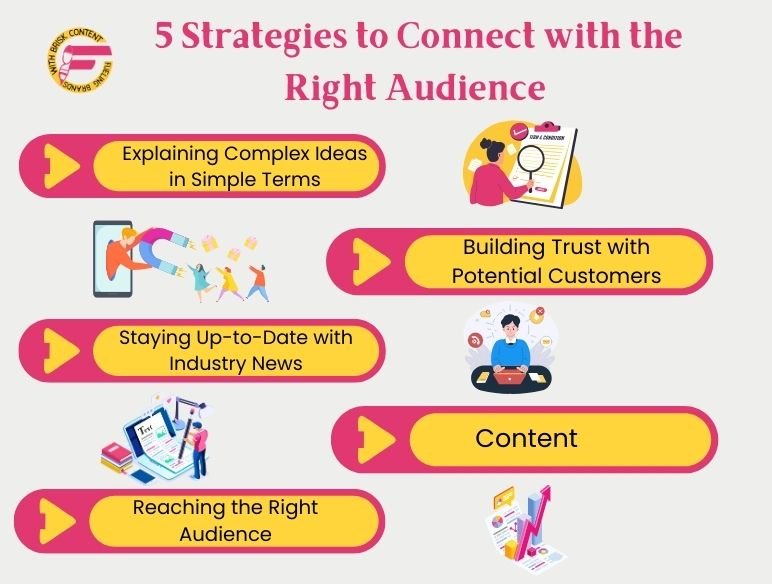
Here, we have listed the 5 most important reasons why an identity verification platform should hire content writers to create blogs and relevant content for its brand.

Blogs Explain Complex Ideas in Simple Terms

Many people find identity verification confusing. There are a lot of mechanical or technical things concerned. A smart content marketing agency understands how to simplify these complex ideas. 

They can design blog posts, videos, and infographics that clarify how identity verification works without using excessive language. This helps more people understand why it is vital and how it can keep them safe online.

It Helps to Trust with Potential Customers

When it comes to identity verification, trust is regarded as crucial. People want to know they can trust a platform to secure their information. Content marketing agencies can help establish faith by presenting examples of how the platform has assisted actual individuals and businesses. 

They can also develop material that demonstrates the human side of the business, such as featuring team members or discussing the company’s values. This type of content helps people become more comfortable with the idea of using an identity verification service.

Keeps Audience Up-to-Date with Industry News

The realm of online security is ever-changing. New risks emerge on a regular basis, and new techniques to protect against them arise. A content marketing agency can assist identity verification platforms in staying up to date on these developments. They can publish timely news regarding new security threats or platform updates. This indicates the company’s commitment to protecting its customers and establishes

Strategies to connect with right Audience

Variety of Content Attracts Target Audience

Different people like to consume information in different ways. Some prefer reading articles, while others might prefer watching videos or listening to podcasts. A content marketing agency can create a mix of content types to appeal to a wide range of people. This variety helps the identity verification platform reach more potential customers and keep them engaged over time.

People choose to consume information in a variety of ways. Some people enjoy reading articles, but others prefer watching movies or listening to podcasts. A content marketing business can create several types of material to appeal to a broad audience. This variety enables the identity verification platform to contact more potential clients and keep them engaged over time.

You can Reach the Right Audience.

Not everyone needs identity verification services, but for those that do, they are incredibly important. Content marketing services specialize in discovering and contacting the right people. They understand how to leverage search engine optimization (SEO) and social media to push material in front of people who are likely to want identity verification. This focused strategy enables the platform to connect with potential consumers more effectively.

People choose to consume information in a variety of ways. Some people enjoy reading articles, but others prefer watching movies or listening to podcasts. A content marketing business can create several types of material to appeal to a broad audience. This variety enables the identity verification platform to contact more potential clients and keep them engaged over time.

How Content Fayah can help to market the Identity Verification Platform

Working with us offers several benefits for identity verification platforms. We can assist in explaining complex ideas, establishing trust, staying current, reaching the correct audience, and producing diverse content. All of these aspects work together to help the platform grow its customer base and establish itself as a credible name in internet security. In a world where protecting our digital identities is more important than ever, smart content marketing might have a huge impact on these key services.

Categories
Blogs Content Marketing

Going Viral: Is It Luck or a Content Marketing Formula?

Ever wonder why some content spreads like wildfire online? I’m just kidding, but marketers need to know that, right? Is going viral just dumb luck, or is there a secret formula?

Going viral” in digital marketing seems to be the holy grail. One minute, you are posting, and the next, your content reaches millions, creates conversations, and drives remarkable traffic. Is viral success by pure luck, or is there a method to the madness? Or sometimes, just the right place, right time. Otherwise, it’s just a perfect content strategy. In this blog, we will discuss whether virality is just an accident or if it’s the result of a well-executed marketing formula and how you can make it big, too.

 Let’s dig in and find out with this blog.

The Allure of Viral Content

There is nothing quite like having online content shared with many people. It spreads fast and far, gets people talking, and puts your brand on the map overnight.

But here’s the thing: if viral success were predictable, you’d always get it right. What works once doesn’t work the next time – which makes many people tell you it’s a matter of luck.

The Role of Luck

Let’s be real. Luck does play a part in viral content. You can’t control everything. Sometimes, the stars just align. Your post hits at the perfect moment. The right influencer shares it. And boom – you’ve gone viral.

But relying on luck alone is a risky strategy. It’s not sustainable. And it’s not something you can build a business on. For example, a meme or video could get picked up because it aligns with a current event, a social issue, or viral challenge. This kind of virality feels like winning the lottery.

Luck Isn’t a Business Strategy

Going too much by luck is something quite dangerous. If you build a business or try to grow your brand, then dependence on a mythical concept of luck wouldn’t promise anything to provide you with constant results. Moments that usually lead to going viral happen when no one expects it and can’t be easily replicable. Thus, you cannot depend on the chance of your content going viral. And yet, companies and content creators need what they can control: quality and sharable content, knowledge of whom they serve, and consistency. A good content strategy will grow steadily and, in the long run, instead of betting on luck to give you that one-time boost.

It’s thrilling to play the luck card, but you can’t depend on that. The surest way to guarantee long-term success- whether or not you catch the lucky break- is by building a foundation of smart content marketing.

The Content Marketing Formula

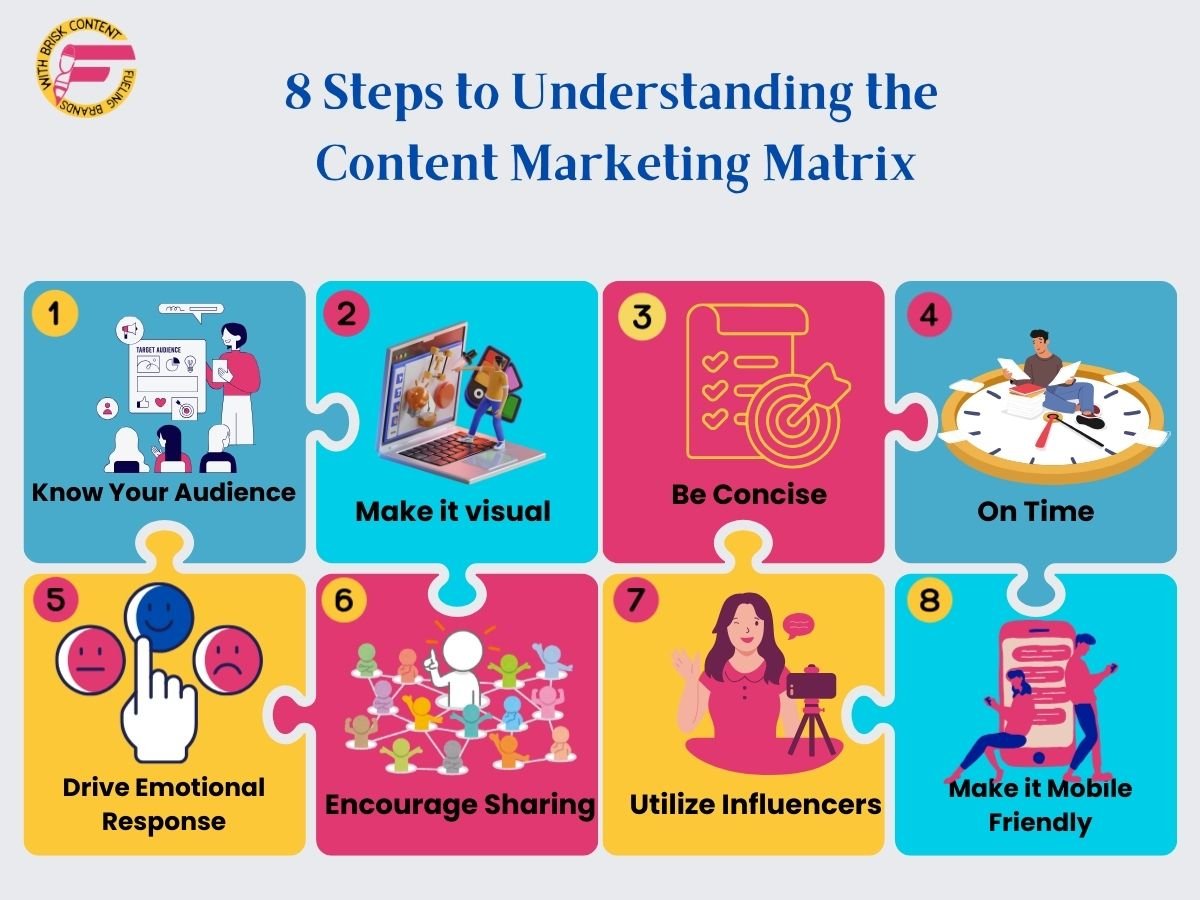
While there’s no foolproof formula for viral success, the most effective strategies help stack the deck in your favor. These are  some of what the pros pay attention to:

1. Know Your Audience: Who are you trying to reach? What do they care about? What makes them tick? The better you know your audience, the better you can create content that really speaks to them.

2. Be an Emotion Trigger: Generally speaking, viral content hits an emotion buried within you. It makes you either laugh or cry or even get angry. Whatever it is, it should evoke some form of reaction. Neutral stuff is hard to go viral.

3. Shorten it: Your message must be easily digested, understood, and passed on. Complex content makes it hard to go viral. If your content cannot be quickly digested and transmitted, it will not go viral.

4. Be timely: Viral content often follows current events or trends. Stay on top of what is happening in your industry and the world.

5. Make it visual: Images and videos are more likely to be shared than text. People are visual, so give them something eye-catching.

6. Encourage Sharing: Make sharing more effortless for people. Use social sharing buttons. Ask people to share if they have found value in your content.

7. Utilize Influencers: Building a relationship with influencers in your niche will catapult your content into more significant virality. Their share can kick-start the process of going viral.

8. Make it Mobile Friendly: Most social media browsing is accessed on mobile devices. Ensure that your content looks great and works great on small screens.

That’s why it is essential to create consistently good content. Don’t fully depend on viral. Build a solid content strategy that provides value to your audience over time.

The Power of Persistence

Going viral can seem like instant success, but what people don’t see is the hard work that usually leads up to it. Behind most viral hits, there are countless hours of effort, multiple failed attempts, and a lot of learning.

Creators and marketers who achieve viral success often spend months or even years creating content that goes unnoticed. They experiment with different ideas, formats, and platforms. Sometimes, content falls flat. Other times, it gains a little traction but doesn’t explode. But they don’t stop. They keep trying, adjusting their approach based on what works and what doesn’t.

Persistence is key because the more content you produce, the more chances you have of finding that viral moment. Every post or video is a new opportunity to learn what your audience responds to and how trends shift over time. It’s not just about luck or a single “perfect” post; it’s about consistently showing up and refining your strategy.

Continuing to create, experiment, and learn increases your chances of eventually hitting that viral sweet spot. Even if you don’t go viral right away, persistence helps you build a loyal audience, gain valuable insights, and improve your content. Viral success may take time, but persistence ensures that when the moment comes, you’re ready for it.

Balancing Art and Science

Going viral is not just about luck or strategy but a mix of both art and science. On the one hand, it speaks of the art of coming up with something new, interesting, and memorable content. Here, you think outside the box, come up with a great story, and develop visuals or messages that would make a big capture in people’s attention. Creativity will make the content stand out among this sea of information and what is needed in order to emotionally connect with the audience.

There’s science on the other end – the analytical approach to understanding your audience and using data to optimize your content. That takes you to cutting and sorting through metrics in terms of such things as engagement rates, audience demographics, and how your content performs and seeing where you can improve and where you cannot. All this can be outlined by analyzing data: when to post, through which platform, and with what types of content.

The Takeaway

Going viral is neither an art nor a science. Put, it involves the right balance between new, engaging content and enlightened data insights. Content creators or marketers who successfully blend both elements and science have much better chances of success with viral messaging and longer relationships with audiences.

Conclusion

So, Is it luck or a content marketing formula? Let me tell you, and it is a bit of both. Yes, you have an element of luck, but you can stack the odds in your favor. The ability to understand the target audience, quality content, and best practices all increase the prospects of viral success.

Remember, maybe your content won’t go viral, but these strategies will help you build a much stronger, more engaged audience over time. And that’s worth more than any fleeting viral moment.

Keep writing. Keep learning. And who knows? The next piece of content you create might just be the one to make that super-viral-rainbow-troll-town hailed newsbreak.v

Categories
Blogs product descriptions

8 Tips to Craft Product Descriptions That Sell

Running an online business? It’s like being a digital salesperson, but it is a little trickier. You’ve got seconds to grab attention and convince strangers to buy something they can’t even touch. No face-to-face charm, no manager to sweet-talk – just your words on a screen.

Your product page is your storefront, your pitch, and your handshake all rolled into one. If it doesn’t click, boom! They’re off to the next shop with a click. 

So, what’s the secret? It is nothing but content marketing. Your words need to work overtime – describing, charming, and sealing the deal. It’s a tough gig, but get it right, and you’ll turn those faceless visitors into happy customers.

What is Product Copywriting?

Are you selling stuff online? It’s all about the words you choose. The power of compelling copywriting isn’t just listing features – it’s like telling a tale that hooks readers and shows how your device solves their problems. Whether you’ve got a tweet-sized advertisement or a novel-length description, your goal is to make people feel like they absolutely need what you’re selling. It’s part of art, part science, and a whole lot of knowing what makes people tick. Get it right, and customers will click “Buy Now” faster than you can say “free shipping.” If you opt for a content marketing agency, it will help you attract customers faster. Due to their experience in the field of content marketing, they make use of correct words and sentences that will help you build traffic to your website. 

What Should You Know Before You Write Product Descriptions?

Writing good product descriptions can be tricky. Don’t just use the manufacturer’s words. Instead, think about who will buy it and write for them. Even if you wrote essays in school, this is different. There’s always room to make your writing better. Here are some tips on how to write SEO product descriptions that sell.

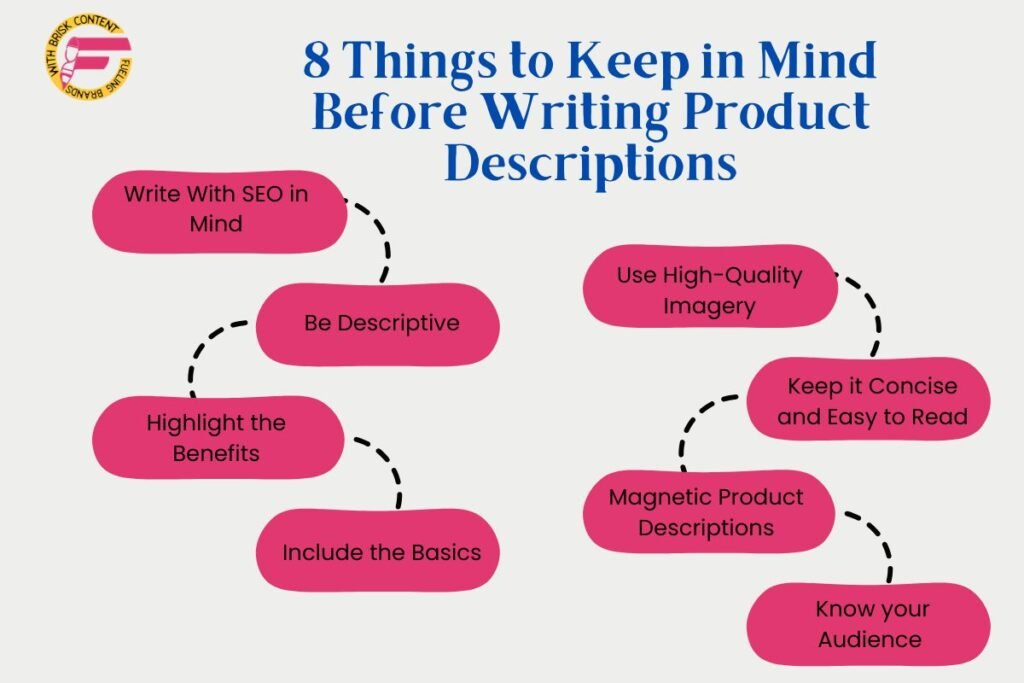
Know Your Audience

Know your buyers. You should not try to speak to everyone as it won’t work. Figure out who really wants your stuff. Talk like they do. Use words and ideas they get. If you’re not sure, make up some pretend customers. Think about what they like, how old they are, what they do. This helps you write in a way that grabs their attention and makes them want to buy.

Know Your Product

You can’t expect to effectively sell something if you don’t fully understand it yourself. Try to spend some time using the product firsthand if possible. If you are selling things straight from the manufacturer, you can get more information by reading customer reviews, watching product demonstration videos, or consulting reference materials. Sharing the knowledge you can only acquire from firsthand experience with the product can assist in establishing trust and motivate the user to make a purchase. Your objective is to write a product description that makes the customer see themselves using it.

Writing Content: Creating Buyer-Attractive Descriptions

When crafting product descriptions, start by addressing key questions about your audience and the item’s benefits. This groundwork helps ensure you cover all crucial points buyers care about. As you write, keep these insights handy for reference. Remember, thorough prep work pays off in the final copy. Content marketers provide quality content that greatly affects how well your descriptions connect with potential customers. Stick to best practices as you develop your product narratives to create compelling, informative copy that resonates with your target market. So, keep these few points in mind:

Keep it Concise and Easy to Read

Hook readers fast as you have seconds before they leave. Skip the long intro and grab attention right away. Make your writing easy to scan with short paragraphs, bullets, and bold text. Break things into bite-sized chunks. Use pictures to break up text. A content marketing agency can help nail this approach. They’re pros at creating engaging copy that keeps people reading and connects quickly. Their expertise can make your product descriptions stand out and convert better.

Use High-Quality Imagery

Good product photos are a must. Use bright, natural light and high-resolution images that show items from different angles. For size context, include shots of people using the product. If you can, hire a professional photographer – they know how to make products look great. A content marketing agency can help here, too. They often have connections with skilled photographers and can guide your visual strategy. Their expertise ensures your product images and descriptions work together to wow potential buyers.

Include the Basics

Don’t forget the basics in your product descriptions. Include key details like size, weight, colors, and materials. Buyers need this info to make decisions. Also, to build trust, special features like local production or organic materials should be mentioned. A content marketing agency can help balance these essential details with compelling copy. They know how to present facts in an engaging way that informs and persuades potential customers.

Highlight the Benefits

Show customers why your product stands out. Focus on one buyer’s specific needs. Convince them why your item beats alternatives. Highlight features and their benefits, like how a vacuum’s wheels protect floors or its bags keep dust contained. Use clear, simple language that speaks to your target audience. A content marketing agency can help craft these persuasive descriptions. They’re skilled at turning product features into compelling benefits that resonate with buyers and drive sales.  

Be Descriptive

Paint a picture with your words. You should try to go beyond basic features and bring the product to life. Describe how it feels, smells, or tastes. Sell the experience, not just the item. For example, instead of saying a sweater is comfortable, talk about its cloud-like softness. But use this approach wisely – it works for things like clothes or food, not so much for hardware supplies. A content marketing agency can help you find the right balance. They’re experts at creating vivid descriptions that appeal to the senses and make products irresistible without going overboard. 

Write With SEO in Mind

You are not required to be skilled or proficient in search engine optimization; you just have to think about how customers find your products online. Use words they’re likely to search for in your descriptions. For example, say “leopard-print bedsheets” instead of “spotted animal-print linens.” This helps your items show up in search results. A content marketing agency can really help here. They know how to blend these search-friendly terms into your product copy smoothly, making it easier for potential buyers to discover your offerings while keeping the writing natural and appealing.

Enhance Your Buying Experience: Select the Appropriate Kind of Product Description

Product descriptions vary based on audience, product type, and brand identity. E-commerce sites typically use three styles: brief, technical, or long-form. A content marketing agency can tailor these descriptions to your specific needs, ensuring they resonate with your target market and effectively showcase your product’s unique features and benefits. 

Brief Product Descriptions

Brief product descriptions which is placed under the title, are concise yet crucial. In just 2-3 lines, they provide a quick overview and boost search visibility. These short descriptions are key for SEO and contain essential keywords. A content marketing agency can craft these abstracts to maximize impact, balancing brevity with informative content that captures customer interest.

Technical Product Descriptions

Technical product descriptions dive into specific details, often used for electronics or building materials. They cover measurements, materials, and certifications. While not flashy, this info is vital for buyers. A content marketing agency can present these technical specs clearly, making them accessible to customers needing precise information for purchasing decisions.

Long Product Descriptions

Longer product descriptions give room for creativity. In a paragraph or two, you can paint a vivid picture, touching on senses and emotions. They showcase product benefits, user experience, and unique brand qualities. A content marketing agency can craft these descriptions to captivate readers, set your products apart, and turn browsers into buyers.

Can I do product copywriting in-house?

While in-house product copywriting is possible, many businesses face challenges. Time constraints often lead to rushed, error-filled descriptions that fail to impress buyers. Alternatively, the task gets postponed indefinitely. In-house writers may also struggle to connect with customers, being too close to the product to see it from a fresh perspective. A content marketing agency offers expertise and an outside viewpoint, crafting compelling copy that resonates with potential buyers. They bring efficiency, quality, and a customer-focused approach, helping businesses showcase their products effectively without straining internal resources.

Write Product Descriptions that Sell with Content Fayah

Partnering with a skilled marketing agency can help you elevate your product copywriting. Experts in content strategy and SEO, like Content Fayah, bring valuable experience to the table. Our team of writers and specialists can create or improve your product descriptions, making them stand out. By collaborating with professionals, you ensure your content is not only engaging but also optimized for search engines. Reach out to Content Fayah today to discover how we can enhance your product messaging and give you an edge over competitors.

Categories
Content Marketing

The Ultimate Checklist for Hiring a Content Marketing Agency

“Without goals and plans to reach them, you are like a ship that has set sail with no destination.” — Fitzhugh Dodson.

To hire a content marketing agency that genuinely elevates your brand, you must first look inward and define what you need.  It’s not about who has the bold portfolio or the most prominent name—it’s about you and your goals. 

Let’s explore with this blog how setting clear, actionable goals is the foundation for choosing the perfect agency to transform your content strategy!

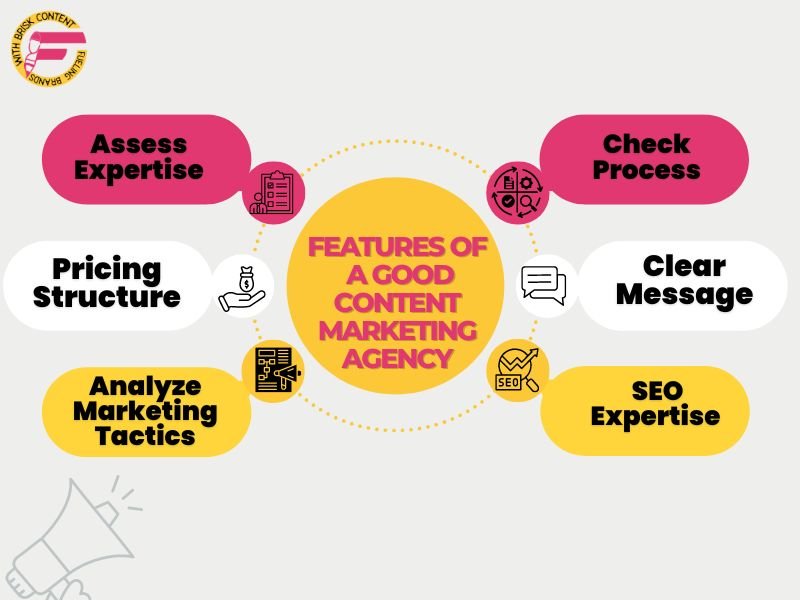
Features of a good content marketing agency

Every content marketing agency has its niche, but you decide who will make it work for your business. This requires you to set the following parameters clearly:

  • Understand your needs and work accordingly.
  • Engage in meaningful discussions to set your content marketing goals.
  • Explain your plans, strategies, and return approaches while valuing your input.

Assess  Expertise

Some of the key considerations are:

  1. Industry Experience: Monitor their experience handling businesses in your industry or comparable ones. Your organization will do well with this knowledge, indicating they know your target audience’s profile and the market dynamics.
  2. Portfolio review: The portfolio is their work, so review examples of previous work. Ensure that the content is high quality, includes various projects, and has good case studies that give you confidence in the work.
  3. Specialization: Sometimes, an agency specializes in certain areas, such as SEO, social media, or email marketing. Specialization leads to more effective strategies for achieving your goals.
  4. Team Credentials: Look for the credentials of the people who will work on your project. Are they good writers? Good designers? Good strategists? A good team is mainly responsible for the quality of your content.
  5. Customer Reviews: Read testimonials and past client reviews. Good reviews will give you an idea of whether the agency is reliable, communicates properly, and has a knack for what it does.

Check Process

Here is what you should look for:

  1. Initial Consultation: Ask about their approach to the initial consultation. A thorough discovery phase should involve understanding your business, goals, and target audience.
  2. Strategy Development: Inquire about how they develop a content strategy. A solid process should include research, goal setting, and defining key performance indicators (KPIs) to measure success.
  3. Content Creation: Understand their content creation process. How do they generate ideas, conduct research, and ensure quality? A systematic approach will yield better results.
  4. Review and Approval: Check how the review and approval process works. Will you have input at various stages? A transparent process helps ensure the content aligns with your vision.
  5. Distribution and Promotion: Ask about their methods for distributing and promoting content. Effective promotion is key to reaching your audience and achieving desired outcomes.
  6. Performance Tracking: Inquire about how they measure the success of their content. A good agency should use analytics to track performance and provide regular progress reports.
  7. Continuous Improvement: Find out how they incorporate feedback and make adjustments. A responsive agency will continuously refine its approach based on results and your input.

Analyze Marketing Tactics To Be Used

Here’s what you need to look for: 

  1. Content Strategy: Find out how they plan to create an effective SEO content strategy. A good strategy should include research on your target audience and content themes, as well as overall execution.
  2. Seek to know the SEO strategies they will utilize to enhance your content. Here, you seek their keyword research, on-page optimization, and link-building ways to make you stand out.
  3. Content Types: Determine the type of content they specialize in. These may range from blog posts to video production, infographics, podcasts, etc. Mixing different kinds of content can engage various segments of your audience.
  4. Distribution Channels: Illustrate how they will distribute your content. Social media, email newsletters, and other distribution channels must effectively engage the audience whose effort they are making.
  5. Performance Monitoring: They should demonstrate a way of measuring the success of their marketing efforts. Look for companies that employ analytics when they track vital metrics and change strategies based on your performance.
  6. Adaptability: Ask how they keep up-to-date with what’s new in marketing and how they update their strategy for their clients. A good agency is flexible, showing readiness to adjust to changing circumstances in the virtual environment.

Ask About SEO Expertise

Effective SEO is the essence of a successful content marketing strategy. So, evaluating an agency’s SEO competence is highly relevant. Here are some key questions to consider:

  1. Keyword Research: Ask how they are conducting keyword research. A good agency should systematically plan out the relevant keywords that will drive traffic and improve search rankings.
  2. On-page optimization: Ask them about their on-page SEO strategies. These include optimizing titles, meta descriptions, headings, and content structure to increase search engine visibility.
  3. Technical SEO will include elements like site speed and mobile friendliness. They must also know how to get indexed properly. All these form the foundation for improving overall site performance.
  4. Link Building: How will they go about link building? A good SEO campaign can only work with linking to high-quality backlinks; find out how they will procure these links and boost the authority on your site.
  5. Content Optimization: Find out how they optimize content for search engines without compromising quality. The key is to balance good SEO best practices and keeping your content interesting.
  6. Analytics and Reporting: They use analytics tools to track SEO performance. Find out which metrics they follow and how often they report on progress.
  7. Keeping in the Know: SEO is constantly evolving. Find out how the agency keeps its staff current with the trends and algorithm changes that affect your content.

Understand Pricing Structure

Pricing models: Ask an agency about its pricing models. Standard options include charging hourly, project-based billing, and retainer agreements. Every model has advantages and disadvantages, so you need to choose one that suits your needs.

  1. Service Packages: Do they offer service packages? Some agencies bundle services such as content creation, SEO, and social media management for a reduced rate. If these packages are available, they may be of really good value.
  2. Breakdown on Costs: Now, request a detailed breakdown of the costs of each specific service. In a more transparent breakdown, you’ll understand your spending and ensure no hidden fees.
  3. Flexibility: Does the agency consider flexibility in pricing? Knowing how they would treat a flexible pricing adjustment would always be useful if you change your requirements or the scope of work.
  4. Payment Terms: As much as payment terms indicate what is supposed to be set as deposits, the payment schedule, and even your cancellation policies, this can get you ready for what’s ahead.
  5. Value for Money: Consider the value you will get for the price. In most scenarios, a higher fee than you require for an established and experienced agency might yield better returns than going for something cheaper.
  6. Return on Investment (ROI): Discuss how the agency measures ROI. Understanding that they can track the success of their efforts will warrant the costs and ensure a sound investment.

Evaluate Communication and Support

Pay attention to the following aspects:

  1. First Contact: Notice how they communicate during the first few conversations. Are they responsive, attentive, and able to explain things clearly? This is basically how everything will start going forward.
  2. Regular updates: Inquire about their procedure for updating the project progress on your side. A good company should give you regular reports and check-ins to keep you updated.
  3. Feedback mechanism: Ask how they design their feedback mechanism. An agency that values your input and is willing to make alterations based on your suggestions demonstrates a commitment to collaboration.
  4. Access: How accessible is the agency to questions or concerns? You don’t want a partner who is challenging to reach and takes a long time to address your needs at critical campaign stages.
  5. Support Structure: What’s their support structure? Is there an assigned account manager or point of contact? Knowing who to go to will refine the actual communication process.
  6. Crisis Management: How will they address potential challenges or crises? An activist agency will have plans and the ability to respond to issues quickly and efficiently, with minimal disruption.
  7. Cultural Fit: Consider whether their communication style matches your company culture. A great fit will make collaboration enjoyable and the relationship at work productive.

Why Is Content Marketing Important To Your Business?

Your small business must stand out and differ from competitors in the dynamic digital marketplace. Content is the fuel for your marketing strategy. Dull and ineffective content could ruin a splendid design and mar your marketing strategy.

With content marketing, you can build up your online business reputation. You’ll be able to serve your viewers with all sorts of content, such as videos, blog posts, infographics, social media posts, and presentations. By offering value to the audience in these forms, you will attract the viewer and build brand trust.

When planned and produced correctly, content can drive the audience toward your company’s website, where they convert into leads and sales. Content marketing becomes a compelling strategy that allows small businesses to differentiate themselves from the competition in the industry. You must find a reliable content marketing agency to help you reach more people and build brand trust.

Conclusion

Once you have marked off the requirements checklist, that’s only some of it. You will also need to do your research to separate the wheat from the chaff. Also, have a list of the agencies you would want to work with and then proceed to narrow down the candidates. Then, you will sit down with them, make them explain what they are offering, and then comfortably decide which one to hire.

Choosing the right content marketing agency is the key to great success for any business, whether online or offline. A strong partnership will elevate your brand, expand your audience, and convert leads to customers. 

Connect with us to know how we can help your business grow.

Categories
Blogs

9 Employee Engagement Metrics Every Manager Should Calculate

As a professional human resources manager, employee engagement should be at the top of your priority list. Corporate has come a long way, from customer satisfaction being the centric role to ensuring the company’s employees are as engaging as they should be.

Tracking and considering Employee engagement metrics are vital ways to pay attention to employees. Focusing on the company’s workforce becomes more critical as working methods become more secluded and complicated.

Employee engagement metrics help businesses identify which areas of employment need improvement and furnishing. These metrics help create a healthy, happy, satisfied, and motivated workforce for the company, which is crucial for long-term success.

What are Employee Engagement Metrics?

Employee engagement is the capacity and extent to which a person can be committed and passionate about their work. It could be described as dedication to his day-to-day work, time investment, and extra effort for success.

Employee engagement metrics help HR professionals and managers understand where their teams need help and support. The metrics also provide job descriptions, job feedback, employee feedback, relationships with seniors and colleagues, job recognition, and personal wellness for the company’s progress.

There are several ways to measure employee engagement metrics, and as a manager and HR professional, you should measure these nine metrics for future growth and success.

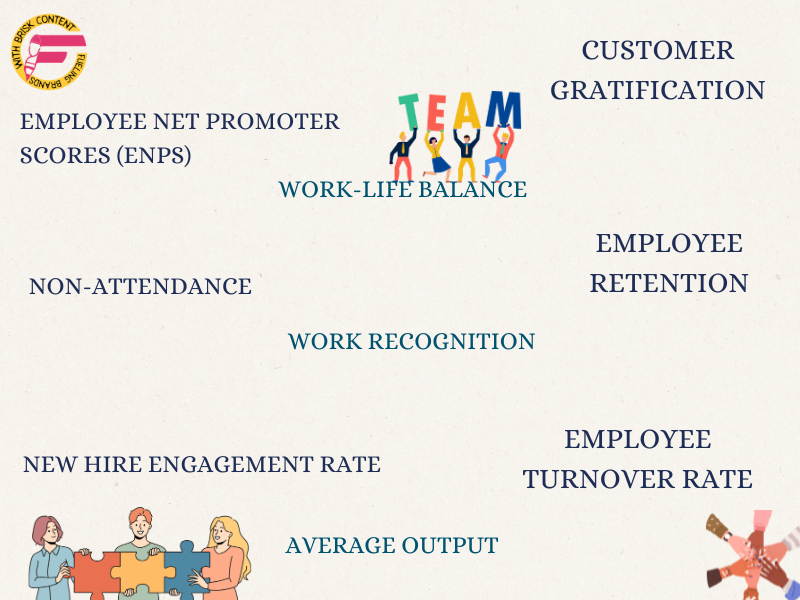
  1.  Employee Net Promoter Scores (ENPs)

ENP is a well-known metric for measuring employee engagement. This method tests an employee’s loyalty to the company. 

This is measured simply by a survey asking employees: “On a scale of 1-10, how likely are you to recommend our company to your friends and peers?”

The answer is then measured and divided into three different categories of employees, i.e., promoters, passives, and detractors.

  • Promoter: If an employee responds with a 9 or 10, it indicates that they are satisfied and happy with the company.
  • Passives: Employees who give a response of 7 or 8 are essentially neutral toward the organization; they are neither happy nor unhappy. They will neither endorse it nor disparage it to others.
  • Detractors: Responses below six fall under this category. They are not satisfied with the company. 
  1.  Non-attendance

The higher employee absenteeism, the lower the company’s engagement rate. If an employee or a group of employees is taking too much leave, they’re probably bored or uninterested in their office work. 

Measuring absenteeism helps us track employee engagement. Probable reasons for not attending the office regularly could be a poor working environment, low maintenance of the surroundings, poor governance, lack of work-personal life balance, etc. Less attendance can result in a heavy workload for the employee.

  1.  Work-life balance

A balance between work and personal life is essential for an employee’s health and wellness. By supervising an employee’s wellness metrics, you can identify challenges and issues that might not be comfortable enough to bring up in a meeting or employee engagement measurement. 

Employees who balance work and personal lives can be more engaged with the company.

  1.  Work Recognition

Workers want to be appreciated and complimented for their work. Recognizing their efforts and hard work is a low-cost, highly effective way to improve employee engagement. 

Kindness comes in both directions; noticing their day-to-day tasks being completed on time and appreciating them will make them feel recognized and motivate them to do more hard work to receive compliments from their manager.

  1.  New Hire Engagement Rate

The new hire engagement rate is the percentage of new hires who quickly committed to their work within the first 90 days. 

High new hire engagement rates indicate that the company is excellently recruiting new hires and herding them to work quickly.

  1.  Customer gratification

The logic behind this crucial metric is simple: happy employees mean happy customers. If your employee is satisfied with his work and engaged with the business, then there is a high chance that your customers will be satisfied and happy.

To measure whether one is inversely or directly related to the other, measure the ENP and customer happiness scores. If both of these are high, the company is doing great with engaging employees, but if the score is low, it needs polishing for success.

Engaged employees are always hungry for good work and eager to learn about new things. They surrender to providing high-quality work and customer gratification.

  1. Employee turnover rate

Highly engaged employees are less inclined to resign independently, contributing to the employee turnover rate. The percentage of employees that leave the company each year is known as the employee turnover rate.

Turnover is one of a business’s highest costs; lower turnover leads to more productivity, less disruption, and increased cohesion.

Employees expect to be supported, have good relations at the workplace, be developed, and face challenges for future growth. A satisfied employee has more chances for long-term tenure in an organization.

  1.  Employee retention

Employee retention is quite the opposite of employee turnover. The ability to keep employees for a long time indicates high employee engagement.

To create a productive, long-lasting workplace, you must keep your best employees on staff and devoted to their duties.

  1.  Average output

It’s pretty simple to understand that it could be employee engagement if your marketing or business loses profitability or productivity.

The company will always grow if employees are fully engaged and strive to provide premium-quality work. However, if the business experiences the opposite of growth, the employees should be more engaged and motivated.

Above and beyond employee engagement metric

While it’s essential to ensure employee engagement, the primary purpose behind measuring these metrics is not that the scores should be 10/10. There are so many advantages to ensuring employee engagement; it helps you understand what spots need to be appropriately filled.

What you do with your employees and how much their survey feedback matters to you is just as important as calculating these metrics. Learn the points you find essential in surveys and work accordingly. Your employee’s happiness is just as important as your customer’s satisfaction.

In the long run, engaged employees are happier, more loyal, and perform better in the organization. Your employees are the reason for your present and future success.

Categories
Blogs Content Marketing

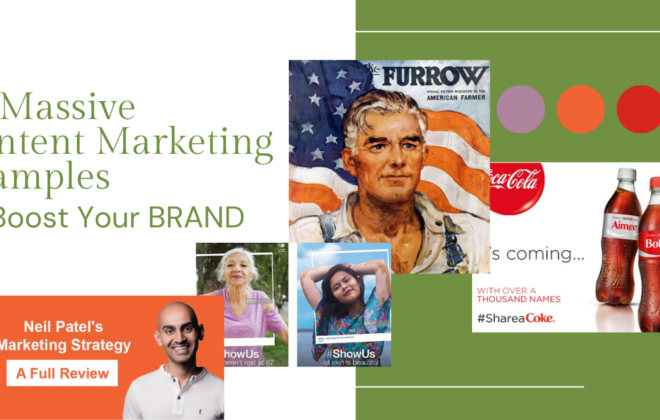
17 Massive Content Marketing Examples to Boost Your Brand

Are you a new marketing company seeking inspiration and case studies to understand better how branding and promotion may strengthen your business? Worry not because you are exactly where you should be.

In this digital era of business, marketing has become an easy path to success. There are multiple ways and roots to promote your brand like a pro.

Successful entrepreneurs and brands are always here to help and figure out how it all works because they have been through exactly what you’re going through.

We have numerous examples of different brands to boost your fresh new startup company; let’s learn briefly about them and how they’re marketing their products. 

Augmented Reality Examples

  1. Ikea

Who doesn’t like spending time at Ikea, the Swedish furniture brand? We all enjoy roaming the aisles of the lavishly furnished market. Some consumers who are too busy and occupied to purchase new furniture might be unable to find the time to visit the store.

Hence, Ikea has created an app where customers can place furniture in their homes without even buying it. Yes, you read that right. Without buying, we can now determine which art piece will suit our home’s wall.

This is an excellent way of enhancing the products and marketing them smartly.

  1. L’Oreal Paris 

The new L’Oreal Paris app “try before you buy” features a tool that allows users to quickly try on a product virtually and figure out what shade of lipstick or blush will suit their skin tone without even buying it. 

This feature allows customers to try the product without even purchasing it from the comfort of their home.

This is an excellent idea for promoting or marketing your product while making customers happy with the new updates.

  1. McDonald’s 

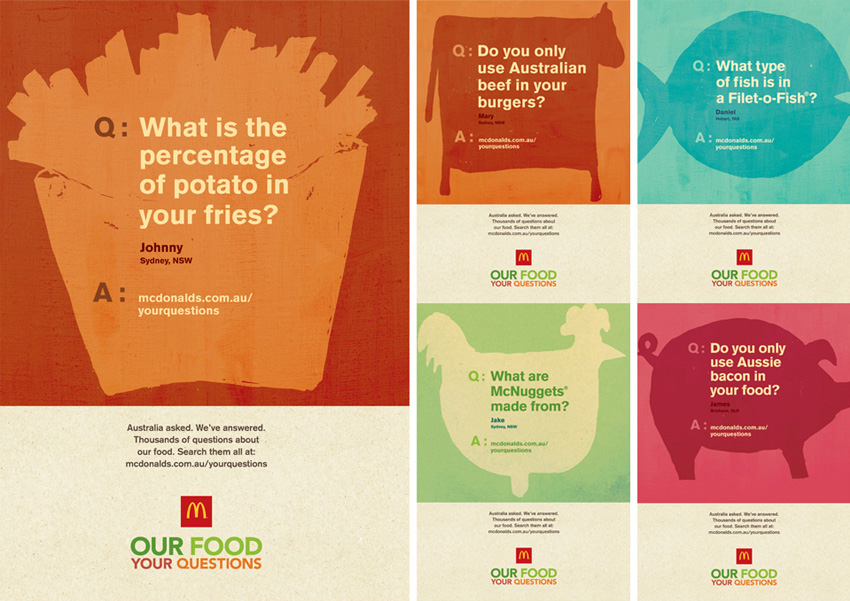
McDonald’s new customer service feature, “question time,” helps people understand what ingredients are in the food they’re about to consume. 

We can now determine what product is used in the burger patty we’re about to devour. This feature helped McDonald’s build connections with customers by being honest. 

Customers can feel more free and connected with the brand. It also drove authenticity across different platforms. 

  1. Coca-cola

Coca-Cola launched a new marketing campaign called “Share a Coke,” in which the beverage company printed familiar names on the bottle.

This step by the brand touched the sky with success as people started buying the product just for the name on the bottle.

Who doesn’t enjoy talking about themselves, after all? 

Seeing your name on a bottle sparked joy and conversation, leading to excellent product marketing.

  1. Rolex

Visualization plays a crucial role in marketing. People buy what they find attractive and eye-catching, and this is precisely what Rolex worked on. 

To capture the classic aesthetic of its brand, Rolex uses Instagram photographs. The pictures scream classic, simplicity, and the product’s sparkliness, resulting in millions of followers on the social media app.

Blog Examples

  1. Neil Patel’s Marketing Blog

Neil Patel is everywhere, helping businesses broaden their marketing and educating them. His in-depth guides and blogs on KissMetrics and Quick Sprouts rank him in the top five, and he assists many entrepreneurs who started their businesses from scratch.

Patel is a prolific blogger, earning around 3 million visitors on his blog every month. His aggressive content marketing strategy is the primary reason behind this success.  

Although his articles are straightforward, he goes all in on the information he provides. From using charts and graphs to providing accurate statistics and personal experiences, he always delivers as much content as possible. 

  1. HubSpot

HubSpot is a machine that creates and spreads content. They are doing incredibly well with their work.

HubSpot recommends that amateurs publish 4-6 blogs per day on their site. Posting content frequently will engage you with your audience on any platform. 

HubSpot posts regular blog posts, ebooks, and whitepapers. It also creates and broadcasts multiple webinars and videos. 

  1. Shopify 

Despite its e-commerce niche, Shopify also posts bulk content on its website. Its blog reflects on its journey and that of the people who sell through it.

Shopify had more than 26 million page views in the last year alone. It also conducts a podcast show called “Shopify Masters,” where they interrogate successful store owners and have long conversations with them. 

The primary reason Shopify is doing so well with blogs is that they understand their audience.

We take this away from them: Do not limit your reach and content scope just because you don’t have a niche or if you have a proper niche. 

  1. Etsy

Etsy is also an online marketplace, like Shopify. In its e-commerce niche, Etsy sells handmade and aesthetic vintage goods. The brand uses blogs to market its products and goods on different apps.

Products from Etsy are ideal for marketing on Pinterest, where users, particularly the younger generation, enjoy looking through attractive and cosmetic products. 

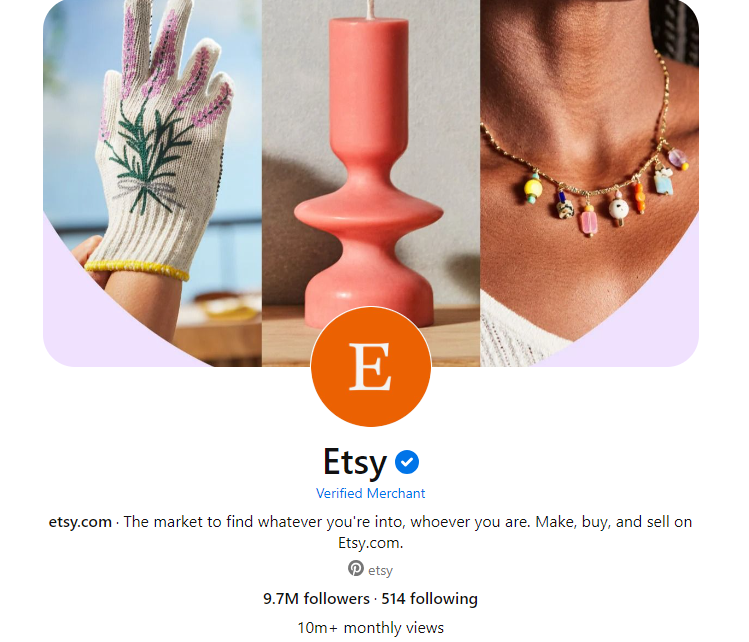
Etsy has 9.7 million Pinterest followers, 10 million+ monthly visits, and 3 million Instagram followers.

The brand is famous for its handicrafts, designs, aesthetically pleasing visuals, and photography.

Etsy advertises its work on social media and blogs because its customers admire its presentation.

  1. Zip Recruiter’s podcast

The recruitment site ZipRecruiter collaborated with Shark Tank star Daymond John to create the podcast “Rise and Grind with Daymond John.” 

John invites and features entrepreneurs, athletes, and musicians worldwide in his show. ZipRecruiter made an astounding move, not to promote and talk about his service but to talk about things that motivate people.

People listen to podcasts to be entertained, educated, and motivated; making them interested in you by marketing your company and goods will turn them off. 

  1. Microsoft’s “Stories” blog

Life stories and personal experiences connect us. We hear the life tales of hundreds of people; that is what we connect to and relate to.

Microsoft created a new way of expanding its business through this human act. The new “stories” blog helps consumers become more familiar with Microsoft, which helps build brand loyalty and repeat business.

  1. Xero Blog

Xero is a famous online B2B brand that invests in content marketing to promote and advertise its products through blogs. 

The Xero blog’s target audience is mainly interested in topics related to small businesses, tech, and products. 

It demonstrates the significance of this digital marketing tactic: a well-known B2B company like Xero utilizes content marketing to publish stories on its blog.

Social Media Marketing examples

  1. Starbucks

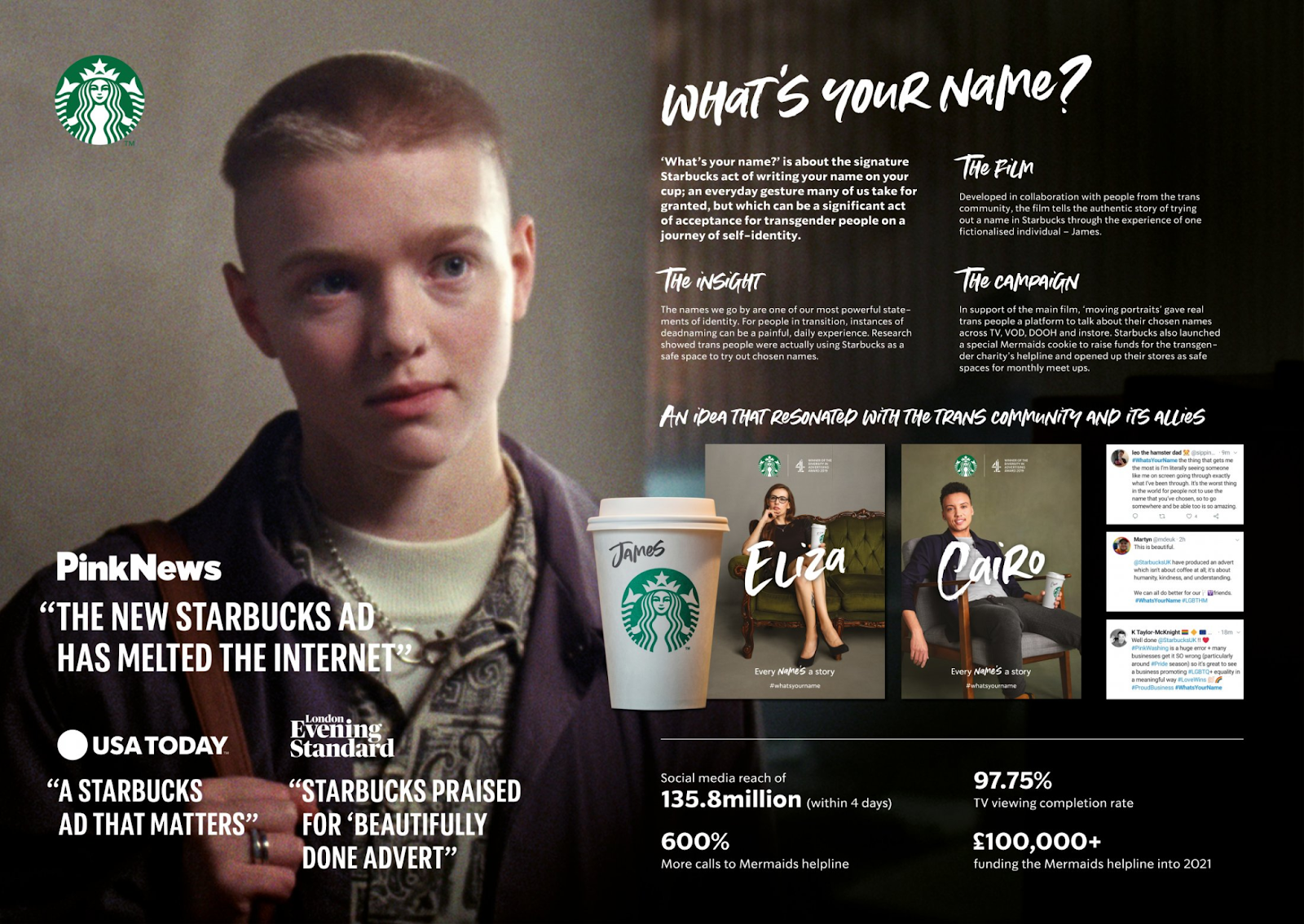
Starbucks started campaigns like #ShotOfPride and #WhatsYourName to support the LGBTQ+ community and gender-diverse youth, respectively. This move created a huge buzz among the public.

Approximately 70-80K likes were gained on Instagram. Starbucks used real people and a politically uplifting trend to attract its audience.

They also started a “one of the people” trend to share real-life stories.

The critical takeaway from Starbucks is that, as a social media marketer, you must follow the trend that creates a long-lasting impression on people. 

  1. Dove’s #ShowUs project

Dove started an initiative called #ShowUS to shatter beauty clichés. Working with Getty Images, they took photos of everyday individuals and non-binary persons without editing to demonstrate true beauty. 

The project reached around 2 billion people in 39 countries; 500+ women participated; around 660 media pieces were created, and more than 700,000 posts were made on Instagram. 

We realize from this project as marketers that people on social media want to be connected with real people who understand unrealistic beauty standards and want to be featured as such.

As a social media marketer, run a campaign or hashtag that makes people feel noticed and special.

  1. Gillette

In 2019, Gillette posted a short film exclusively on YouTube, aiming directly at the modern interpretation of manhood, called “Gillette: We Believe: The Best Men Can Be”. The film depicted the cases of men going through masculinity, bullying, and sexual harassment.

The film launched in the campaign got more than 27 million views and around 1K likes on Instagram (which is more than the usual post from Gillette). The #GilleteAd reached almost 150 Million people in just one month.

Even though the ad reached millions, some found it offensive and started a hashtag #boycottgillette. Nonetheless, it didn’t get much attention, and men felt appreciated.

It isn’t easy to be politically active, but if you can, do it. This calls for investigation, audience feedback, and a profound comprehension of your brand voice.

Content Marketing examples

  1. LinkedIn

We know that LinkedIn is a vast platform for searching for jobs and hiring. Its marketing relies on visualization.  LinkedIn uses visualization as a significant marketing tool. It uses all images for blogs, quotes, posts, Illustrations, etc.  

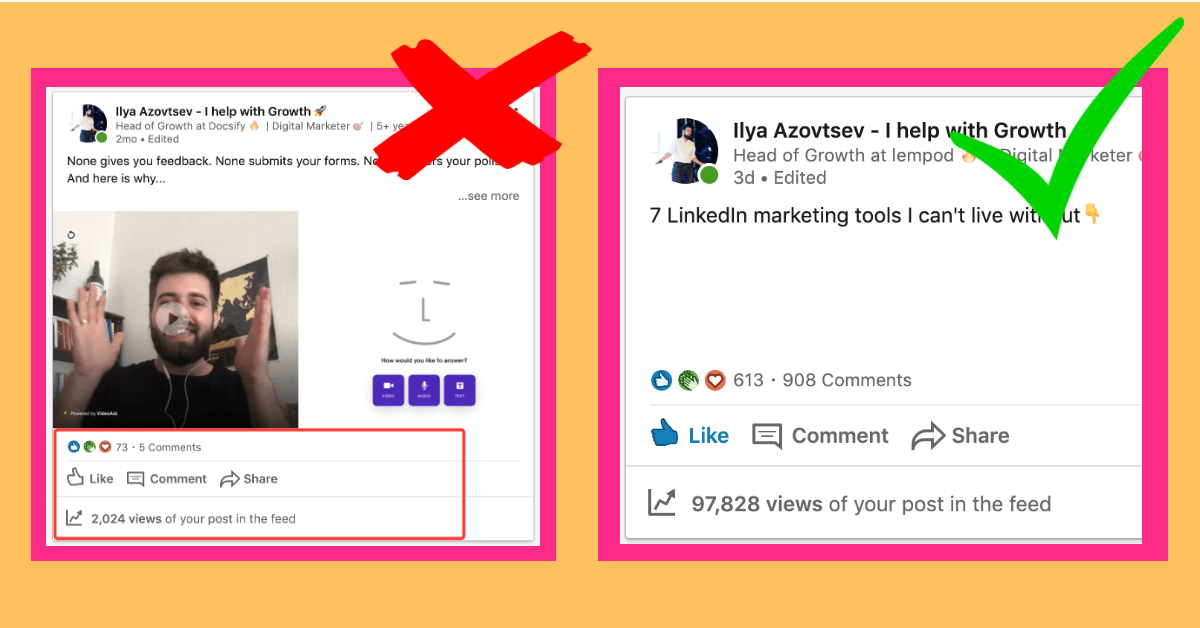
Use images and pictures to keep your audience interested and engaged. 80% of LinkedIn users are unlikely to read the posts you make, but they will undoubtedly see the images and videos you upload.

  1. The Furrow

John Deere, the founder of “The Furrow,” has been using B2B content marketing even before we started calling it that (a century ago). Deere was a blacksmith who saved farmers struggling to turn the heavy, sticky prairie soil with traditional plows made for New England’s light, sandier soils.

He published the magazine “The Furrow” to educate farmers with the latest technology to solve the newest farming problems.

His magazine mainly focused on a farmer’s problems rather than his inventions and products.

The article is still published in the journal and discusses the contemporary issues farmers face while scarcely mentioning their products.

“The Furrow” is an excellent example of B2B content marketing.

In a nutshell

Multiple companies are creating epic content on their websites along with these. If these successful companies can occupy the facility of content marketing strategy, why not you?

We explored 17 content marketing examples that boosted their companies even without a content strategy. 

Carefully analyze your approach based on what works best for your brand, where you can find talent and the resources you have at your fingertips. After you have outlined your plan, you can go forward.

Categories
Blogs

How To Tap Into The Power Of Compelling Copywriting To Show Your Value Proposition

Effectively communicating the value proposition of your product/service is essential for driving desired actions.

A value proposition is a concise statement highlighting the unique benefits of your product or service. It helps captivate readers, differentiate your offering, and achieve desired outcomes.

It overcomes challenges such as audience ambiguity, unclear messaging, jargon, and lack of persuasiveness.

More than offering a product or service alone is required to win over potential clients’ interest and loyalty. Businesses must convey the value proposition of their products and services, emphasizing the unique features and advantages that make them stand out from rivals. This is where copywriting comes in. The skill of creating exciting and convincing text—becomes extremely important.

The role of copywriting in conveying value proposition to potential customers

A value proposition is a clear and concise statement articulating your product or service’s unique value to customers. It addresses the fundamental question: “Why should I choose your offering over others?” A compelling value proposition should resonate with the target audience, addressing their pain points, aspirations, and desires.

Copywriting is pivotal in effectively conveying a product’s or service’s value proposition to potential customers. Effective copywriting should not merely list features but should instead translate those features into tangible benefits that resonate with the target audience. 

To show how a product or service can improve people’s lives and meet their unmet needs, it should speak to their desires and pain points. This entails considering the client’s viewpoint, talking in a way that appeals to their feelings, and using storytelling strategies to establish a lasting rapport.

Copywriting, then, serves as the bridge between your product or service and its perceived value. Copywriting can transform a mere product into an irresistible solution by using persuasive language, compelling storytelling, and a deep understanding of your target audience.

Emphasize the importance of customer-centric value proposition

A customer-centric value proposition is no longer an option in today’s consumer-driven market; companies need to succeed. 

Effective marketing starts with a customer-centric value proposition, a crucial differentiator in the cutthroat industry.

By adopting a customer-centric approach, businesses can create value propositions that resonate deeply with their target audience. This involves understanding the customer’s journey, identifying their pain points and motivations, and tailoring the messaging to address their needs.

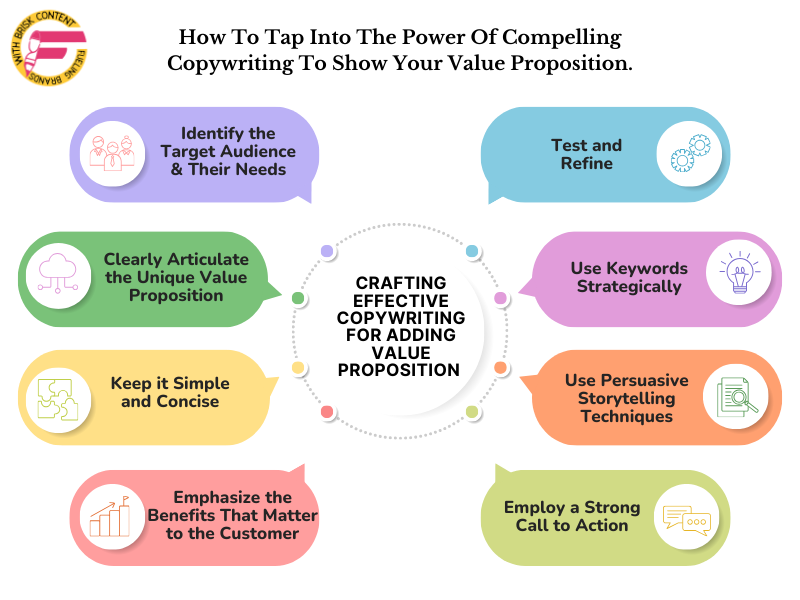
Crafting Effective Copywriting for adding Value Proposition 

1. Identify the Target Audience and Their Needs

Before crafting any copy, it is crucial to understand the target audience clearly. This includes their goals, interests, problems, and demographics. Businesses can customise their messaging to address the specific concerns of their audience and show them how the product or service can improve their lives by understanding their needs.

2. Clearly Articulate the Unique Value Proposition

The value proposition is the core message that summarizes why a customer should choose your product or service over competitors. It should be concise, clear, and focused on the unique benefits of the offering. Avoid simply listing features; instead, translate those features into tangible benefits that resonate with the target audience’s needs and aspirations.

3. Use Persuasive Language and Storytelling Techniques

Good Persuasive language that engages the target audience is necessary to grab their attention and leave a lasting impression. Employ vivid language, anecdotes, and storytelling strategies to engage the audience emotionally. Arouse their desires, allay their fears, and demonstrate how the good or service can help them achieve their goals.

4. Emphasize the Benefits That Matter to the Customer

Not all benefits will resonate equally with every customer. Focus on the benefits most relevant to the target audience’s needs and aspirations. Highlight how the product or service can solve their problems, improve their lives, and make them feel good about themselves.

5. Employ a Strong Call to Action

An unambiguous call to action prompts the customer to take the desired action. It should be concise and easy to comprehend. Whether the customer is visiting your website, making a purchase, or subscribing to your newsletter, make sure they understand what you want them to do.

6. Keep it Simple and Concise

In today’s fast-paced world, consumers have a short attention span. Avoid lengthy and convoluted sentences. Use simple, straightforward language that gets to the point quickly. Focus on the core message and avoid unnecessary jargon or technical terms.

7. Use Keywords Strategically

Integrate relevant keywords into the copy to improve its search engine ranking and visibility. This will increase the chances of potential customers discovering your product or service when they search for relevant terms online.

8. Test and Refine

Effective copywriting is an iterative process. Once you have crafted your messaging, test it with different audience segments and gather feedback. Use analytics to track your copy’s performance and identify improvement areas. Continuously refine and optimize your messaging to ensure it resonates with the target audience and drives desired outcomes.

Some examples of Brands that have successfully conveyed their value proposition through copywriting

Nike: Nike’s tagline, “Just Do It,” is one of history’s most recognizable and influential. It captures the brand’s core value proposition of empowering athletes to achieve their goals. The tagline is simple, memorable, and inspiring, resonating with consumers for decades.

Apple: Their “Think Different” campaign challenged the status quo and positioned Apple as an innovative and creative brand. The campaign successfully differentiated Apple from its competitors and appealed to consumers who value these qualities.

MailChimp: MailChimp’s tagline, “Send better emails,” is a simple yet effective way to communicate the brand’s value proposition. It highlights the product’s core benefit, which is the ability to create and send effective email campaigns. The tagline is also memorable and easy to understand.

Conclusion

If you’re trying to persuade someone to do something—buy a product or service or just subscribe to your blog—take the time to figure it out. Even the newest or smallest blog or business has a value proposition. What’s yours?

Categories
Blogs

SaaS Websites: Is a shorter copy better?

What are SaaS websites?

SaaS websites are online platforms that provide software services accessible over the internet. These websites offer applications and tools that users can use without the need for downloading or installing software locally on their devices. Instead, users can access the software through a web browser, making it convenient and accessible from anywhere with an internet connection. SaaS, or Software as a Service, is a cloud computing model that has gained popularity for its flexibility and cost-effectiveness. Businesses and individuals can subscribe to these services, paying for what they use on a subscription basis. This eliminates the need for upfront investments in software licenses and hardware, making SaaS websites a practical solution for various computing needs.

What is a short copy for SaaS websites?

A short copy for a SaaS website includes a brief and compelling message that communicates the value, benefits, and uniqueness of the software product. It’s a concise piece of text that aims to capture your interest, explain the core offering, and encourage you to take action (such as signing up, requesting a demo, or exploring the features).

For example, on your SaaS website providing project management software, your short copy could be:

“Streamline Your Projects. Boost Collaboration. Try Our SaaS Project Management Tool Today!”

In this, the benefits are highlighted. There is a clear call to action. The software’s value proposition is clearly expressed. At the same time, you are inspired to explore the website more.

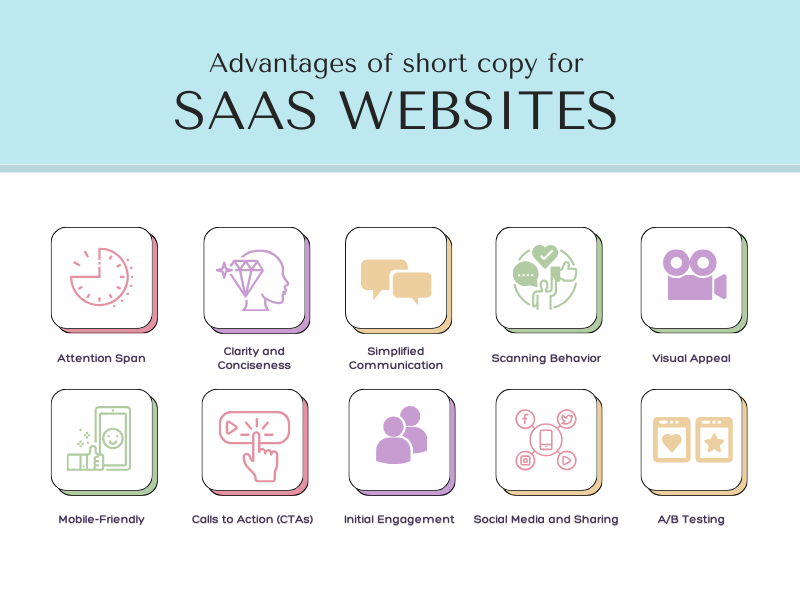
Advantages of short copy for SaaS websites

  • Attention Span: A short copy can quickly convey the key value proposition of the SaaS product, capturing your interest before you move on to another website.
  • Clarity and Conciseness: This can be beneficial for quickly conveying the key benefits and features of your SaaS product.
  • Simplified Communication: SaaS products often solve specific pain points and provide streamlined solutions. A short copy helps communicate these benefits without overwhelming you with unnecessary details.
  • Scanning Behavior: You usually have a habit of scanning websites rather than reading every word. Concise copy with clear headings and bullet points caters to this scanning behavior, allowing you to quickly grasp the main points.
  • Visual Appeal: Short copy allows for a clean and visually uncluttered design, which can be aesthetically pleasing and encourage you to explore further. A short and impactful copy with whitespace can create a modern, sleek, and cutting-edge brand image. This aligns with the technology-focused SaaS industry.
  • Mobile-Friendly: Shorter copies are more suitable for smaller screens, ensuring that your message is easily readable without excessive scrolling.
  • Calls to Action (CTAs): Short copy can be particularly effective for emphasizing CTAs, as there’s less text to distract from the desired action. However, you must present CTAs that are compelling and well-placed.
  • Initial Engagement: Short copy is often better for grabbing your attention quickly and encouraging you to explore further. It’s particularly useful for landing pages or introductory sections.
  • Social Media and Sharing: Short copy is more shareable on social media platforms and in email campaigns, making it easier for you to quickly share the product’s benefits with their networks.
  • A/B Testing: Marketers often use A/B testing to optimize conversion rates. A short copy is easier to test and iterate. Thereby, allowing for quicker experimentation with different messaging.

Disadvantages of long copy for SaaS websites

  • Due to limited attention spans, lengthy content can easily overwhelm you.
  • You have a habit of scanning content rather than reading it thoroughly. A long copy can be difficult to skim, leading you to miss important information.
  • Lengthy content can increase page load times. Hence, increasing the bounce rate
  • On mobile devices, long content can be particularly challenging to read. It might require excessive scrolling and pinch-to-zoom actions, leading to frustration.
  • SaaS products often involve technical details and features. You are usually looking for quick and straightforward information.
  • Long content is beneficial for SEO at times. However, if not properly structured and optimized, it dilutes the relevance of specific keywords and topics.
  • Longer content requires more effort to test and optimize. It can be challenging to determine which sections of the content are most effective at conveying key messages.
  • Visual and interactive content formats (videos, infographics, and interactive demos) have become increasingly popular.

Conclusion

SaaS websites offer a dynamic and accessible solution in the ever-evolving landscape of technology. By providing software services over the internet, these platforms streamline processes and enhance efficiency for businesses and individuals alike. Moreover, the advantages of shorter copy in conveying information on these platforms cannot be overstated. The brevity not only captures the attention of users in our fast-paced digital age but also ensures clearer and more direct communication of essential information. Embracing SaaS and recognizing the efficacy of concise messaging exemplifies a modern and effective approach to software usage and communication strategies, marking a pivotal shift towards a more streamlined and impactful digital experience.

CTA

To revolutionize your digital experience and boost efficiency, explore the power of SaaS websites today. Embrace the future of software solutions without the hassle of lengthy explanations. Opt for concise communication to propel your business forward. Are you ready to transform the way you work? Click here to unlock the potential of SaaS and experience the benefits of a shorter, more impactful copy. Elevate your digital journey now!