Search engines may run on algorithms, but SEM wins or loses depending on how clearly you talk to people, not robots. In fact, the average landing page converts at about 6.6% across industries, while the top 10% push above 11%, which shows how much your on‑page message and structure can separate you from the pack. When your ads and landing pages use the same everyday language your audience types into Google, you earn better Quality Scores, cheaper clicks, and more chances to turn those searches into sales.
Strong headlines, simple ad copy, and focused landing pages help people see, in a split second, that they are in the right place, which is why “good words” often beat “big budgets.” With the right message, Search Engine Marketing becomes less about bidding wars and more about attracting people who are ready to act.
What is Search Engine marketing?
Search engine marketing (SEM) means paying to show ads on search engines like Google when people type certain keywords. Ads appear above the organic results so you can catch users who are ready to buy or learn more. SEM covers search ads, shopping ads, and branded campaigns that drive traffic to pages designed to convert visitors into leads or customers. Clear writing helps your ads promise real value, and your landing pages deliver on that promise, boosting Quality Score and potentially lowering your cost per click.
Users leave quickly if the page doesn’t match what they searched for, so relevance earns top spots at better prices. Simple headlines with clear benefits and copy that answers basic questions turn more clicks into customers without always raising your bids.
How Can Keyword Research Align SEM and Content?
Keyword research syncs SEM and content by matching user queries to tailored pages, skyrocketing Quality Scores and slashing costs.
Alignment Roadmap
- Discover Intent: Analyze tools like Ahrefs for volume, difficulty, and searcher goals to pinpoint high-value terms.
- Map Strategically: Assign keywords to funnel stages top for awareness posts, bottom for sales pages, which ensures ad-to-content flow.
- Optimize Deeply: Weave terms naturally into titles, intros, and CTAs, lifting relevance and dwell time by 30%.
- Measure & Iterate: Track conversions in Google Analytics, refining clusters to achieve 20%+ ROI gains.
If you want to learn all about keywords, then read our blog on the best keyword optimization techniques
How Do Search Engine Marketing & Ad Auctions Work?
Search engines use ad auctions to decide which ads show and where they appear on the page every time someone searches. In Google Ads, your Ad Rank depends on your bid, Quality Score, and expected impact of ad extensions and formats, not just how much you are willing to pay.
Quality Score itself looks at expected click‑through rate, ad relevance, and landing page experience, so your words and on‑page content directly affect how much you pay per click.
- Search intent
Search intent indicates what the user wants to do, such as learn something, find a site, or buy a product. When your ad and landing page match that intent, Google marks your ad as more relevant and rewards you with higher Quality Scores and lower CPCs. You can spot intent in words like “how” or “best” for research, and “buy,” “price,” or “near me” for shoppers, then tailor your headline and copy to match.
- Keyword competition
Keyword competition measures rival bids and ad strength, rated by Quality Score (1-10). Fierce fights hike costs, but relevance-focused ads outrank higher bidders. Target mid-tier or long-tail keywords to claim spots at an affordable rate.
- Keyword volume and cost
Keyword volume tracks monthly searches, balancing high-traffic terms with rising costs against niche ones with lower CPC. High volume draws more auctions but demands premium bids; tools forecast costs to target value. Aim for 1,000+ volume keywords with CPC under $2 for scalable ROI.
Why Are High-Quality Landing Pages Vital for SEM?
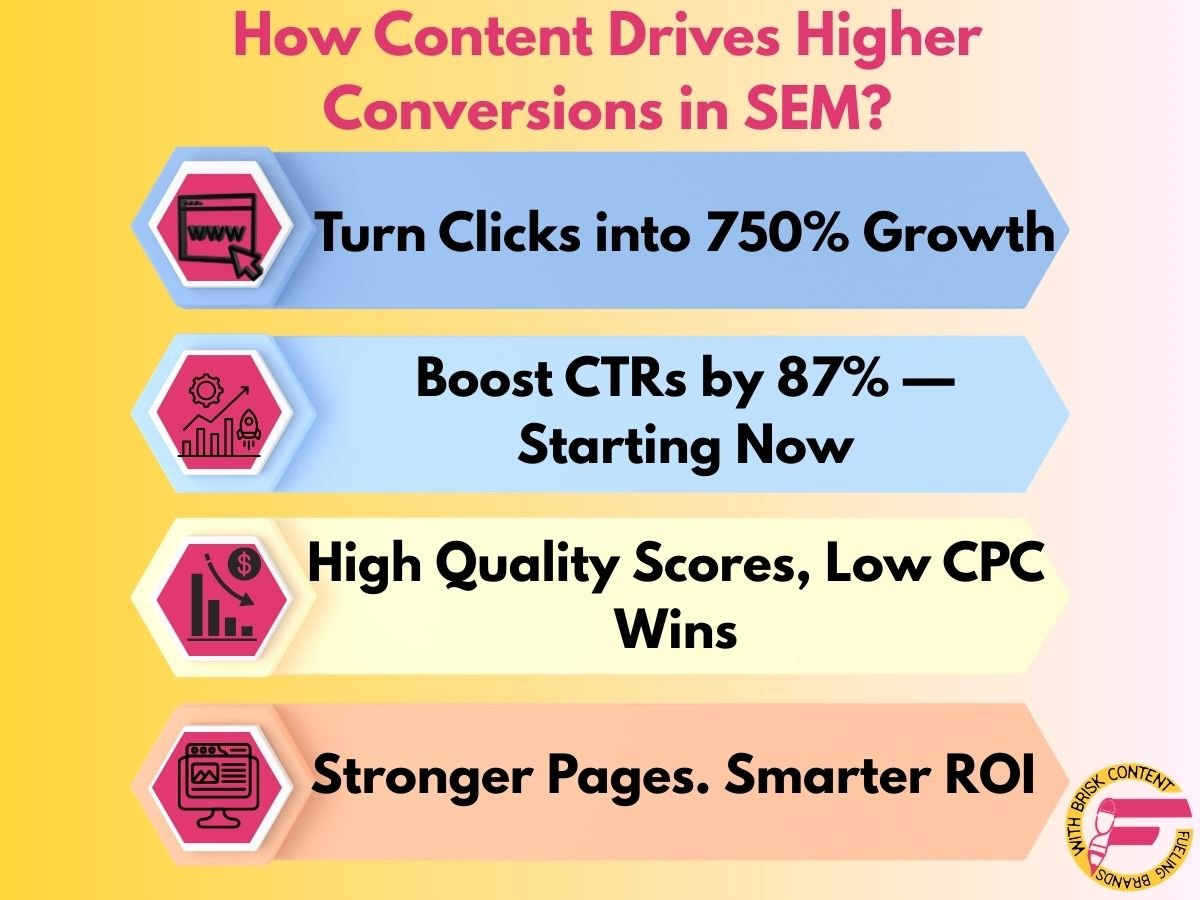
High‑quality landing pages are vital because they decide what happens after the click, and they feed back into your Quality Score. Google checks whether your landing page is appropriate, easy to use, and transparent, and this “landing page experience” score affects your ad position and CPC. When landing page experience and ad relevance are rated above average, click‑through rates can rise by 87% and conversion rates by 750%, underscoring the importance of clear content and structure.
A good SEM landing page repeats the core promise from the ad, answers key questions quickly, and points to one main call to action. Pages that focus on a single offer, avoid clutter, and load quickly tend to convert far better than generic homepages and send a strong signal of relevance back to the ad platforms. Recent data shows that landing pages from PPC search traffic convert at about 10–11%, but high performers that test headlines, copy, and forms can reach much higher rates. This means every improvement you make to the written content on your landing page can both increase conversions and lower CPC at the same time.
How Can Content Drive Higher Conversions in SEM?
Content drives higher conversions in SEM when it speaks directly to the user’s problem and makes the next step feel safe and easy. Strong headlines echo the user’s search terms and highlight a clear benefit, such as saving time, reducing risk, or getting a better price. Supporting copy then addresses the main objections, explains what happens after the click, and uses social proof such as reviews or case results to build trust quickly.
In the checkout area, simple wording and short, clear labels can reduce friction and drop-offs. Many landing pages convert best when they ask for only the most important fields, because every extra field can lower completion rates. Testing content through A/B experiments, such as trying different headlines or calls to action, often shows that small language changes can lift conversions by meaningful margins. When your copy aligns with user intent and keeps the promise made in the ad, you turn more clicks into customers without always increasing ad spend.
What Role Does Retargeting Content Play in Search Engine Marketing?
Retargeting content pulls back visitors who left your site or saw your ads. These warm leads convert 43-70% better than new leads, with some campaigns achieving 150% lift. Tailor messages to past actions, like cart abandoners, who see free shipping ads. Use friendly reminders with urgency, not pushy sales. Retargeting cuts acquisition costs by half and increases click rates compared to display ads. Pair it with a search for full coverage. Clear, helpful copy nudges users to finish without annoyance, turning browsers into buyers across the funnel.
How Should You Use Analytics to Optimize Search Engine Marketing(SEM) Content?
Analytics reveal how users respond to SEM content to inform smart fixes. Track CTR, bounce rate, time on page, and conversions per keyword in Google Analytics. High click-through rate but low sales signal an intent mismatch. Rewrite the copy to fit better. Compare devices and audiences to spot wins, like shorter mobile intros. A/B test headlines and CTAs for proven lifts.
Regular checks turn data into better writing that exceeds average rates of 10-11%. This loop refines ads and pages so each change brings more revenue from the same spend.
Conclusion
Written content is the thread that connects every part of your SEM strategy, from keyword research and ad auctions to landing pages and retargeting. When your words match real search intent and lead to helpful, focused pages, you earn higher Quality Scores, lower CPCs, and stronger conversion rates. Instead of treating SEM as a pure bidding game, treat every keyword as a conversation and every click as a chance to prove value.
Review your current ads and landing pages, update the language to match user intent, and test one improvement this week. With each round of better writing and smarter targeting, you build a system that attracts the right visitors, earns their trust, and converts more of them into loyal customers.
Better-written content improves SEM results by aligning with user intent, boosting Quality Scores, and helping landing pages convert more clicks into leads or sales.
You should review and update your SEM ad copy and landing page content at least every few weeks, using performance data to test new headlines, offers, and calls to action.
A good first change is to rewrite your main headline so it repeats the key search keyword and clearly states one strong benefit for the user.