Categories
Blogs Content Marketing

How can your written content boost your SEM Strategy 

Search engines may run on algorithms, but SEM wins or loses depending on how clearly you talk to people, not robots. In fact, the average landing page converts at about 6.6% across industries, while the top 10% push above 11%, which shows how much your on‑page message and structure can separate you from the pack. When your ads and landing pages use the same everyday language your audience types into Google, you earn better Quality Scores, cheaper clicks, and more chances to turn those searches into sales. 

Strong headlines, simple ad copy, and focused landing pages help people see, in a split second, that they are in the right place, which is why “good words” often beat “big budgets.” With the right message, Search Engine Marketing becomes less about bidding wars and more about attracting people who are ready to act.

What is Search Engine marketing?

Search engine marketing (SEM) means paying to show ads on search engines like Google when people type certain keywords. Ads appear above the organic results so you can catch users who are ready to buy or learn more. SEM covers search ads, shopping ads, and branded campaigns that drive traffic to pages designed to convert visitors into leads or customers. Clear writing helps your ads promise real value, and your landing pages deliver on that promise, boosting Quality Score and potentially lowering your cost per click.

Users leave quickly if the page doesn’t match what they searched for, so relevance earns top spots at better prices. Simple headlines with clear benefits and copy that answers basic questions turn more clicks into customers without always raising your bids.

​How Can Keyword Research Align SEM and Content?

Keyword research syncs SEM and content by matching user queries to tailored pages, skyrocketing Quality Scores and slashing costs.

Alignment Roadmap

  • Discover Intent: Analyze tools like Ahrefs for volume, difficulty, and searcher goals to pinpoint high-value terms.
  • Map Strategically: Assign keywords to funnel stages top for awareness posts, bottom for sales pages, which ensures ad-to-content flow.
  • Optimize Deeply: Weave terms naturally into titles, intros, and CTAs, lifting relevance and dwell time by 30%.
  • Measure & Iterate: Track conversions in Google Analytics, refining clusters to achieve 20%+ ROI gains.

​If you want to learn all about keywords, then read our blog on the best keyword optimization techniques

How Do Search Engine Marketing & Ad Auctions Work?

Search engines use ad auctions to decide which ads show and where they appear on the page every time someone searches. In Google Ads, your Ad Rank depends on your bid, Quality Score, and expected impact of ad extensions and formats, not just how much you are willing to pay. 

Quality Score itself looks at expected click‑through rate, ad relevance, and landing page experience, so your words and on‑page content directly affect how much you pay per click.

  1. Search intent

Search intent indicates what the user wants to do, such as learn something, find a site, or buy a product. When your ad and landing page match that intent, Google marks your ad as more relevant and rewards you with higher Quality Scores and lower CPCs. You can spot intent in words like “how” or “best” for research, and “buy,” “price,” or “near me” for shoppers, then tailor your headline and copy to match.

  1. Keyword competition

Keyword competition measures rival bids and ad strength, rated by Quality Score (1-10). Fierce fights hike costs, but relevance-focused ads outrank higher bidders. Target mid-tier or long-tail keywords to claim spots at an affordable rate.

  1. Keyword volume and cost

Keyword volume tracks monthly searches, balancing high-traffic terms with rising costs against niche ones with lower CPC. High volume draws more auctions but demands premium bids; tools forecast costs to target value. Aim for 1,000+ volume keywords with CPC under $2 for scalable ROI.

Why Are High-Quality Landing Pages Vital for SEM?

High‑quality landing pages are vital because they decide what happens after the click, and they feed back into your Quality Score. Google checks whether your landing page is appropriate, easy to use, and transparent, and this “landing page experience” score affects your ad position and CPC. When landing page experience and ad relevance are rated above average, click‑through rates can rise by 87% and conversion rates by 750%, underscoring the importance of clear content and structure.

A good SEM landing page repeats the core promise from the ad, answers key questions quickly, and points to one main call to action. Pages that focus on a single offer, avoid clutter, and load quickly tend to convert far better than generic homepages and send a strong signal of relevance back to the ad platforms. Recent data shows that landing pages from PPC search traffic convert at about 10–11%, but high performers that test headlines, copy, and forms can reach much higher rates. This means every improvement you make to the written content on your landing page can both increase conversions and lower CPC at the same time.

How Can Content Drive Higher Conversions in SEM?

Content drives higher conversions in SEM when it speaks directly to the user’s problem and makes the next step feel safe and easy. Strong headlines echo the user’s search terms and highlight a clear benefit, such as saving time, reducing risk, or getting a better price. Supporting copy then addresses the main objections, explains what happens after the click, and uses social proof such as reviews or case results to build trust quickly.

In the checkout area, simple wording and short, clear labels can reduce friction and drop-offs. Many landing pages convert best when they ask for only the most important fields, because every extra field can lower completion rates. Testing content through A/B experiments, such as trying different headlines or calls to action, often shows that small language changes can lift conversions by meaningful margins. When your copy aligns with user intent and keeps the promise made in the ad, you turn more clicks into customers without always increasing ad spend. 
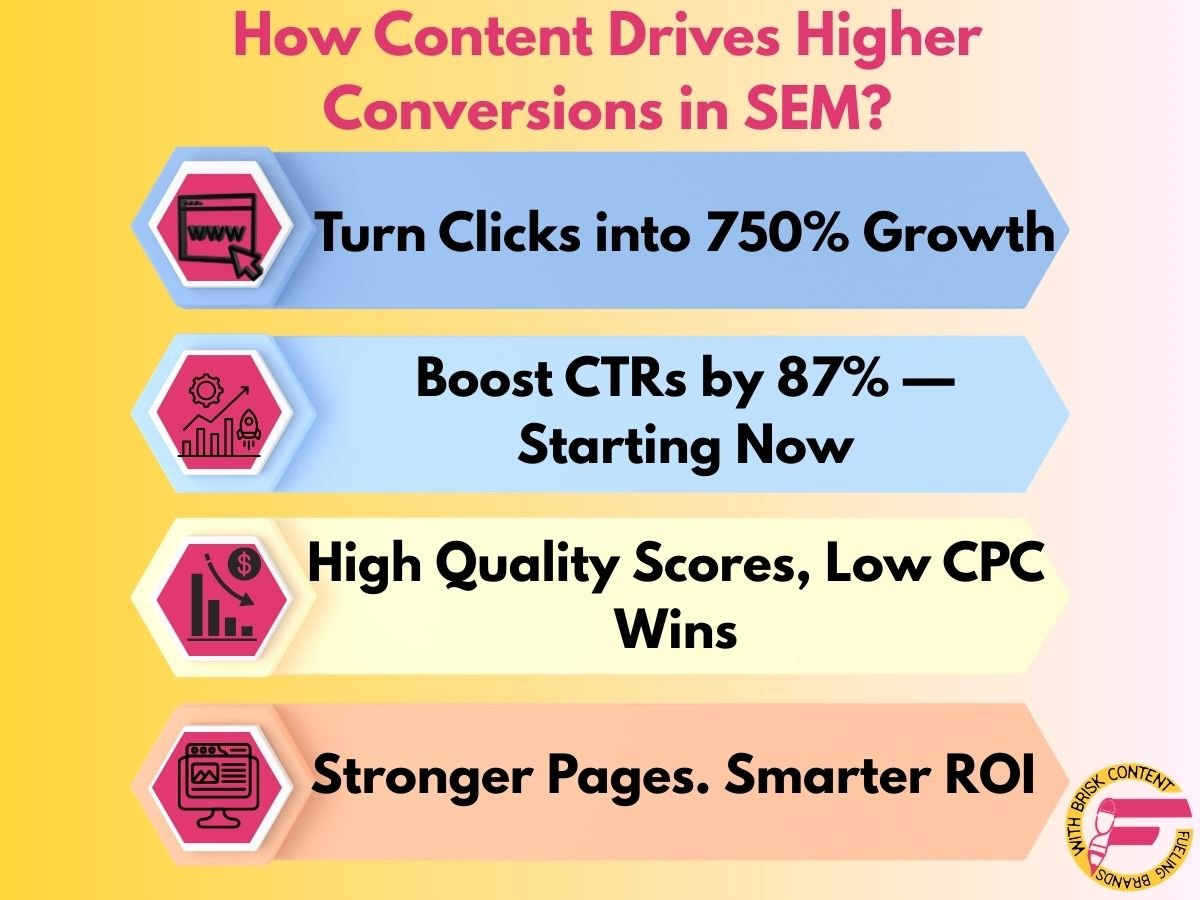
How Content Drives Higher Conversions in SEM?

What Role Does Retargeting Content Play in Search Engine Marketing?

Retargeting content pulls back visitors who left your site or saw your ads. These warm leads convert 43-70% better than new leads, with some campaigns achieving 150% lift. Tailor messages to past actions, like cart abandoners, who see free shipping ads. Use friendly reminders with urgency, not pushy sales. Retargeting cuts acquisition costs by half and increases click rates compared to display ads. Pair it with a search for full coverage. Clear, helpful copy nudges users to finish without annoyance, turning browsers into buyers across the funnel.

How Should You Use Analytics to Optimize Search Engine Marketing(SEM) Content?

Analytics reveal how users respond to SEM content to inform smart fixes. Track CTR, bounce rate, time on page, and conversions per keyword in Google Analytics. High click-through rate but low sales signal an intent mismatch. Rewrite the copy to fit better. Compare devices and audiences to spot wins, like shorter mobile intros. A/B test headlines and CTAs for proven lifts. 

Regular checks turn data into better writing that exceeds average rates of 10-11%. This loop refines ads and pages so each change brings more revenue from the same spend.

Conclusion 

Written content is the thread that connects every part of your SEM strategy, from keyword research and ad auctions to landing pages and retargeting. When your words match real search intent and lead to helpful, focused pages, you earn higher Quality Scores, lower CPCs, and stronger conversion rates. Instead of treating SEM as a pure bidding game, treat every keyword as a conversation and every click as a chance to prove value. 

Review your current ads and landing pages, update the language to match user intent, and test one improvement this week. With each round of better writing and smarter targeting, you build a system that attracts the right visitors, earns their trust, and converts more of them into loyal customers.

How does better written content improve SEM results?

Better-written content improves SEM results by aligning with user intent, boosting Quality Scores, and helping landing pages convert more clicks into leads or sales.

 How often should I update my SEM ad copy and landing page content?

You should review and update your SEM ad copy and landing page content at least every few weeks, using performance data to test new headlines, offers, and calls to action.

What is the first content change I should make to boost SEM performance?

A good first change is to rewrite your main headline so it repeats the key search keyword and clearly states one strong benefit for the user.
Categories
Content Marketing

The Best Keyword Optimization Techniques To Try

Are you aware that Google processes over 16 billion searches every day in 2025? With such massive search volumes, optimizing your keywords is important to make sure your content reaches the right audience. Research shows that long-tail keywords push around 70% of all search traffic, which makes particularity a key part of keyword strategy. 

Also, nearly 95% of keywords receive very low monthly searches, which opens up opportunities to target niche phrases that competitors might overlook. Knowing how to research and apply these keywords effectively can set your content apart and boost your search rankings. This blog examines proven keyword optimization techniques that can help you stay ahead in the developing digital landscape.

What Is Keyword Optimization and Why Does It Matter?

Keyword optimization involves strategically choosing and placing search terms that users insert into search engines to improve a website’s visibility. When done right, it connects your content with people actively looking for what you offer. This increases organic traffic, improves user engagement, and supports higher conversion rates.

Effective keyword optimization means not only choosing popular words but also understanding what users want, current search trends, and your competition. This helps search engines know what your content is about, making it easier to match with the right searches.

Keyword Research: Finding the Correct Phrases to Target

The foundation of strong keyword optimization starts with detailed keyword research. Using instruments like Google Keyword Planner, Ahrefs, and Semrush, marketers identify terms that potential customers are searching for. Learn 17 massive content marketing examples from Content Fayah showing keyword strategies in action.

Some key tips for research are as follows:

  • Focus on long-tail keywords. These specific phrases often reveal higher intent and lower competition.
  • Consider related and semantic keywords to capture broader search intent.
  • Evaluate keyword difficulty to find phrases with a good balance of volume and achievability.
  • Use question-based keywords to target featured snippets and voice search results.
  • Staying updated on trending keywords also ensures your content remains relevant.

Mapping Keywords to the Customer Journey

Keywords differ, which totally depends on where the searcher is in their buying process. Grouping keywords by these stages can make your content more targeted and effective. Mapping in the manner given below helps you to attract the right audience with content that meets their needs at each phase.

  1. Awareness Stage: Broad, informational keywords that help users recognize a need or problem (e.g., “what is content marketing”).
  2. Consideration Stage: Evaluation-related keywords, often with qualifiers like “best,” “vs.,” or “review.
  3. Decision Stage: Keywords with direct buying intent, such as product names or phrases like “buy,” “discount,” or “near me.”..

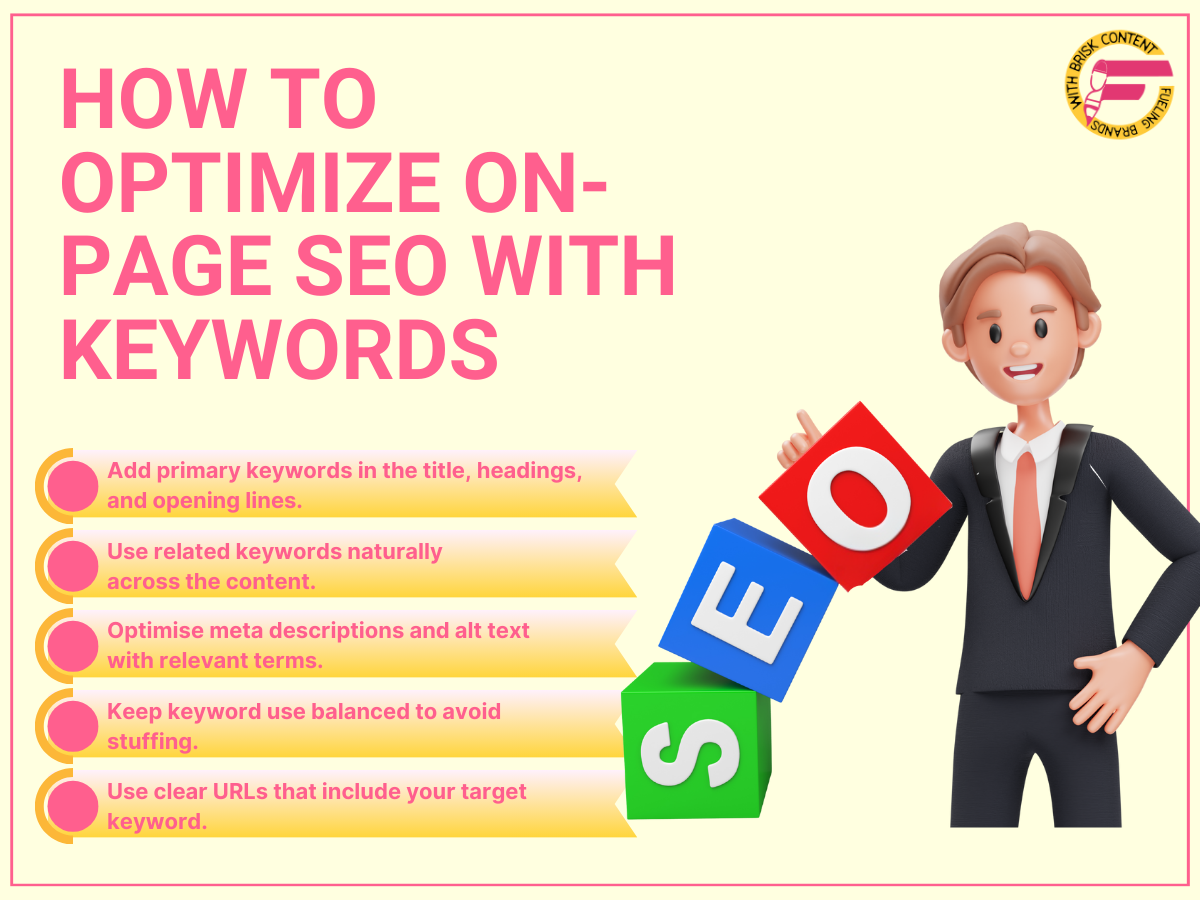
Optimizing On-Page SEO With Keywords

On-page SEO is critical to ensure that search engines and users understand your content. You can follow the best practices that are given below:

  1. Use primary keywords naturally in titles, headings, and the first 100 words.
  2. Incorporate related keywords semantically throughout the content.
  3. Optimize meta descriptions and alt text with relevant terms.
  4. Maintain valid keyword density to avoid keyword stuffing.
  5. Use URL structures that contain target keywords for better readability and SEO value.
  6. On-page keyword placement directly impacts rankings and click-through rates.

Utilizing Keyword Clustering for Topic Authority

Keyword clustering groups related search terms together and forms wide content that covers multiple related queries. Search engines increasingly favor this because it provides depth and context.

For example, instead of writing several small articles on “running shoes,” “trail running shoes,” and “best running shoes,” create a single authoritative guide covering all these terms in detail. This approach helps you build topical relevance, keeps users engaged longer and improves chances to rank for multiple keywords simultaneously. Apply clustering with tactics from Content Fayah’s 7 Content Hacks for B2B Marketing to dominate search clusters.

Using Advanced Keyword Tools for Deeper Insights

To help you choose the most suitable platform, here’s a comparison of some of the leading advanced keyword research tools available in 2025.

Tool NameKey FeaturesStandout AdvantagePricing
SemrushExtensive keyword database, competitor analysis, SERP features, keyword gap analysis, and content templates.Comprehensive all-in-one SEO suite with deep insightsStarts at $129.95/month
AhrefsBacklink analysis, keyword difficulty scoring, click data, SERP explorerAccurate traffic potential estimates and content gap analysisStarts at $99/month
ClearscopeInstant content ranking, keyword suggestions that are based on language understanding, and competitor content reviewAI-powered optimization based on SERP contextPricing varies by usage
Surfer SEOReal-time content editor, keyword difficulty metrics, SERP analysis, NLP suggestionsOn-page SEO optimization with AI-based guidancePlans start around $59/month
KWFinderKeyword difficulty, opportunity insights, search volume, and intent taggingUser-friendly interface and keyword opportunity alertsStarts at $29.90/month
Google Keyword PlannerKeyword suggestions, search trends, and cost forecastingFree tool directly from Google for keyword ideasFree

Refreshing Content with Updated Keyword Strategies

SEO is not a “set and forget” effort. Regularly reviewing and updating your best-performing content to include new keywords and related terms is important. Google rewards fresh, relevant content that aligns with growing search trends.

Adding FAQ sections, expanding on topics with new data, or optimizing for voice search by including conversational phrases can keep your rankings strong.

Optimizing for Voice and Mobile Search

As voice-based technology grows rapidly, especially on smartphones and smart speakers, keywords need to adapt. Voice searches tend to be longer and more conversational. The approaches given below align your content with how people speak and use devices, helping you capture voice search traffic effectively. Techniques to optimize for voice and mobile search include:

  1. Targeting long-tail, conversational keywords that reflect natural speech.
  2. Creating FAQ pages that answer common questions clearly.
  3. Using structured data markup allows search engines to understand your content.
  4. Improving page load speed for a smooth mobile experience.
  5. Ensuring your website is fully mobile-friendly and responsive.
  6. Focusing on local SEO with location-based keywords.
  7. Creating content that matches natural language patterns and voice-related queries.
  8. Optimizing for featured snippets and zero-click searches to capture voice assistant responses.

Measuring Success: Tracking Keyword Performance

Tracking the following key areas allows you to make informed decisions that boost your website’s performance and effectiveness in search results. If you measure your keyword success, it helps you adjust your SEO strategy by focusing on several important metrics, such as:

  • Organic traffic growth
  • Keyword ranking positions
  • Bounce rates and time spent on page
  • Conversion rates from organic search

Conclusion

Good keyword optimization is an ongoing process that needs constant research, changes, and the right tools to succeed. By choosing keyword strategies that match what users want, you can increase your content’s visibility and attract visitors who are genuinely interested. Advanced keyword tools give valuable information to improve your plan and stay ahead of your competitors. 
To keep up, update keywords regularly, optimize for new trends like voice search, and align keywords with the buyer’s journey. Businesses that aim to improve their SEO and content marketing will see better results by working with experienced professionals. Ready to implement winning keyword strategies? Contact Content Fayah today for expert SEO content that ranks and converts.

FAQs

1. How do short-tail and long-tail keywords differ from each other?

Short-tail keywords are broad and high volume, while long-tail keywords are more specific with lower volume but higher conversion potential.

2. How often should I update my keyword strategy?

Review your keywords at least quarterly or when significant algorithm changes happen to stay relevant.

3. Are keywords still important with AI and voice search growing?

Yes, but optimization now includes natural language and conversational phrases suited for voice queries.

4. What’s the best free tool for keyword research?

The best free tools for keyword research are Google Search Console and  Google Keyword Planner, which help you to start keyword research effectively.

Categories
Blogs

12 Best Tips to Take Your Content to the Next Level

With the thriving progress of web technology, content has been proven as one of the crucial aspects of the internet. Catering to the newest & relevant content has become a necessity to sustain and outshine in today’s competing era.
One of the best ways to cause a stir among the spectators is by content marketing strategy. Content writing has seen tremendous growth, as the company’s outlook is on writing as an investment for attracting an audience and increasing brand engagement. 

What is content writing?

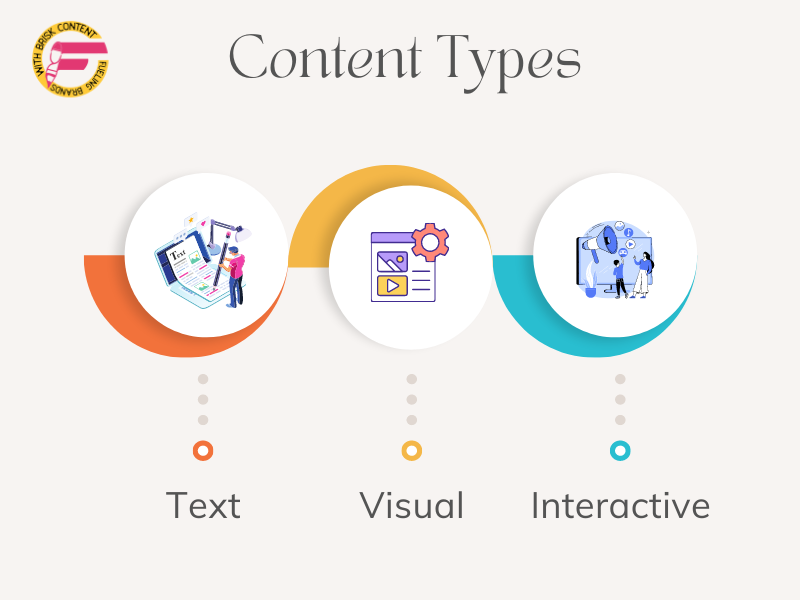
Types of content

Content writing is the creative process of generating content through careful planning, research, writing, editing, and publishing content in a digital format.

The content writing includes blog writing, video manuscripts, e-books, whitepapers, press releases, informative articles, landing pages of websites, social media copies, and many more.

Regardless of format, a content writer is crucial for developing high-quality content that signifies and strengthens a brand’s voice, thereby engaging, delighting the target audience, and creating opportunities for sale.

12 Content Writing Tips and best practices

While there’s no one-size-fits-all approach to content writing, let me help you take your content to the next level by diving into some basic content writing tips:

1. Set an Objective

It’s crucial to visualize from the beginning of a content drive, what goals you want to hit at every stage of content creation. It can vary from generating leads to converting readers into customers; educating readers, informing, or entertaining them.

Setting objectives can help you govern:

  • Type of content
  • Style and tone setting
  • Target audience breakdown
  • The Overall effect on business planning

You are obliged to develop and shape the content that sounds most impactful and conversion-worthy to the audience.

2.   Bring uniqueness & authenticity to your content

Working on any piece of content requires numerous researching-but that’s not where it halts.

After searching for relevant content about the particular topic online, create an outline of what all subheads and pointers will be added to make your content surround that theme.

Try to fill the content with the information gained after researching and the perspective you have formed on that topic. It helps you bring originality, factual data, real-life examples, and tips into your content.  

3. Conduct Keyword Research

Regardless of the content you write, it’s crucial to create content format around keywords. Selecting keywords can be challenging since SEO benchmarks and search engine upgrades change frequently.

Keywords allow you to discover specific terms widely used by searchers to gather information, which can ultimately accelerate traffic to your website.

Extensive knowledge about the topic you’re writing should include statistics, data, and metrics to signify credibility and act as a foundation for your claims.

4. Good hook can let you grab the reader’s attention.

The most essential part of any content?
Of Course, it has to be, The Headline.

If the headline isn’t thought-provoking, the reader won’t bother hitting the back button leaving the content unread in the first place, you simply won’t attain the expected results with your content.

Head-turning headlines cover- controversy, questions, humor, and uniqueness as all of them are big attention-grabbers and help you generate traffic to your content.

To keep your audience hooked, along with headlines focus on adding images, illustrations, and audio wherever required to make it more engaging and unique. It will provide you with an opportunity to use your writing skills to inspire, surprise, move, and be ready to commit actions.

5.  Get to Know Your Audience

As the old proverb goes, if you attempt to acquire audience attention by pleasing everyone around, you please no one.

So, to ensure that your content is appealing to a wider market, yet distinctive to your target audience, you need to speak with them directly and look out for their personas. 

·   Audience objective and obstacles.

·   How they look at your products & services and compare them with your competitors.

·   Your solutions for their concern.

·   The content format, styling, and social channel they prefer.

Once you know what your target audience personas look like, you can fine-tune your messaging and create content accordingly.

6. Blend multimedia constituents to split up the text

While writing, focusing on adding multimedia components like images, videos, graphs, etc wherever possible, can help you add up additional value and split up the text making it simpler for your audience to engage with.

They can also help make pieces more readable and scannable, thereby increasing traffic generation on your content.

7. Cater to readers with relevant calls-to-action

When you create any content format, your ultimate objective is to build a brand, drive traffic toward your content and convert leads or readers to paying customers. 

Calls-to-action (CTAs) throughout your content are ways to both explicitly and involuntarily put the thought in the audience’s head that they require your products &  services.

8. Edit and optimize everything you write

Editing is as critical a step as writing. After creating your first draft, consider how you might refine the rough edges of writing. It will help you recheck for grammatical mistakes, relevancy checks, uncertain segments, or any important data being missed out. This will ensure you that the content is plagiarism free & is ready to get published.

9. Pick your interesting angle

Multiple contents are readily available on the same topic, so why should the reader opt to read yours? How does your viewpoint make a difference?

You need to frequently analyze new, astounding angles to keep the readers engaged. It is not only crucial for the target audience but also for the SEO. It will help you frame content & target different keywords on the same matter with an increment in search traffic.

10. Enact your brand voice

Your brand’s voice depicts your brand’s personality. The way you demonstrate the content expresses a lot about your brand’s value and that should be unique.

Use and maintain a tone of voice specific to your target audience, as it presents you with the right path to communicate with them. The tone of voice depicts who you are, who your target audience is, and what you need to accomplish.

11. Merge creative quotes from pioneers to outline a well-developed statement-

Even after creating content on a certain matter from your end, sometimes adding expert quotes and opinions can sound fruitful, as it generates a more well-developed argumentation. 

The newer statement formed will influence readers and showcase to them that the quality & factual content they’re spotting on your website won’t be obtained anywhere else on the searched pages.

12. Support your perspective with storytelling strategy and examples-

Conveying viewpoints through storytelling techniques, examples, and personal experience can be found beneficial as the audience can comprehend your content in a better sense from beginning to end.

One of the best ways to bring engagement to your content is through storytelling skills. It helps the audience in connecting with your opinions in a different light and gives them a purpose to respond by making a move.